Bicycle Registration: A Comparison of Methods, Costs, and Providers

Sticker coding, embossing, laser engraving, or RFID chips—which method is right for your frame, how much it costs, and where you can get it. Plus: the type of coding you can apply yourself without an appointment.

Compatible with ADFC coding Valid throughout the EU Over 4,500 customers

What is bicycle coding?

A bike identification code is a permanent, visible identification code on the frame that uniquely links your bike to you—either as a traditional EIN (“Owner Identification Number,” which contains encrypted information about your place of residence and ownership), or as a database ID with a QR code, such as the BikePass ID.

There are two benefits: Thieves immediately realize that this bike is registered and that reselling it is risky. And if the police find your bike, they can identify you using the code—which is a real advantage, given that 246,000 bikes are stolen each year in Germany (PKS 2024) and the clearance rate is less than 10%. But one thing is also clear: Coding is not a lock or insurance, but rather an additional layer of protection that makes resale more difficult.

What methods of bicycle coding are there?

Sticker coding, embossing, laser engraving, or a chip—each method has its strengths and limitations. The key is whether it’s compatible with your frame material and how quickly you can get it.

Sticker Coding (BikePass ID)

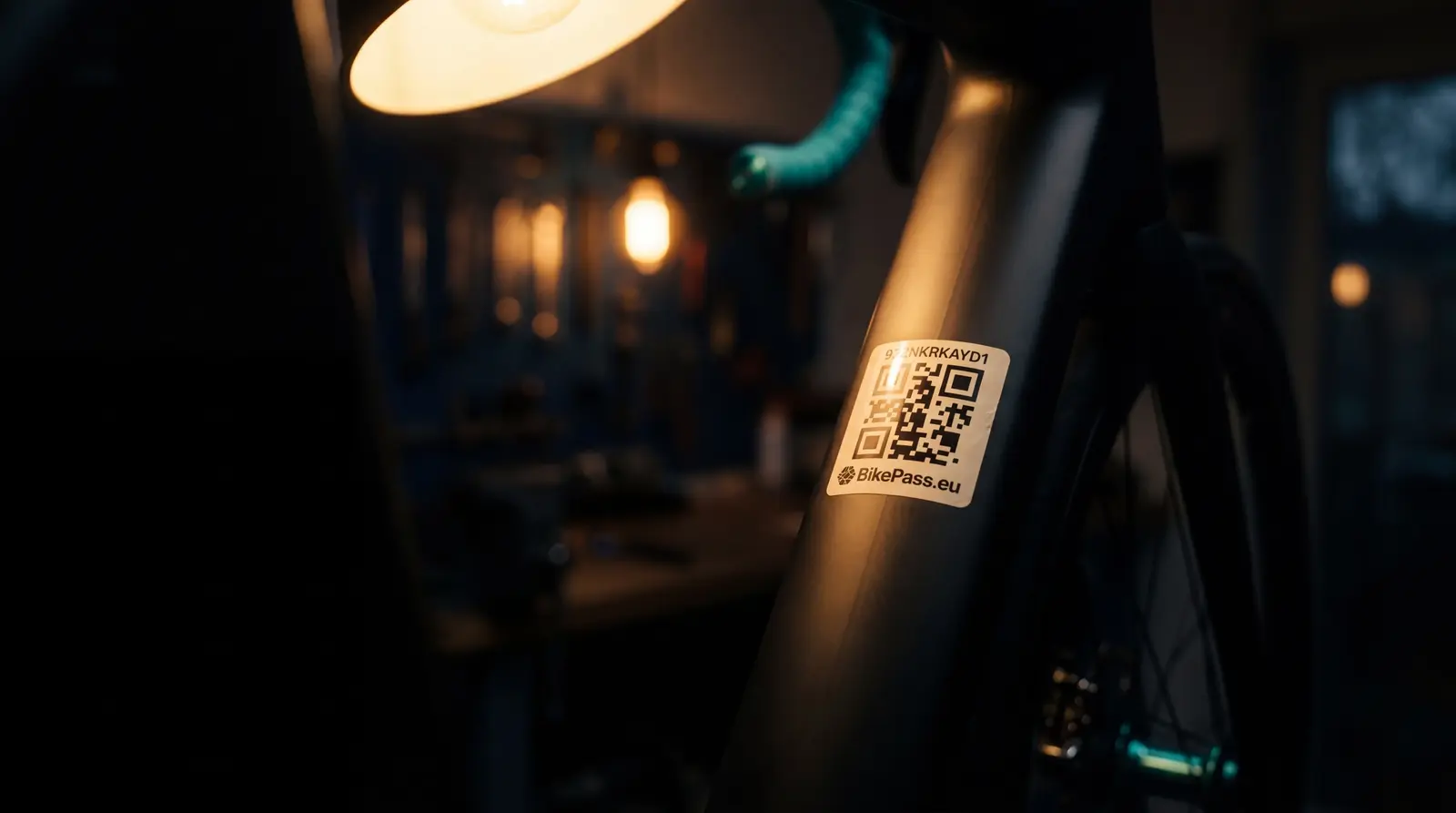
A tamper-proof special sticker with a unique ID and QR code is affixed to the frame. Anyone who scans it can immediately see: registered—including status and any theft reports. You can apply it yourself right away, without an appointment; it’s suitable for all frame materials—including carbon, which cannot be embossed. The BikePass ID set, consisting of two stickers (30 × 30 mm, for the frame and battery), costs a one-time fee of €34.99 and is linked to your digital BikePass.

About the BikePass ID

Embossed Coding (ADFC / Police)

Using an embossing tool, the code is stamped directly into the frame—a permanent, well-established practice valued by both the police and insurance companies. However, carbon frames cannot be embossed, and thin-walled aluminum frames often cannot be either. Appointments for ADFC and police campaigns are often booked up weeks in advance, and the code’s significance is limited to certain regions.

Laser Coding

The markings are laser-etched onto the surface of the paint—very precisely and inconspicuously; this is possible on painted carbon frames (only the paint, not the material). However, at 50–100 €, they are expensive and available only from a few specialty retailers.

RFID / Chip Encoding

A tiny chip is embedded in the frame and read by a scanner—invisible and difficult to remove. The catch: The police and buyers need an RFID scanner, which is rarely available. Comparatively high costs and limited availability—hardly useful as an anti-theft measure in practice.

How much does bicycle coding cost?

From affordable police promotions to laser engraving: an overview of typical prices. ADFC and ADAC members often pay significantly less for engraving.

Provider / Method Price No appointment? For carbon?
ADFC Embossed Coding approx. 15 € (members approx. 10 €)
ADAC Embossed Coding approx. 15 € (members approx. 7.50 €)
Police Outreach Days 5–15 € (often free during promotions)
Laser Coding 50–100 € just paint
BikePass ID Sticker Code + Digital Registration 34.99 € one-time payment (set of 2 stickers)

Tip: When buying a new bike, many bike shops offer free bike registration—it’s worth asking. You can find ADFC events through regional associations; police awareness days are often held at city festivals or on “Road Safety Day.”

The coding you do yourself

BikePass ID: two tamper-proof stickers (30 × 30 mm) for the frame and battery—weather- and UV-resistant, linked to your digital bike pass. One-time fee of €34.99, no subscription. Ships from Germany within 1–3 business days.

View BikePass ID

Does adhesive coding really work?

"Sticker" sounds like "can be scraped off." In fact, the adhesive coding is designed specifically to withstand this kind of attack—and if there's any doubt, the database is what counts, not the sticker.

The head tube and handlebars of a matte-black road bike with turquoise accents in the warm evening light

Weather-Resistant Mount

The BikePass sticker is UV-, weather-, and heat-resistant and is protected from abrasion by a protective laminate. Under normal use, it will last for many years—even in rain, snow, and intense sunlight.

Destruction Design

The sticker cannot be removed without leaving residue. This makes it extremely difficult for thieves to remove or replace it—and a bike that has clearly been tampered with will raise suspicion in any buyer.

Digital Connection

Even if the sticker is damaged, your registration in the BikePass system will remain active—including your frame number and proof of ownership. You can order replacement stickers and link them to your account in the app.

Verifiable by government agencies

As a Europe-wide registry, BikePass is also accessible to government agencies. When a bike is found or inspected, police and public order authorities can immediately see whether it is registered or has been reported stolen—either through the search function or the BikePass API.

A sticker-based coding system without digital registration would indeed be ineffective. The combination of a visible sticker and EU-wide registration, on the other hand, works for all frame materials—without requiring any modifications to the frame.

Encryption + Registration = Maximum Protection

Coding alone is only half the battle: Without a database entry, the police can't identify a found bike, and a buyer can't verify anything. Here's how to combine both layers in three steps.

01

Encoding

Stick the two BikePass ID stickers in a clearly visible spot on the frame and battery—they're weatherproof, scratch-resistant, and UV-resistant. No tools, appointments, or waiting required.

02

Sign up

Link the ID to your digital BikePass in just a few clicks—registration takes less than 3 minutes.

Sign up for free
03

Shooters

Finders, buyers, and the police can scan your bike—the Europe-wide database helps in the event of theft and builds trust when reselling.

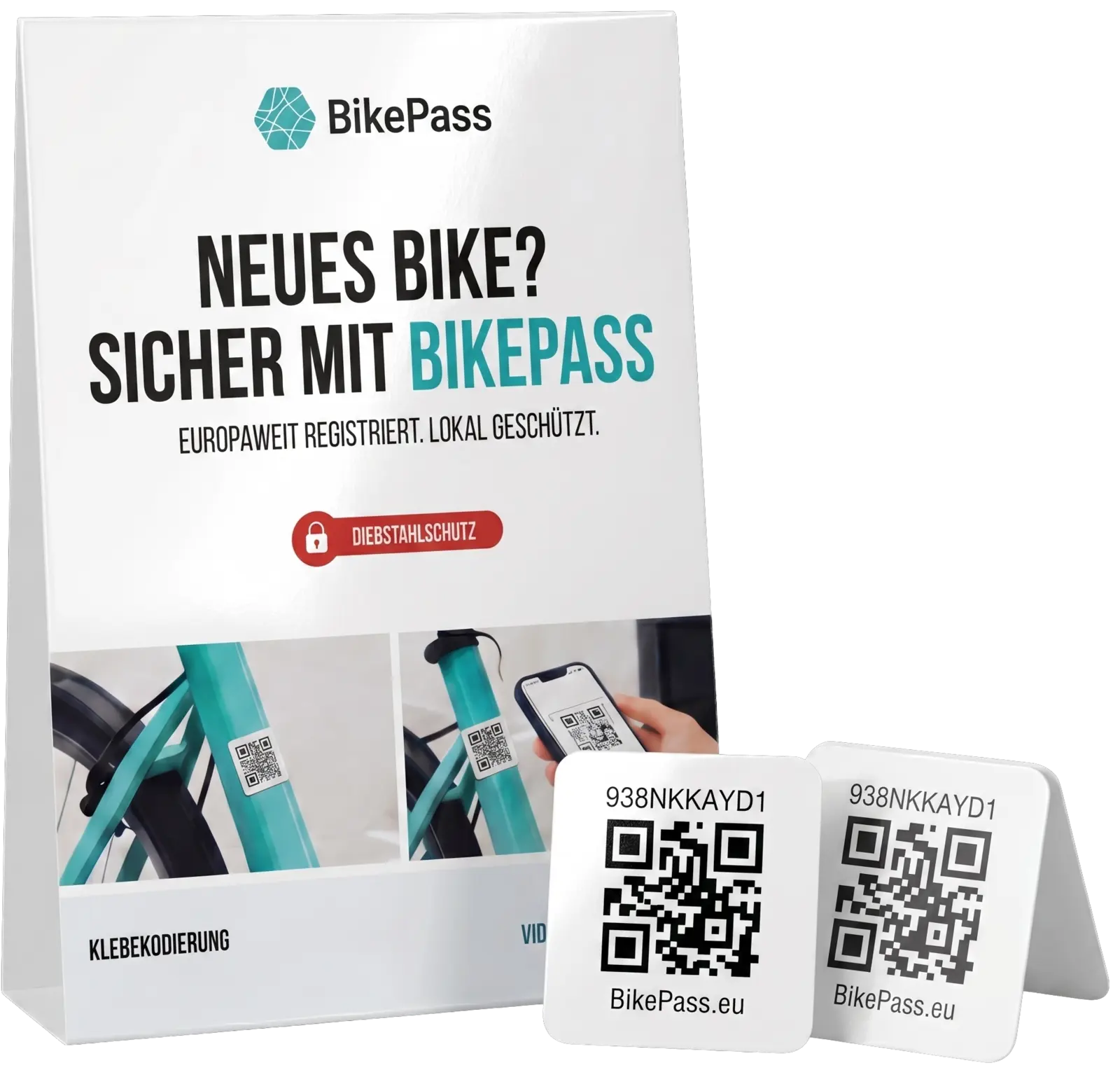
BikePass ID Packaging with Adhesive Code Stickers

BIKEPASS ID

The BikePass ID is our system for bike registration: a visible label with a QR code that links your bike to your digital pass.

  • Easy to install, even at home, and includes a free one-year subscription to BikePass.eu
  • Visible deterrentprovided by two ultra-strong adhesive stickers (weather- and UV-resistant)
  • Compatible withADFC coding, serial numbers, and EIN numbers
  • Easy identification ofthe owner — helps with investigations in the event of theft
PayPal VISA Pay Pay
Delivery in 1–3 business days · plus €3.80 shipping within Germany
€34.99 including tax
Learn more about BikePass ID

Over 4,500 satisfied customers

Real testimonials from the BikePass community.

Everything You Need to Know About Bicycle Registration

How long does a coding sticker last?

BikePass ID stickers are UV-, weather-, and heat-resistant and protected from abrasion by a protective laminate. Under normal use, they last for many years—even in rain, snow, and intense sunlight.

Can I program my bike myself?

With a sticker, yes: Wipe the frame clean, apply the sticker, press it down firmly, and link the ID in the BikePass app—no tools, no appointment, no waiting. Embossed coding, on the other hand, should only be performed by a trained coder, because incorrect embossing can damage the frame.

What do the numbers in a bicycle identification code mean?

With traditional EIN coding (“Owner Identification Number”), the code contains encrypted information about the location and the owner. The BikePass ID is a unique database number linked to the information you’ve provided.

Is a sticker-based registration accepted by the police?

The key factor is the verifiable registration system behind it: As a Europe-wide registry, BikePass is also accessible to government agencies—the police and local authorities can quickly determine whether a bicycle has been registered or reported stolen when they find it or conduct a check.

Do I need to have my bike coded?

No, it’s not required. But especially for e-bikes valued at around €1,500 or more, some insurance policies require coding or registration—and in any case, it makes it easier to prove ownership. That’s when it’s definitely worth it.

What is the difference between coding and registration?

Coding refers to the visible code on the frame, while registration refers to the entry in a database. The two complement each other—on their own, each provides only half the protection. By the way, you can also register your bike entirely digitally, without any stickers. For maximum protection, we recommend combining a digital pass with physical coding.

Encode and Register Your Bike Now

Register for free in less than 3 minutes—with the option to include a BikePass ID as a visible adhesive code. Your proof of ownership for the police and insurance companies, valid throughout the EU.

Sign up for free
Less than 3 minutes free Valid throughout the EU
My Cart
Your cart is empty.

It looks like you haven't chosen anything yet.