
In short
Registration links your bike to your identity via the frame number—faster proof of ownership, better chances of recovery, and easier resale; the digital process takes less than 3 minutes and is free.
Approximately 214,000 bicycle thefts were reported to the police in 2025; only about 11% of these were solved (Source: 2025 Police Crime Statistics). A key reason: Most stolen bikes lack a clear link between the frame number and the owner. Without this link, even a dedicated patrol cannot trace a recovered bike—it ends up at the lost and found office or is resold without anyone objecting. Registration closes this very gap—and it only takes a few minutes.
Four Reasons to Register
As long as nothing happens, registering feels like a chore. But as soon as something does happen, it’s the difference between “bike gone” and “bike back.” Four reasons why it’s worth the effort:
- Proof of ownership for the police and your insurance company. If you file a police report or make an insurance claim, both parties will require proof that the bike belongs to you. By saving your frame number, photos, and proof of purchase, you’ll have this proof readily available instead of having to scramble to find it under stress in an emergency.
- Better chances of getting it back. If your bike turns up during a police check, at a lost-and-found office, or when it’s resold, the frame number determines whether it can be returned to you. Without registration, even a found bike often remains unclaimed.
- A deterrent for fence operators. A bike with a frame number that can be verified is less attractive for resale on the black market. Anyone who knows that a number can be traced will prefer to choose a different bike.
- A Clean Resale with Transfer of Ownership. If you sell your bike later, you can simply transfer the digital proof of ownership to the new owner—it’s clearer and more traceable than a loose sales contract without a reference number.
None of these four reasons requires much effort on your part. The real effort isn't in registering the bike itself, but in doing it before it's stolen—after that, it's too late to record the frame number anywhere.
What types of registers are there?
"Registering" doesn't always mean the same thing—there are several ways to link your bike to a frame number. They aren't mutually exclusive; rather, they complement each other perfectly.
| Register Type | When You Are Captured | Who Steps Up in an Emergency |
|---|---|---|
| Police Registration | only after a report has been filed, e.g., in the case of theft or a lost item | Police stations, mostly local |
| Club/Dealer Promotions | at local registration events organized by clubs, the police, or specialty retailers | often available only regionally |
| Digital Registries (e.g., BikePass) | online at any time, regardless of schedule or location | EU-wide, accessible to public authorities via search/API |
Police registration, then, only comes into play after something has already happened—it’s not effective as a preventive measure. Local initiatives by clubs or retailers are practical, but they’re tied to a specific date and usually to a specific region: If you move or sell your bike to another city, the local registration record is often no longer traceable. Digital registries like BikePass operate independently of this: You register your bike whenever it’s convenient for you, and the data remains accessible throughout the EU—even if you move or sell the bike. The most sensible approach is to combine multiple levels: digital registration as the foundation, supplemented by a local code if your club or dealer is running a campaign.
Here's how the digital registration process works
Digital registration means you enter the most important details about your bike online once—and in an emergency, you can share them in seconds instead of having to hunt them down first.
- Enter the frame number. It is your bike’s unique identifier and the basis for any registration. The guide “Finding & Checking Your Bike’s Frame Number” shows you where to find it and how to verify it.
- Add photos. A few descriptive photos—a full view, the paint job, any special features—will help with clear identification later on, such as if someone who finds your bike reports it.
- Keep your receipts. Receipts or invoices serve as supporting documentation and are worth their weight in gold in the event of a dispute or insurance claim.
Tip: Lost your receipt? It’s still worth registering even without an invoice—the frame number and photos alone are already an important part of proving ownership and can be added later at any time.
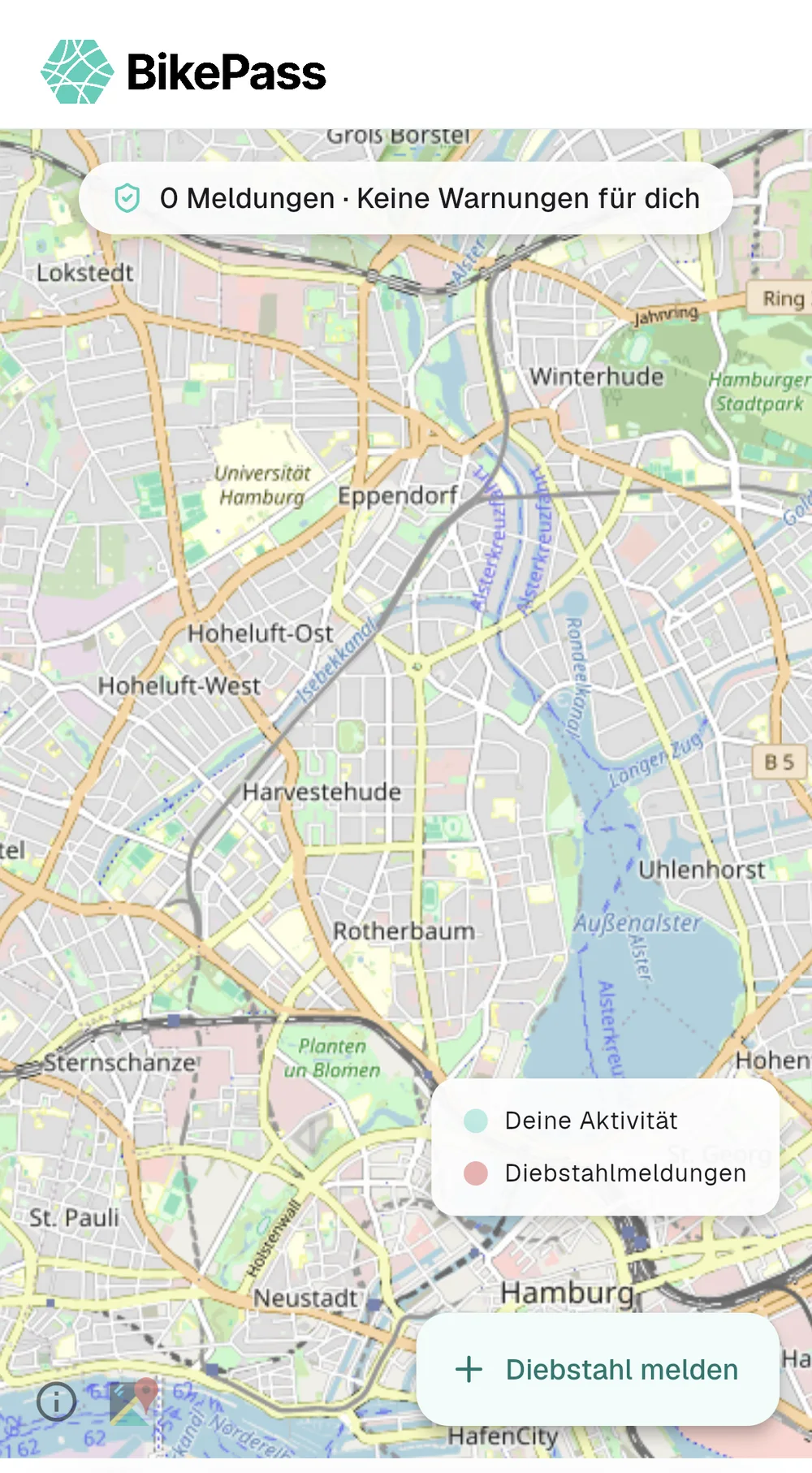
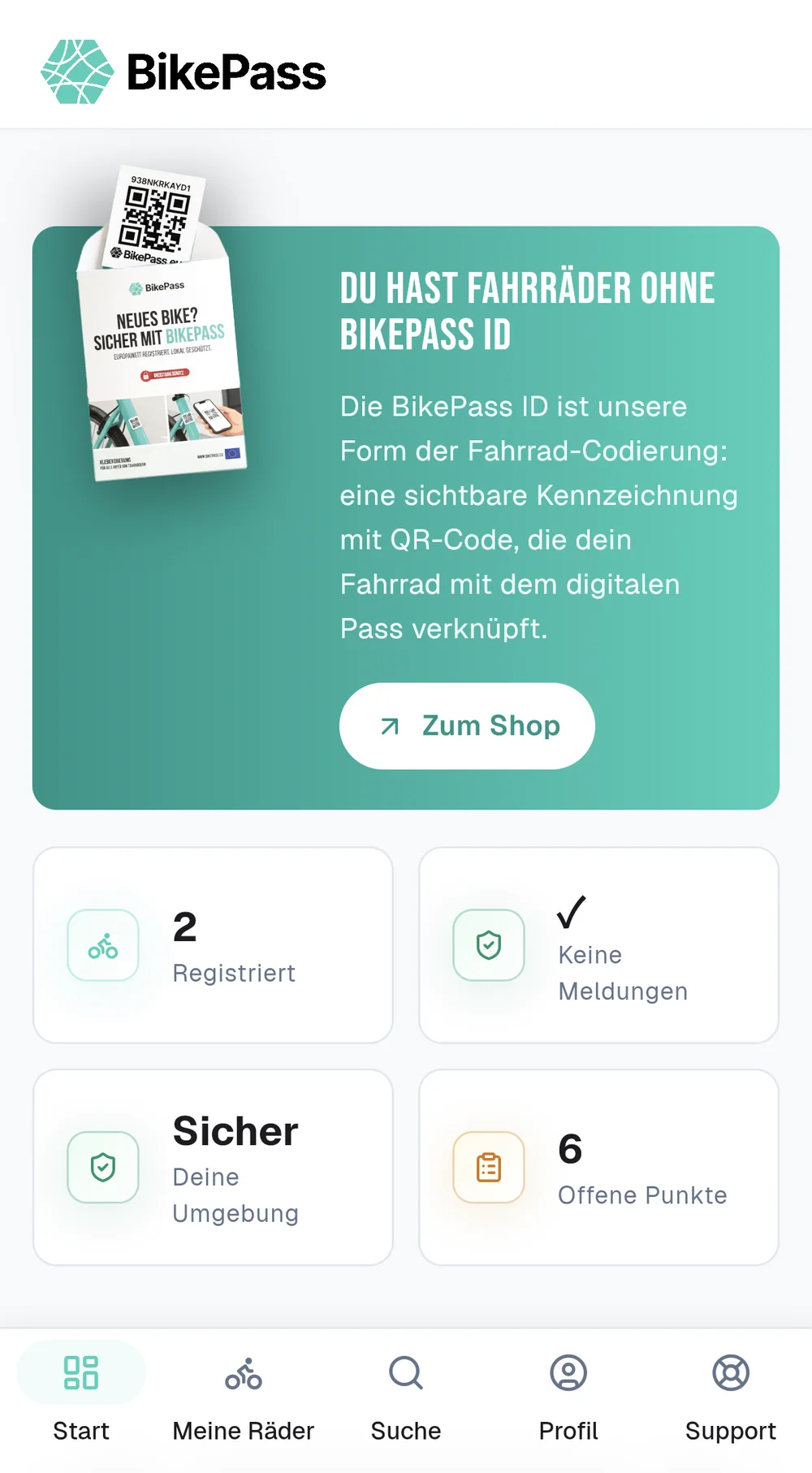
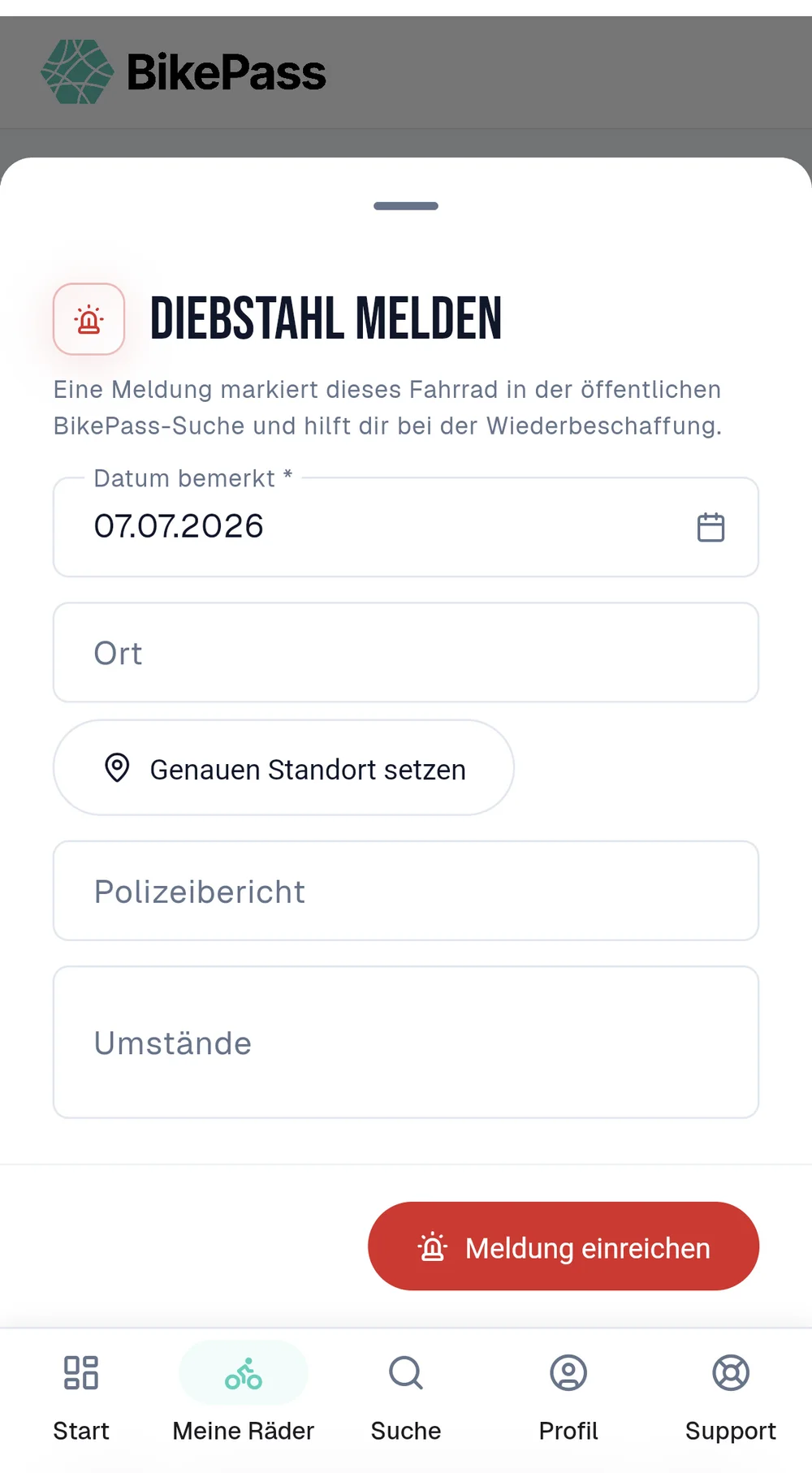
With BikePass, the entire process is free, takes less than 3 minutes, and works throughout the EU via the web app on any device—GDPR-compliant and hosted in Europe. You don’t need to install anything or create an account with a retailer; you can add or update your information at any time from any device. You can register as many bikes as you like—including your family’s—and report a theft directly in the app: The ID will then be visible to law enforcement, and anyone who finds the bike can contact you anonymously.
Registration vs. Coding
Registration and coding are often confused, but they complement each other perfectly: Registration stores your data digitally and invisibly. Coding also makes your bike recognizable from the outside.
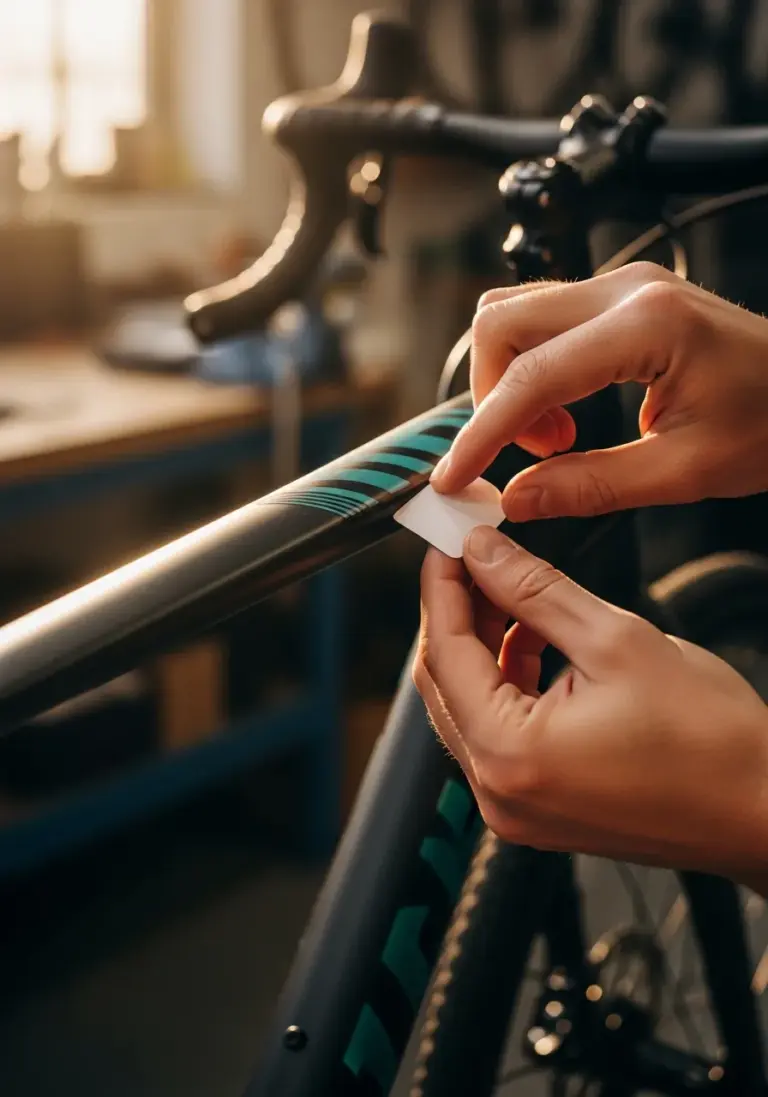
A code is a visible mark on the frame—with BikePass, it’s a tamper-proof sticker with a QR code that you can apply yourself at home, without an appointment or tools, purchased as a one-time purchase rather than a subscription. It acts as a deterrent: Anyone who sees the mark knows that the bike can be uniquely identified. Existing codes or serial numbers, such as those from the ADFC, can also be entered during registration. You can read more about the visible mark on the bike coding page.
In practical terms, this means: Registration is the foundation—it’s free and takes just a few minutes. If you also want to act as a visible deterrent, add coding to the mix. Together, these two measures cover both the invisible detection level and the visible prevention level. For you as the owner, this means: Start with registration, because it requires the least effort—you can add coding at any time, as soon as you get around to it.
Your Registration Checklist
- Have you found, written down, and checked the frame number?
- Did you take clear photos (overall view & details)?
- Do you have your receipt or invoice handy, if you have one?
- Is the bike registered digitally for free, for example, with BikePass?
- Is a visible code added to the registration when necessary?
We write about bicycle theft, anti-theft coding, and digital theft protection—in a practical way, without scaremongering, and with concrete steps you can take.
View all guides →