In short
Bicycle registration is a unique identifier on your frame that clearly links your bike to its owner in the event it is lost or stolen. Traditional options include ADFC registration campaigns and, in some cases, police registration campaigns—which usually require an appointment and involve a bit of a wait. The digital alternative works entirely from home, without an appointment or any tools.
In 2025, the police reported approximately 214,000 bicycle thefts; only about one in nine cases was solved—a rate of around 11% (Source: 2025 Police Crime Statistics). This is exactly where bike coding comes in: It makes your bike less attractive to thieves and, if it’s found, allows the police to clearly identify it. Read on to find out where you can have your bike coded, how much it costs, and why the coding only becomes truly effective once you register it.
What Coding Is and What It Offers
During the coding process, your frame is assigned a unique identifier—usually a combination of numbers and letters that is engraved, embossed, or affixed as a tamper-proof sticker. This identifier is unique and, with most providers, is also recorded in a registry that allows the police to trace it back to the owner if the bike is found.
The effect is twofold: A visibly marked bike is less attractive to thieves because it’s harder to resell discreetly. And if it is stolen and later found, the police can trace it back using the code—provided the ID is recorded somewhere and can be located. This is precisely what sets it apart from a frame number alone: While the frame number is assigned at the factory, it’s initially worthless to the police unless it’s linked to you as the owner.
Coding does not replace a good lock or a complete registration that includes the frame number, photos, and proof of purchase; rather, it complements both. The most effective approach is a combination of all three elements: a lock that makes theft on the spot more difficult, visible coding that acts as a deterrent, and a registered proof of ownership that makes all the difference in an emergency. Our guide “How to Lock Your Bike Properly” shows you how to secure your bike even more effectively.
Tip: Write down your code separately from the bike—for example, digitally, along with the frame number. That way, you'll still be able to find it even if the sticker has faded or the bike isn't handy at the moment.
Traditional Places to Go
The best-known place to get a classic bike code is the ADFC: Many local chapters offer regular bike-coding events, sometimes in collaboration with the local police, and sometimes as an event organized solely by the club. Some bike shops also offer bike coding as an additional service. The process is similar everywhere: Your frame number is checked, a unique code is assigned, and it’s affixed to the frame—usually with an entry in the organizer’s own registry.
The catch with traditional bike-locking events: You’re tied to a specific date and time. These events often take place only a few times a year, spots are limited, and you have to show up in person by bike—waiting time included. The most reliable way to find out when and where bike-locking events are taking place in your region is to contact your local ADFC chapter or your local police station directly; there are no fixed nationwide dates.
For anyone who works or can’t find a suitable event nearby, this fixed schedule quickly becomes the biggest obstacle: If you miss the one event of the year, you have to wait for the next one—and go without coding in the meantime. That’s where the digital alternative really shines.
How much it costs
There are no flat rates for bike registration—the costs vary widely depending on the provider. During ADFC promotions, registration is sometimes free for members or available for a small fee; in some places, non-members may pay a little more. If you have your bike registered by a bike shop instead, the shop will typically charge for the registration as a service based on labor time.
It's best to check with your local chapter, police station, or local dealer directly to find out the current rates—you'll find reliable figures there, not just general information online.
Traditional vs. Digital
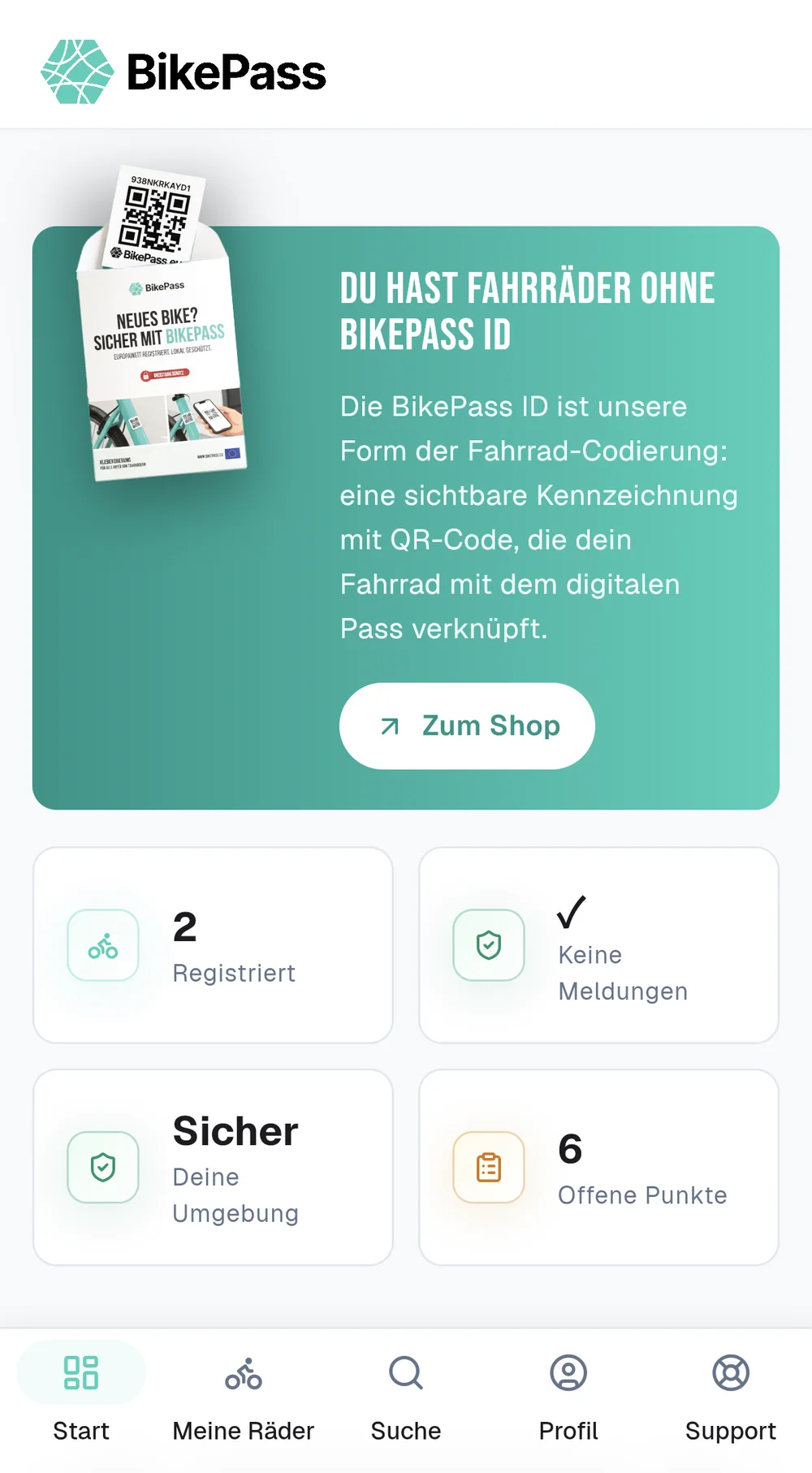
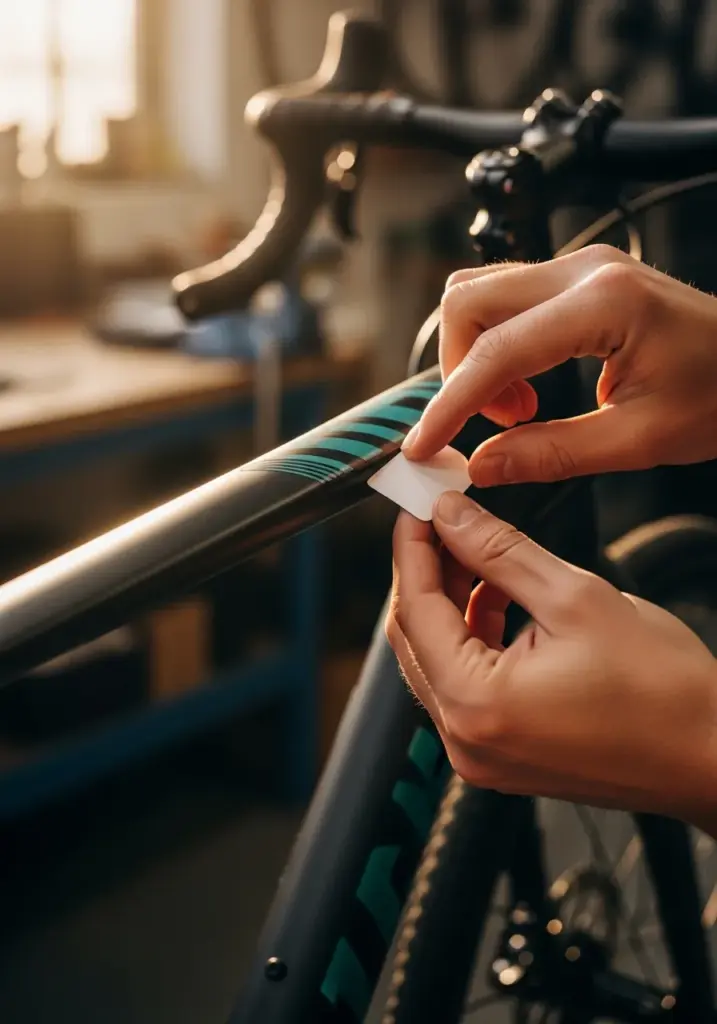
In addition to the traditional coding service, there’s now a digital alternative: the BikePass ID. Instead of waiting for a service appointment, you’ll receive a tamper-proof sticker set with a unique QR code that you can apply yourself at home—no appointment, no tools, and no trip required. The stickers are UV- and weather-resistant and cannot be removed without leaving residue, which makes attempted theft even more difficult. It’s a one-time purchase, with no subscription required.
| Traditional Coding Campaign | BikePass ID (digital) | |
|---|---|---|
| Appointment required | Yes, tied to promotional days | No, it's possible at any time |
| Location | at the ADFC office, the police station, or a retailer | At home, delivery by mail |
| Tool | partly the organizer's gravure equipment | None, sticker set for application |
| Tamper-Resistance | depending on the method and provider | Stickers cannot be removed without leaving residue |
| Cost Model | Varies; sometimes free as part of a promotion | One-time purchase, no subscription |
Important: Even existing codes—such as those from an ADFC campaign—do not have to be lost in the process. Existing codes and serial numbers can be entered retroactively and linked to a digital proof of ownership.
After coding: register
Encoding alone is only half the battle. It only has its full effect if, in the event of loss or theft, proof of ownership is actually available—that is, if the frame number, photos, and proof of purchase are on hand. Otherwise, even a code that can be clearly identified remains, for the police, a puzzle piece without a matching piece.
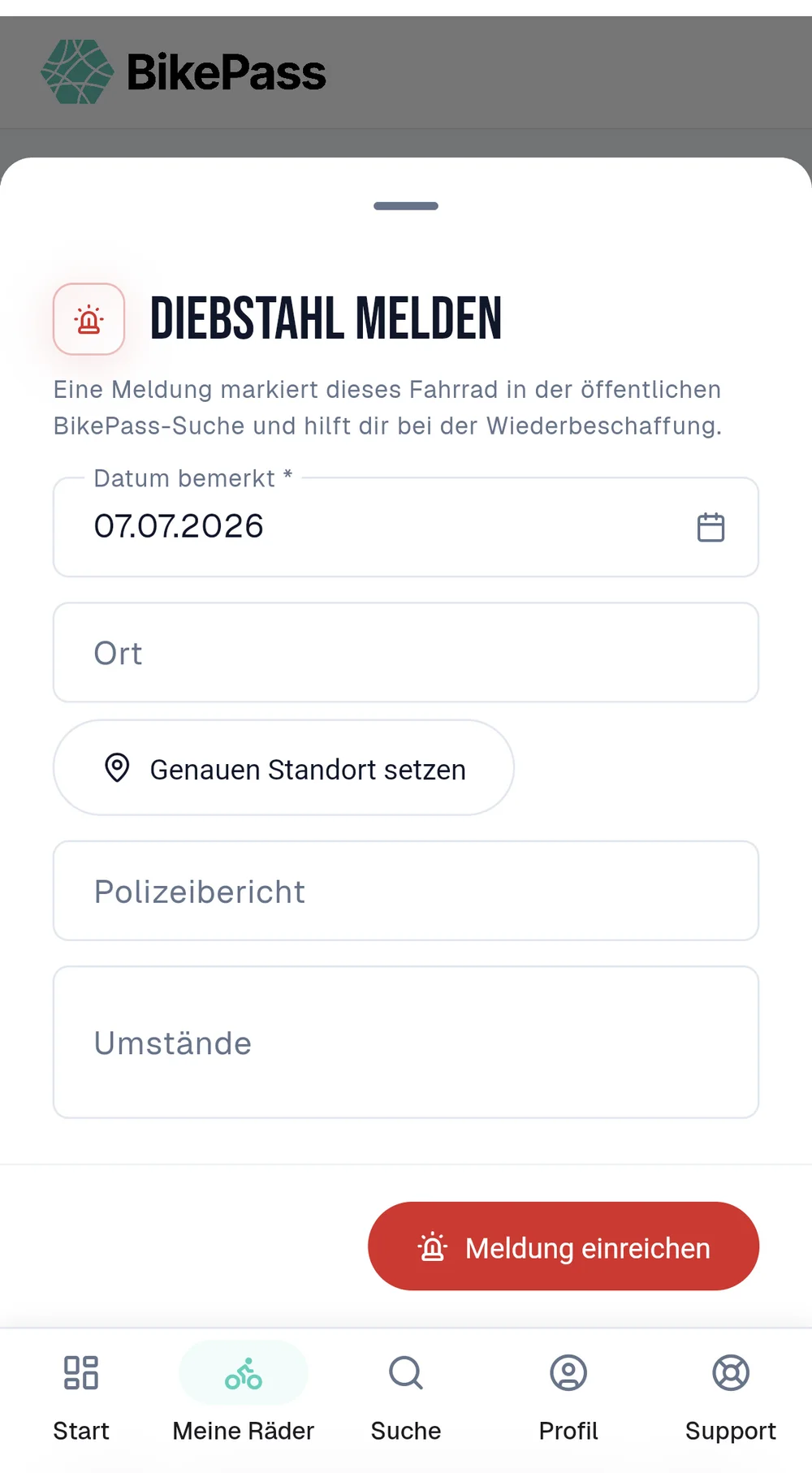
With BikePass, you can upload these documents for free as digital proof of ownership—whether your bike is already traditionally coded or has a BikePass ID. Our guide “Find & Check Your Frame Number” explains where to find your frame number and how to record it correctly, while “Register Your Bike” walks you through the entire registration process. You can find more information about the BikePass ID itself on the bike coding page.
By the way, this works both ways: If you register your bike first and have it coded later, you can simply add the identification number—your proof of ownership remains unaffected and grows with each addition. This way, you build up a complete file for your bike bit by bit, instead of scattering the code, proof of purchase, and photos across different locations.
Your Coding Checklist
- Have you finished the registration, or do you have an appointment scheduled with ADFC, the police, or a dealer?
- Is the code or frame number recorded separately (e.g., digitally)?
- Do you have your receipt and photos handy?
- Is coding recorded digitally so that it can truly help in an emergency?
- Is a certified lock also in use—doesn't the coding system replace it?
We write about bicycle theft, anti-theft coding, and digital theft protection—in a practical way, without scaremongering, and with concrete steps you can take.
View all guides →