In short
The most common reasons for denial are the nighttime clause, an unsuitable or unconnected lock, failure to report the loss, missing frame numbers or documentation, exceeding value limits, gross negligence, and missed deadlines—all seven can be addressed in advance.
The police solve only about 11% of reported bicycle thefts (Source: Police Crime Statistics 2025)—for most victims, insurance is ultimately their only recourse. It’s all the more frustrating when the insurance company then refuses to pay. Yet the decision to deny a claim is rarely based on the theft itself, but rather on minor details that were already determined long before the incident: which clause is in the contract, how the bike was secured, and what documentation you have on hand. The reasons for this are almost always the same—and with a little preparation, almost all of them can be avoided.
01The Nighttime Clause Strikes Again
Many—especially older—home contents insurance policies include a nighttime clause: If a bicycle is stolen outdoors between 10 p.m. and 6 a.m., the insurance company will only pay if it can be proven that the bicycle was in use at that time. If it was simply left on the side of the road overnight, the insurer will typically deny the claim—regardless of whether it was locked. Especially in cases of theft that aren’t noticed until the morning, the exact time becomes a point of contention afterward.
Here’s how to avoid it: Check your policy for the term “nighttime clause.” If it applies to you, your bike must generally be kept inside your apartment, in the basement, or in the garage at night. Our guide, “Home Contents Insurance and Bicycle Theft, ” explains this clause and coverage limits in detail.
02The castle does not meet the tariff requirements
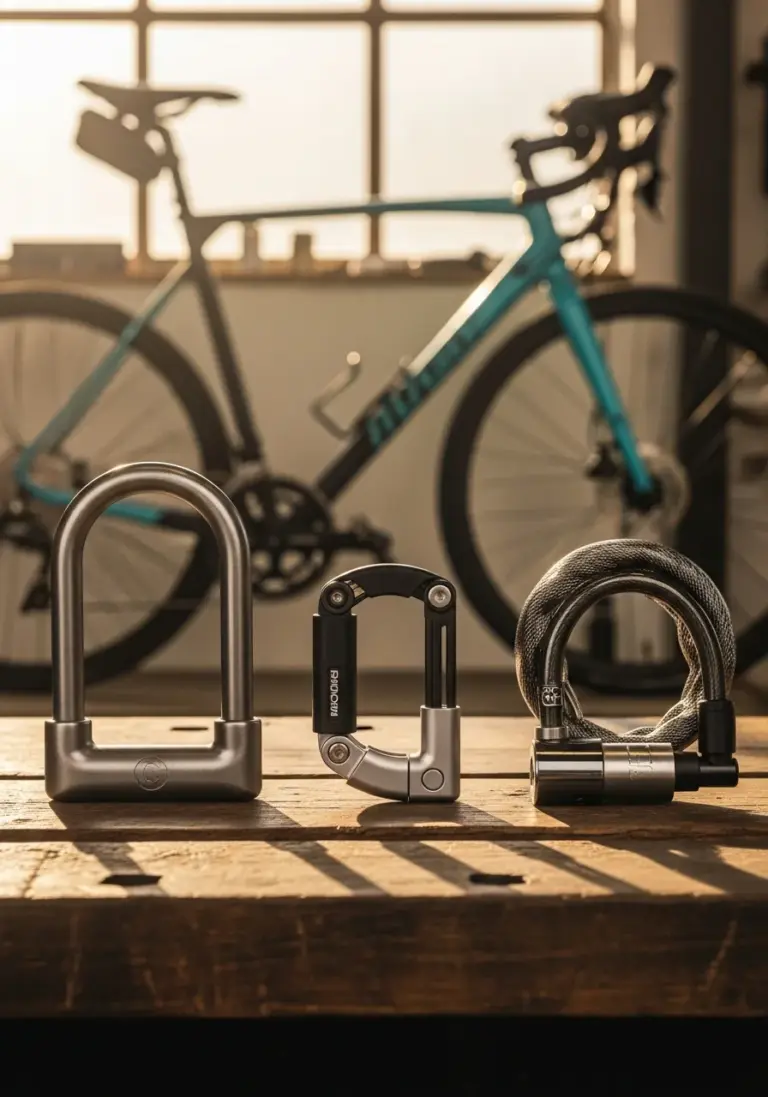
Almost every insurance plan requires a separate lock—and some also require a specific type of lock or a minimum price. If the bike was simply propped up or “secured” with a flimsy cable lock, that’s a classic reason for a claim to be denied. As a rule of thumb, budget about 10% of the bike’s value for the lock.
Here’s how to avoid it: Read the lock clause in your terms and conditions, and always secure your bike to a fixed object—don’t just lock it—which puts you in a much stronger position in the event of a dispute. If a lock is broken, it’s considered a particularly serious case of theft anyway (Section 243 of the German Criminal Code). Our guide “How to Lock Your Bike Properly” shows you how to lock your bike correctly.
03No police report was filed
No insurer will settle a claim without a police report. This holds true even if the clearance rate, according to the 2025 Police Crime Statistics, is only about 11%—filing a report is still mandatory, but solving the case is not. Some victims choose not to file a report out of resignation and thereby automatically forfeit their right to compensation.
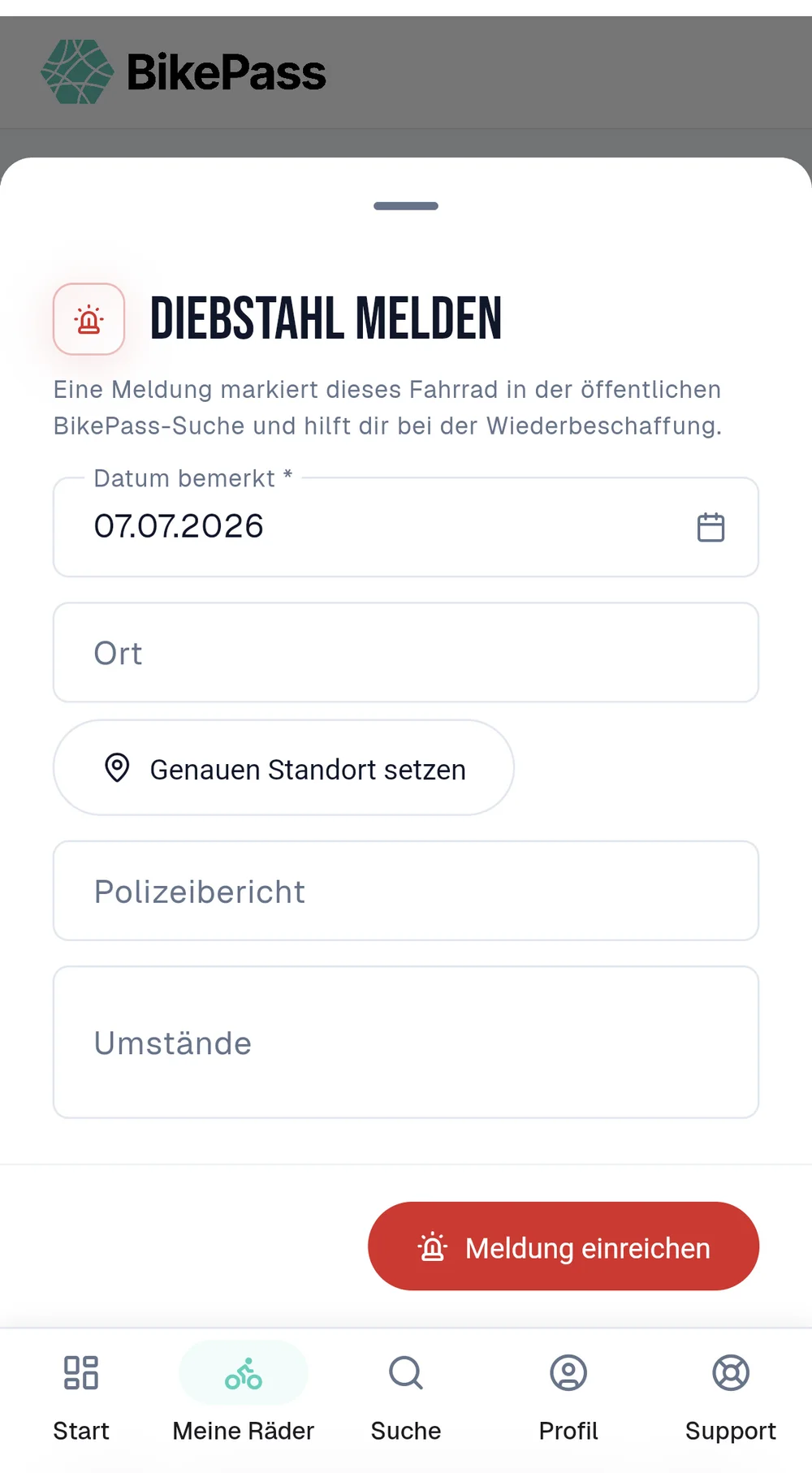
Here’s how to avoid it: File a police report immediately—preferably including the frame number—and make sure to get the case number; your insurance company will ask for it. Our guide, “Reporting a Bicycle Theft, ” walks you through the process.
04Frame number or proof of purchase missing
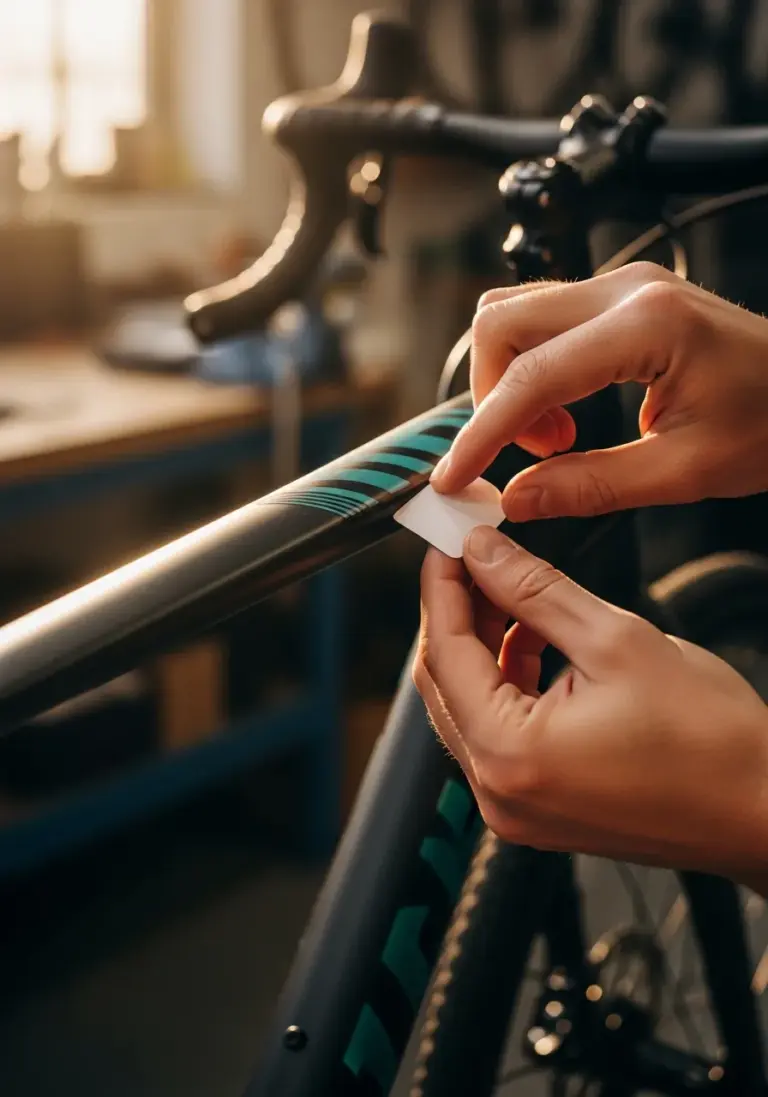
Insurance only covers what you can prove. Without a frame number, proof of purchase, or clear photos, the insurer can’t verify your ownership or the value of the bike—and will either deny the claim or reduce the payout. It’s too late to do this after the theft: the documents were usually kept with the bike or have long since been misplaced.
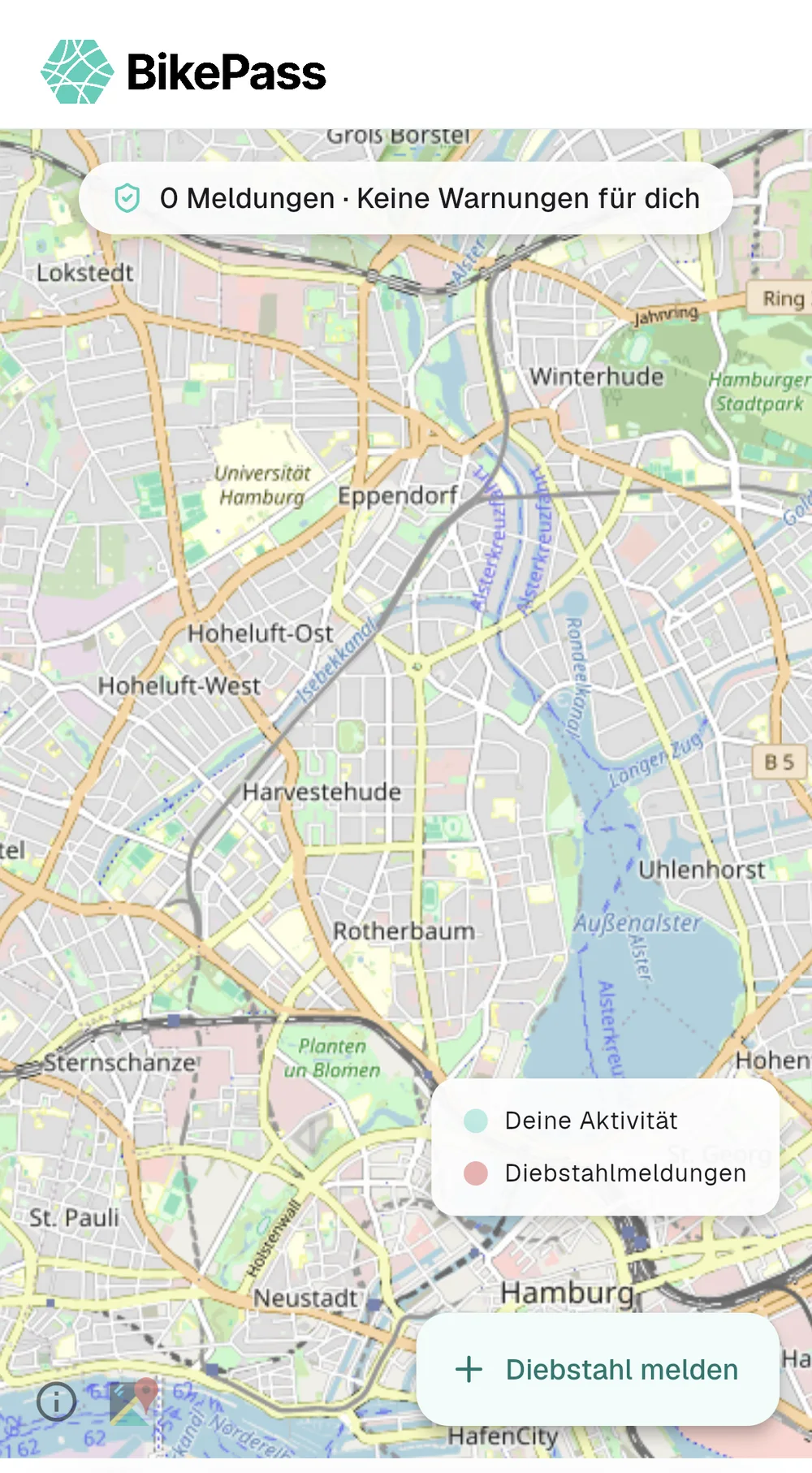
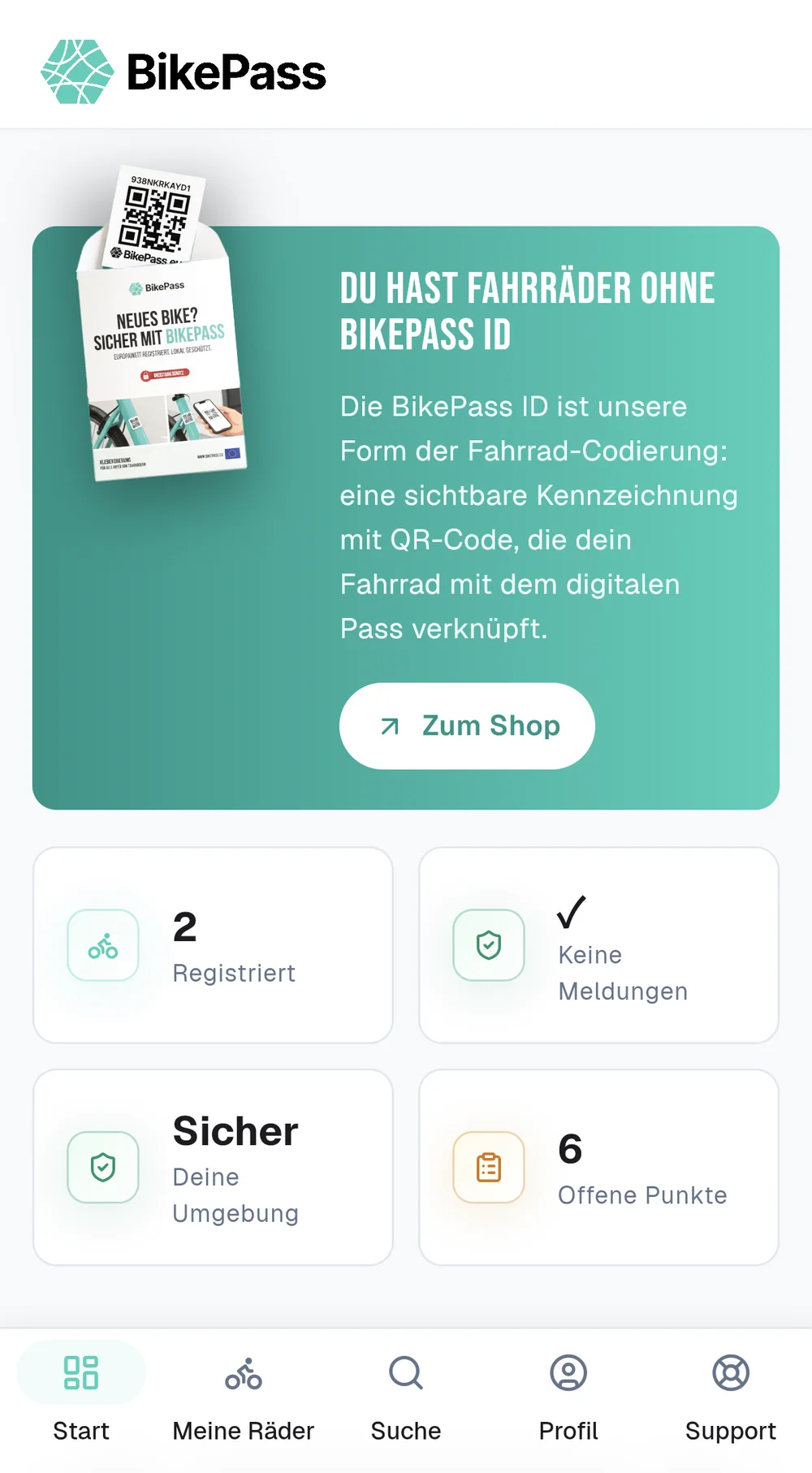
Here’s how to avoid it: Save your frame number, proof of purchase, and photos before anything happens. The “Find & Check Frame Number” feature shows you where the number is located. With BikePass, you can store all of this information together for free as digital proof of ownership and share it directly with the police and your insurance company in case of an emergency.
Tip: Take photos of your bike from all angles, including the frame number, as soon as you get it—not just after it’s been stolen. That way, you’ll avoid any disputes about proof of ownership if the worst happens.
05Policy limit exceeded
The bicycle clause in home contents insurance almost always has a cap—typically 1 to 5% of the insured amount. If the replacement value of your bike exceeds this limit, you’ll only be reimbursed for a portion of the cost in the event of a claim, regardless of how well all other criteria are met. Here’s a sample calculation (fictitious): With a coverage amount of 50,000 euros and a 2% limit, the maximum coverage is 1,000 euros—so if you have an e-bike that costs 2,500 euros, you’ll have to cover the rest yourself.
Here’s how to avoid this: Calculate your coverage limit in euros and compare it to the replacement value of your bike. If it’s not enough, consider increasing the coverage limit or getting a specialized bike insurance policy—for an overview of the costs, see “Bike Insurance: Costs at a Glance.”
06Allegation of gross negligence
If the bike was left unlocked, the key was left in the e-bike’s battery, or a lock that was obviously too weak was used, the insurer may claim gross negligence and reduce or completely deny coverage. The key factor is how carefully you acted compared to an average, cautious cyclist—and the burden of proof often lies with you.
Here’s how to prevent it: Always lock your bike, even if you’re “just popping in” to a store. Additional security measures, such as a registered frame number or visible coding, reduce the risk and strengthen your case—learn more on our page about bike theft prevention.
07Failure to Meet Reporting and Filing Deadlines
Almost all insurance policies require that you report the theft immediately—both to the police and to your insurance company. If you wait a long time before reporting the theft, you risk the insurer viewing the delay as a breach of your duty to report and reducing your benefits. This applies even if you were initially unsure whether it was worth reporting at all.
Here's how to avoid it: Report the theft to the police immediately and notify your insurance company at the same time—the exact deadline is specified in your policy terms; "without delay" means without any culpable delay. Don't wait until all the paperwork is complete.
Your Checklist for Dealing with Rejection
- Have you reviewed the nighttime clause in the contract?
- Did the lock meet the standard requirements, and was the bike securely locked?
- Is there a police report with a case number?
- Do you have your frame number, proof of purchase, and photos on hand (preferably saved digitally)?
- Is the policy's coverage limit aligned with the bike's value?
- Have you ever left your bike unlocked or with the key still in the lock?
- Did you report the theft to the police and your insurance company right away?
We write about bicycle theft, anti-theft coding, and digital theft protection—in a practical way, without scaremongering, and with concrete steps you can take.
View all guides →