In short
Home contents insurance usually only pays out for bike theft if your policy includes a bicycle clause – and then often with a cap (1 to 5 % of the sum insured is common). From locked rooms, your bike is normally covered automatically. Outdoors, conditions apply: locked, sometimes a night-time clause, and a police report is mandatory.
German insurers paid out an average of around 1,270 euros per stolen insured bicycle in 2025 – a record figure (source: GDV, the German Insurance Association, 2025). Whether you are among them or come away empty-handed is not decided at the moment of the theft, but when you look into your policy. That is exactly what we will do together now.
When home contents insurance pays – and when it does not
The basic rule: your bike counts as household contents. If it is stolen from your locked flat, cellar or garage (burglary), it is generally covered by standard home contents insurance – without any additional clause.
It gets tricky outdoors: at the station, outside the supermarket, in a yard without locked access. Home contents insurance only covers this so-called “simple theft” if your policy includes a bicycle clause (often worded as “bicycle theft included”). Without that clause you come away empty-handed after a theft while out and about – no matter how good the lock was.
Tip: Not sure whether your policy has a bicycle clause? Search the contract or the terms and conditions for “bicycle”, “simple theft” or “night-time clause” – or ask your insurer directly by email and get the answer in writing.
The bicycle clause and the compensation limit
The bicycle clause almost always comes with a catch: the compensation limit. A cap of 1 to 5 % of the contents sum insured is common – the exact figure is in your policy. A worked example (fictitious): with a sum insured of 60,000 euros and a 1 % limit, you get a maximum of 600 euros – even if your e-bike cost 3,500 euros.
This is precisely where many claims for high-value bikes fall short. So check: how high is your limit in euros? If the replacement value of your bike is above it, it is worth either increasing the clause or taking out separate bicycle insurance (more on that below).
The night-time clause: the classic pitfall
Many older policies contain a night-time clause: if your bike is stolen outdoors between 22:00 and 06:00, the insurer only pays if the bike was in use at that time (for example, you were out and had parked it briefly) – but not if it stood at the roadside all night.
Many newer tariffs have dropped the night-time clause. But do not rely on that: whether it applies to you is stated solely in your policy terms. If it does, the practical rule is: put the bike in the cellar, the garage or your flat overnight.
Theft away from home: what matters
With a bicycle clause you are generally covered away from home too – under conditions that almost all tariffs share:
- Locking is mandatory. The bike must have been secured with a separate lock. Some tariffs set requirements for the type of lock or a minimum lock price – check your policy.
- Locking to something beats just locking. Even if not every policy requires it: a bike locked to a fixed object puts you in a much stronger position in a dispute over gross negligence.
- A police report is a precondition for settlement – ideally including the frame number. Our emergency guide “Bike stolen – what to do?” shows you how.
Home contents or dedicated bicycle insurance?
For everyday bikes, home contents cover with a clause is often enough. With high-value bikes and e-bikes it hits its limits – and that is where dedicated bicycle insurance comes in. Our guide “Bike stolen – which insurance pays?” explains which policy really pays after a theft. The honest comparison:
| Home contents with bicycle clause | Dedicated bicycle insurance | |
|---|---|---|
| Cover amount | usually capped (typically 1–5 % of the sum insured) | generally the full replacement value of the bike |
| Night-time clause | yes, depending on the tariff | usually no |
| Theft of parts (wheel, battery) | mostly not covered | often included |
| Vandalism / crash damage | no | can be added, depending on the tariff |
| Cost | included in the contents premium or a small surcharge | separate premium, depending on the bike’s value |
| Suitable for | everyday bikes below the compensation limit | high-value bikes, e-bikes, frequent riders |
All details are typical market patterns, not specific tariff terms – what applies to you is stated solely in your policy. As a rule of thumb: if the replacement value of your bike exceeds your contents compensation limit, do the maths on a dedicated policy – we have broken down what bicycle insurance costs separately.
What you really need when you claim
Whichever insurance you have: only what you can prove gets settled – missing evidence is one of the most common reasons why insurers do not pay after a theft. Insurers typically want to see the police report (with the case reference), the frame number, the purchase receipt and clear photos of your bike. Our guide “Find & check your frame number” explains exactly where the frame number sits and how to record it.
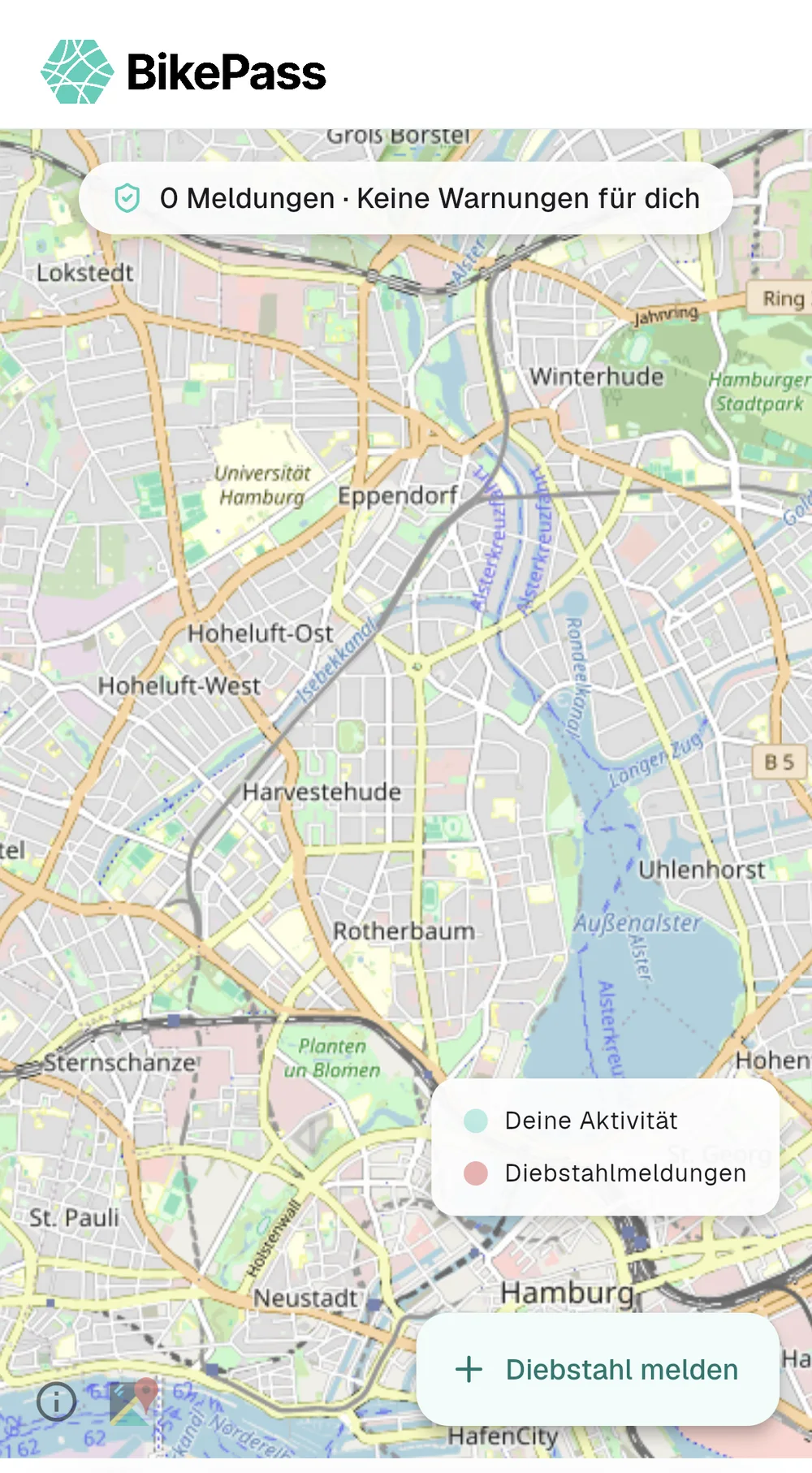
You are in the most relaxed position if these documents are already bundled together before the theft: with BikePass you store your frame number, photos and receipts free of charge as digital proof of ownership – and share them directly with the police and your insurer if the worst happens. To make theft less likely in the first place, read our page on theft prevention for your bike.
Your policy checklist
- Is a bicycle clause included in your contents policy?
- Compensation limit worked out in euros – is it enough for your bike?
- Night-time clause checked (22:00–06:00)?
- Do you know the lock requirements of your tariff?
- Frame number, purchase receipt and photos to hand (ideally registered digitally)
- For a high-value bike: dedicated bicycle insurance costed out
We write about bike theft, security marking and digital theft protection – practical, without scaremongering and with real steps you can take.
See all guides →