In short
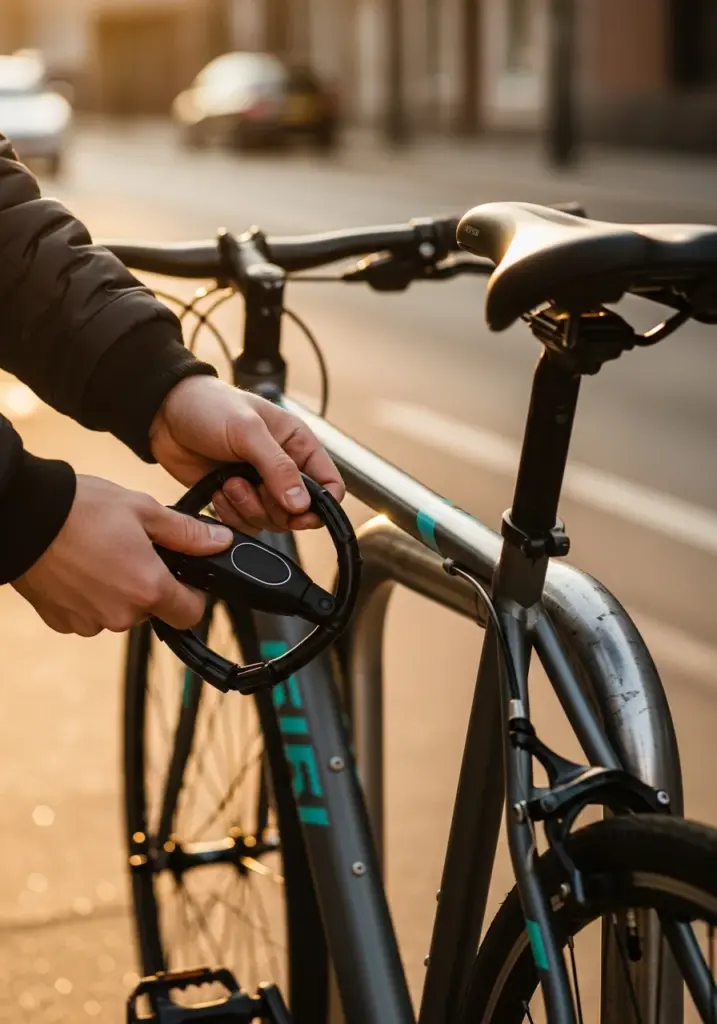
Locked badly is half stolen: always secure the frame (not just a wheel) to a solid, firmly anchored object, keep the lock high and tight – and avoid dark, deserted parking spots. Almost every cyclist makes the 8 mistakes in this article, and thieves love every single one of them.
The best lock is useless if you use it wrongly. Thieves are not looking for the cheapest lock – they are looking for the most convenient mistake. Here are the eight most common ones, sorted from “happens to everyone” to “invitation with a bow on top”.
01Only the front wheel locked
The classic: the lock goes through the front wheel – and the thief opens two quick releases, lifts the rest of the bike away and leaves you the lonely wheel. Always secure the frame; if the lock is long enough, frame plus rear wheel.
02Not locked to anything solid
A bike that is locked but not locked to something can simply be carried away – two people, a van, ten seconds. The lock has to go around a firmly anchored object: bike stand, lamp post, sturdy fence. Give it a quick shake: if the object wobbles or the bike can be lifted over it, find a better one.
03Lock on the ground
If the lock lies on the tarmac, the thief gets a free brace: he can steady his tools and use the ground as an anvil. Fit the lock as high as possible – ideally at frame height, with the barrel facing down.
04Too much slack in the lock
The more air between lock, frame and stand, the more room for levering tools. Lock it tight: the lock should sit snugly, not dangle. That is exactly why it pays to choose your locking point deliberately instead of taking the first one you see.
05Cheap lock on an expensive bike
A cable lock on a 2,000-euro bike is like an advent-calendar padlock on your front door. The rule of thumb: invest around 10 % of the bike's value in a high-quality D-lock or folding lock. You can read how thieves tackle weak locks – and which ones resist – in “How thieves break bike locks”.
06Always the same place, always the same time
If you put your bike in the same rack every day at 08:00, you become predictable. Professionals watch – and then strike while you sit in the office. Vary your parking spot where possible – and always choose busy, well-lit, visible places.
07Quick releases left unsecured
Wheels and a seat post with quick releases come off in seconds – without any tools. Replace the quick releases on wheels and saddle with bolted or coded axles, or secure them with a second lock. Otherwise the bike is still there, but the saddle or front wheel is out on the town.
08Expensive add-ons on open display
Handlebar bag, light, computer, battery: anything that comes off without tools is best taken off by you – before someone else does it. On an e-bike: remove or lock the battery, especially overnight.
Tip: Locking your bike properly protects you twice over – including with your insurer. A bike that is unsecured or secured wrongly can be treated as gross negligence. You can read what insurers expect in the guide to home contents insurance and bike theft.
And because no lock is unbeatable: also make your bike identifiable. A security-marked and registered bike is unattractive to handlers and can be clearly linked to you if it turns up – the complete protection toolkit is on the page theft prevention for your bike.
The 10-second check when you park
- Frame locked (not just a wheel)
- Solid, firmly anchored object – shake test passed
- Lock high, tight, barrel facing down
- Busy, well-lit, visible location
- Quick releases secured, add-ons removed
- Bike security-marked + registered (Plan B in place)
We write about bike theft, security marking and digital theft protection – practical, without scaremongering and with real steps you can take.
See all guides →