In short
If your bike is stolen, one of three possible sources will pay: your home insurance policy with a bike coverage clause, a special bike insurance policy—or no one at all if you’re riding without any coverage. Which option applies to you depends on your policy and the value of your bike.
Approximately 214,000 bicycle thefts were reported nationwide in 2025, and the clearance rate is only about 11% (Source: 2025 Police Crime Statistics). Whether or not this will affect you financially in the event of a theft isn’t determined by the theft itself, but beforehand—by what’s in your policy. We’ll show you the three options and how to figure out which one applies to you.
Home Contents Insurance with a Bicycle Rider
The most obvious option is the one you probably already have: your home insurance. Your bike is usually automatically covered inside locked spaces—such as the basement, garage, or apartment. Outdoors, in the case of what’s known as “simple theft” at a train station or in front of a supermarket, your insurance will only pay out if your policy includes a bicycle clause. Without this clause, you’ll come away empty-handed if your bike is stolen while you’re out and about.
And even with such a clause, there are limits: Compensation is usually capped at 1 to 5% of the insured amount, and many older policies also include a nighttime clause for thefts occurring between 10 p.m. and 6 a.m. Almost all policies also require that the bike be secured with its own lock and that you report the theft to the police—without a police report, no insurance company will pay out.
We explain in detail how these clauses work and what you specifically need to look out for in your contract in our guide, “Home Insurance for Bicycle Theft.”
Specialized Bicycle Insurance
For high-end bicycles and e-bikes, the coverage limit under a standard home insurance policy is quickly reached. This is where specialized bicycle insurance comes in: It typically provides reimbursement at the bike’s replacement value rather than a percentage-based limit, and many policies also cover incidents that homeowners’ insurance policies usually exclude—such as theft of parts (wheels, battery, saddle) or theft while out and about without a nighttime exclusion clause.
Exactly what’s covered varies greatly depending on the provider and plan—vandalism, damage from a fall, or theft from the car can be added as optional coverage under some policies, but not under others. Before you take out such a policy, it’s just as important to review the terms and conditions as it is with a home contents insurance policy.
Especially for commuters who park their bikes outside every day, or for owners of multiple high-end bikes, taking out your own insurance policy can pay off faster than you might think—particularly if the replacement value of the bike significantly exceeds the household property coverage limit.
No protection: bear the risk yourself
The third option isn’t really a choice at all, but rather the absence of one: no bicycle clause in your home insurance policy, no separate policy. This means you’re solely responsible for the full cost of the damage—and on average, that’s more than many people realize. In 2025, insurers paid an average of 1,270 euros per bike for approximately 115,000 bikes covered by claims—a record high (source: GDV, 2025). Without insurance, that’s exactly the amount you’ll have to cover yourself if the worst happens.
That doesn't mean bike insurance is mandatory for everyone—for an old everyday bike, the risk might be acceptable. But the decision should be a conscious one, not made out of convenience or because you've never read your home insurance policy.
A Comparison of the Three Options
In a nutshell, here’s how home contents insurance, bicycle insurance, and no coverage differ—all examples are standard market models; no specific rate details are provided:
| Home Contents Insurance with a Bicycle Rider | Specialized Bicycle Insurance | No protection | |
|---|---|---|---|
| Coverage Amount | usually capped (typically 1–5% of the insured amount) | usually in like-new condition | None—the damage is entirely your responsibility |
| Nighttime Clause | Depending on the plan, yes | Usually not | N/A |
| Parts Theft | usually not covered | Often included in the coverage, depending on the plan | N/A |
| Insured While on the Go | Only with the bicycle clause, subject to certain conditions | standard, depending on the pay scale | no |
| Budget | Included in the home contents insurance premium or subject to a small surcharge | Personal contribution, based on wheel value and circumference | No ongoing costs, but full risk |
Decision Guide Based on Wheel Value
A simple rule of thumb can help you figure this out: Calculate what your home contents insurance’s compensation limit actually is in euros—and compare it to the replacement value of your bike. If the replacement value exceeds that limit, it’s worth looking into a specialized bike insurance policy instead of relying on your home contents insurance coverage.
If you have multiple bikes at home—such as an everyday bike and a high-end e-bike—the answer may vary for each bike. An inexpensive second bike often falls well below the household property coverage limit, while a separate policy may be worth it for the more expensive bike. In any case, be sure to register all your bikes individually so that you have the appropriate documentation on hand for each bike in the event of a claim.
Tip: In addition to insurance, a good lock significantly reduces your risk. As a rule of thumb, you should spend about 10% of the bike’s value on a lock—find out more on our overview page about bike theft prevention.
What You'll Definitely Need in the Event of a Claim
Regardless of which insurance policy applies: You’ll only be reimbursed for what you can prove. You’ll almost always need a police report with a case number, your bike’s frame number, and a receipt or other proof of its value. Our guide “Reporting a Bicycle Theft” shows you how to file a report correctly; we explain where to find the frame number in “Finding & Checking the Frame Number.”
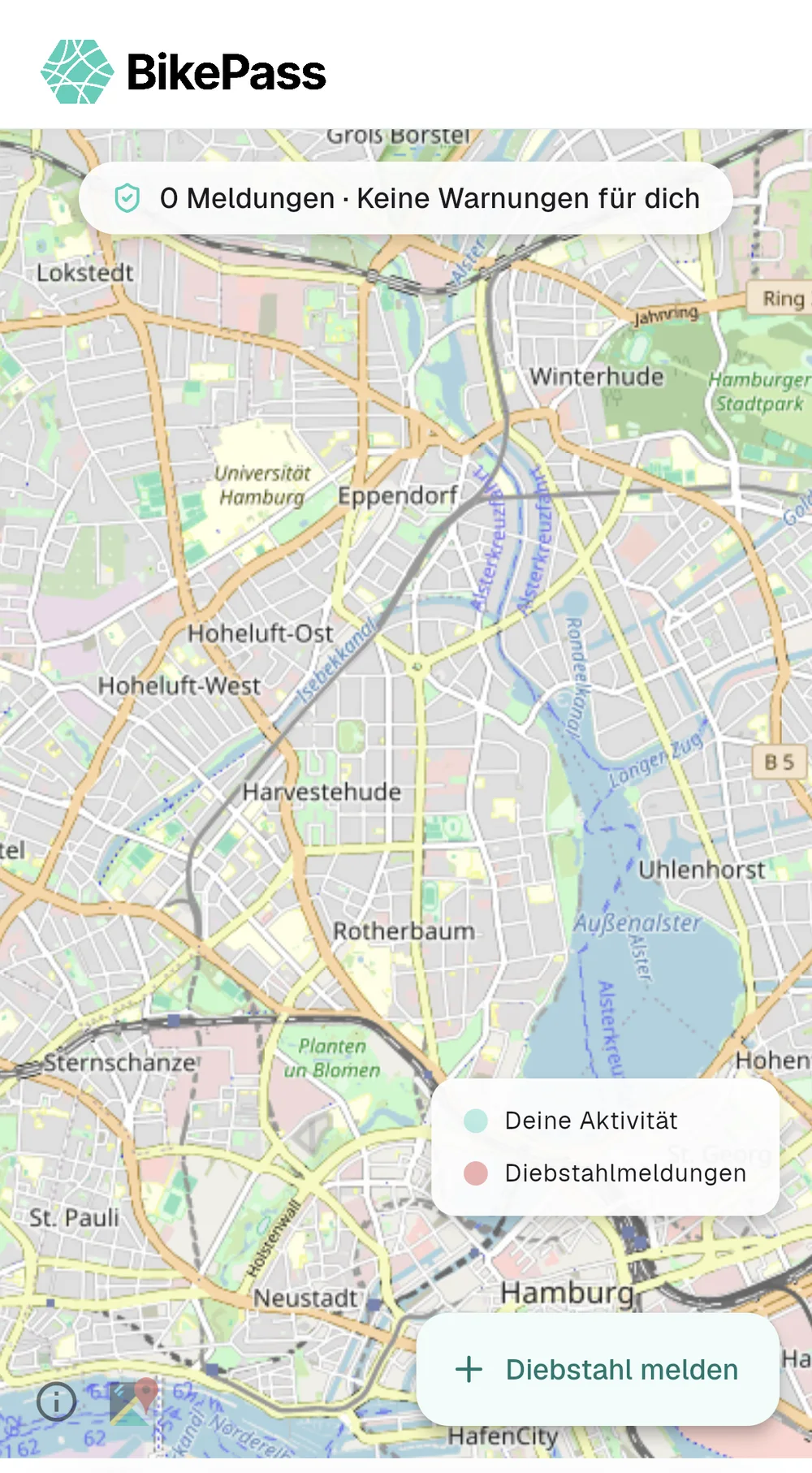
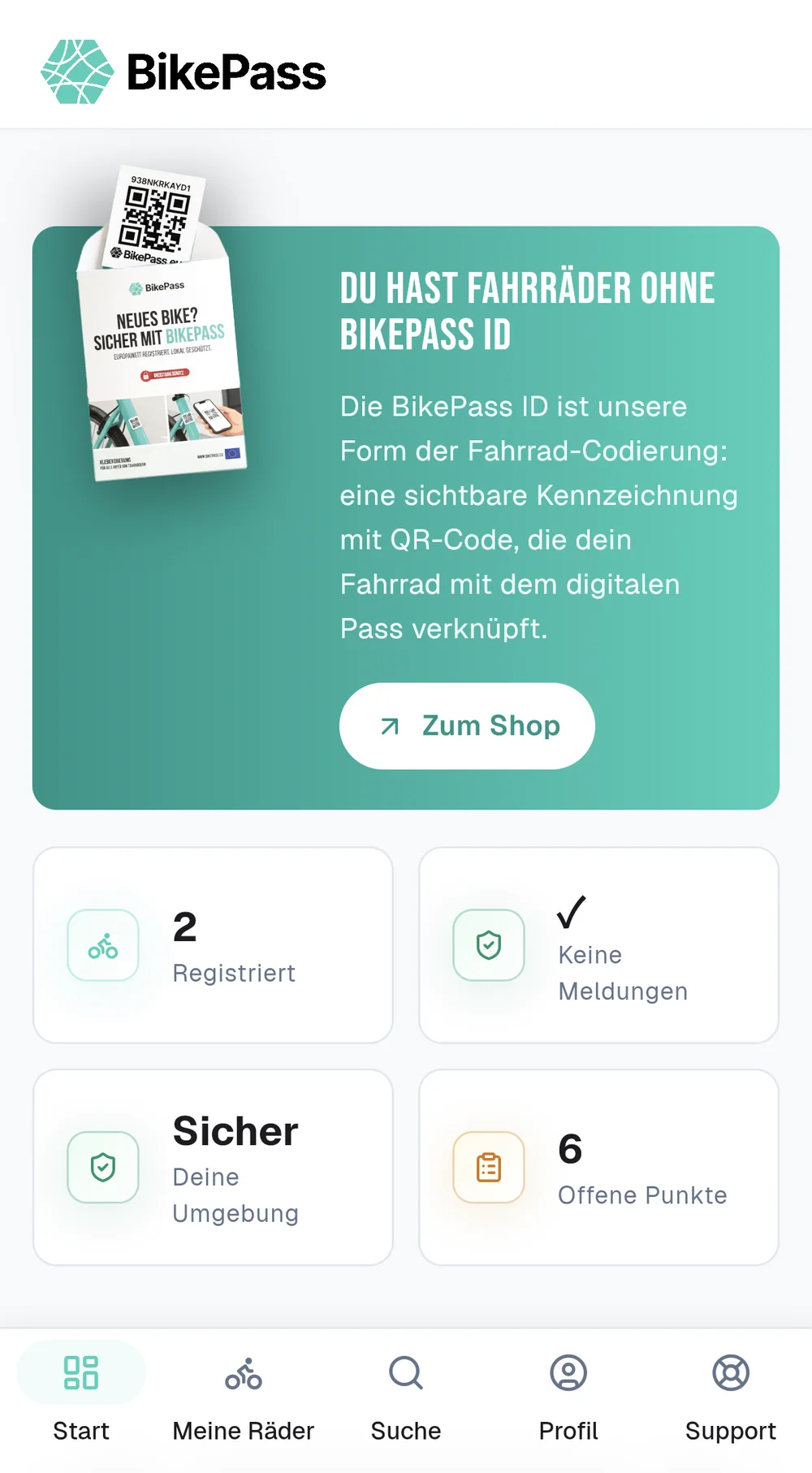
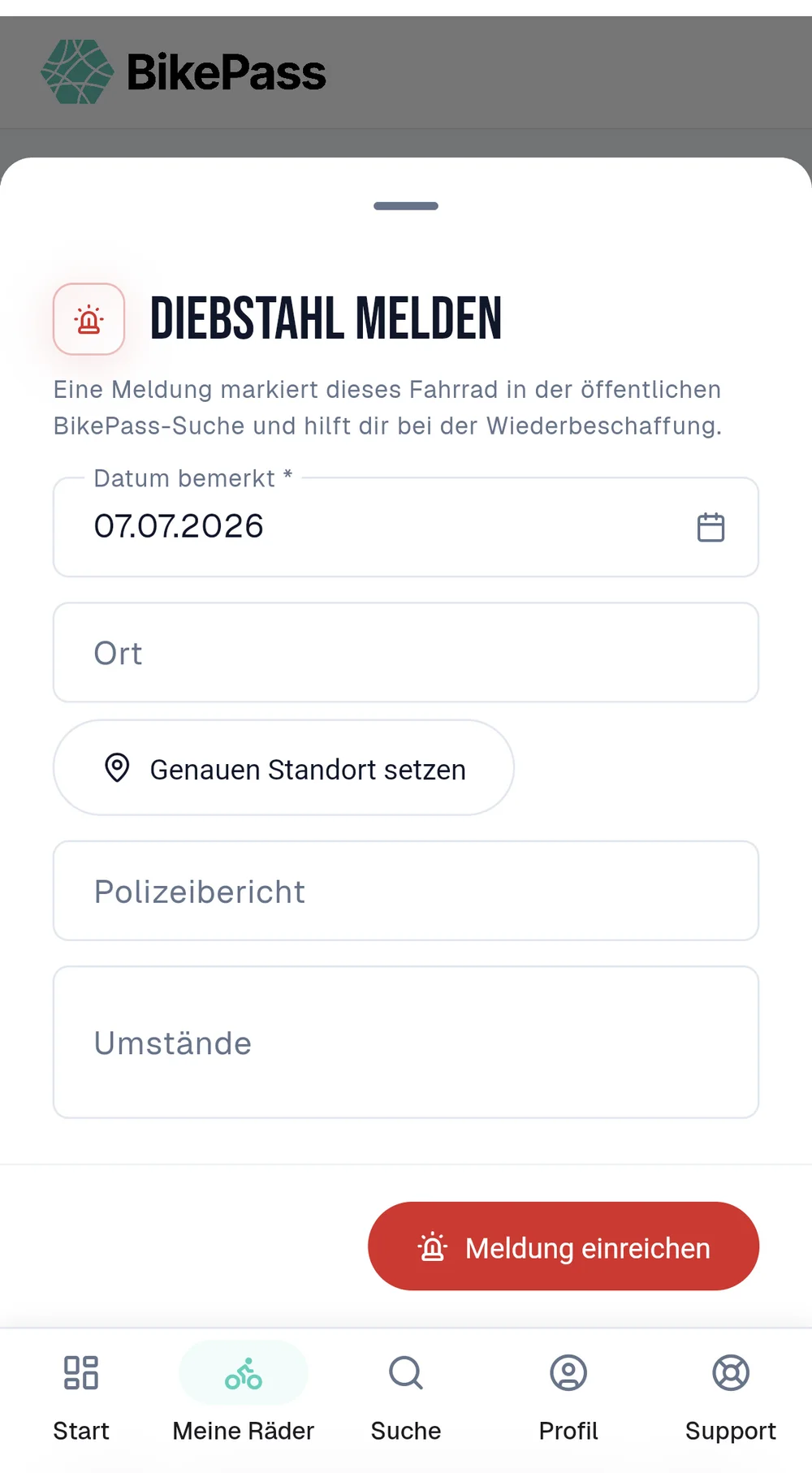
You’ll feel most at ease if you have all these documents organized and ready before a theft occurs. With BikePass, you can store your frame number, photos, and proof of purchase for free as digital proof of ownership—in under three minutes, for as many bikes as you want. In the event of a theft, you can share the documents directly with the police and your insurance company instead of having to gather them first. If the theft has already occurred, simply report it in the web app: The ID will be visible to authorities, and honest finders can contact you anonymously.
Your Insurance Checklist
- Has your home insurance policy been reviewed for the bicycle clause?
- Was the compensation limit calculated in euros and compared to the vehicle's value?
- Has the nighttime clause been reviewed (10 p.m.–6 a.m.)?
- If you have a high-end bike: Have you considered getting special bicycle insurance?
- Do you have your frame number, proof of purchase, and photos on hand (preferably saved digitally)?
We write about bicycle theft, anti-theft coding, and digital theft protection—in a practical way, without scaremongering, and with concrete steps you can take.
View all guides →