In short
You can report a bicycle theft online through your state’s online police station or in person at the police station. Providing the frame number and proof of purchase will significantly speed up the reporting process. Without a police report, no insurance company will cover the damage.
About 214,000 bicycle thefts were reported to the police in 2025—13% fewer than the previous year; the clearance rate is about 11% (Source: 2025 Police Crime Statistics). Nevertheless, filing a report isn’t just a formality you can skip: without it, nothing will happen—neither with the police nor with your insurance company. Here’s a step-by-step guide on how to file a report correctly—both online and in person.
01Online Police Station or Precinct—Which Is Right for When?
There are two ways to report a bicycle theft, and both lead to the same result: a police report with a case number. Every state has an online police station —you can find it by searching for “Internetwache” plus the name of your state. There, you fill out a form with the details of the incident; it’s usually available around the clock and requires no waiting time.
It’s worth going to the police station if the theft just happened, if you have witnesses or clues about the perpetrator, or if you’re unsure what to include in your report—someone there can help you right away. If the perpetrator is still in sight or you feel threatened, call 911 or go directly to the nearest police station instead of filing an online report. You can find a complete overview of the first steps to take after a theft in our emergency guide “Bicycle Stolen—What to Do?”
In the typical, low-stress scenario—where you don't notice the theft until later and the perpetrator is long gone—reporting it online is the more convenient option: no waiting in line, no opening hours, and you can take your time gathering the details before you enter them.
02You'll need this information
To ensure your report isn't a waste of time, you'll need a few pieces of information—ideally gathered before the theft occurred:
- Frame number. Without it, the police can’t uniquely identify your bike in the search system—it’s the most important piece of information of all. Our guide “Find & Check Your Frame Number” shows you where to find it.
- Proof of purchase or invoice. Serves as proof of value and ownership—important for both the police and insurance companies.
- Photos of the bike. Ideally, they should show recognizable details such as the paint job, accessories, or decals.
- The time and place of the incident, as precisely as you can specify them—even a time frame (“between 9 a.m. and 5 p.m.”) is perfectly sufficient.
- Description of the lock and whether it was forced open, cut through, or completely removed.
- Any information from witnesses— even a vague clue such as “A neighbor probably saw something”—will help the police with their investigation.
The more complete this information is, the fewer follow-up questions you'll get later on—and the greater the chance that your bike can be returned to you if it turns up again.
Tip: Have your frame number, proof of purchase, and photos ready before you post the ad—if you have them saved digitally, you can find them in seconds instead of rummaging through boxes and old emails.
03Here's how the online ad works
The online reporting process is similar in most federal states, even though the forms and terminology vary in detail:
- Search for an "Internetwache. " Enter "Internetwache" along with your state in a search engine—each state operates its own.
- Select "File a Report. " Most websites will direct you to a form for "theft" or, more specifically, "bicycle theft."
- Enter the details: personal information, time of the incident, location of the incident, frame number, purchase receipt details, and a brief description of what happened.
- Submit the form and keep the confirmation. You'll receive a confirmation of receipt; the case number is often sent later by mail or email—make a note of where you can find it.
Depending on the state, you may still need to go to the police station in person to sign the final report—this will be specified directly in the online form. It’s best to plan for this right away, rather than be caught off guard later.
If you're missing a piece of information—such as the frame number—while filling out the form, you can usually still submit it. Just fill it out as completely as possible and add the missing information later, as soon as you find it. Also, save the confirmation email or the PDF of the report in case you find the case number in it.
04What the ad offers
The report is more than just a formality—it has three specific effects:
- Insurance companies will only settle a claim if a police report has been filed. Whether it’s home contents or bicycle insurance, as a general rule, no policy will pay out without a police report and a case number. Our guide, “Home Contents Insurance for Bicycle Theft, ” explains exactly what your home contents insurance requires.
- Your bike will be added to the stolen bike database. It will be registered using its frame number—if it turns up during a check or when it’s resold, it can be identified. To learn how you can actively search for your bike yourself, see “Find a Stolen Bike.”
- Legally speaking, it’s the sequence of events that matters. If a lock was broken or cut, this is generally considered a particularly serious case of theft (Section 243 of the German Criminal Code (StGB))—but that doesn’t change the fact that you must file the police report yourself in any case.
05What Happens Next + Common Mistakes
Once you’ve filed a report, the police will take over—usually without you having to follow up yourself. You’ll receive a case number, which you’ll need for your insurance; whether and when the police will update you on the status of the investigation depends on the individual case. If no one contacts you, that doesn’t automatically mean nothing is happening—if in doubt, simply check in with the relevant police station using your case number to find out the status.
In hindsight, these mistakes are the most frustrating:
- Reported too late. The longer you wait, the harder it becomes to accurately reconstruct the time or location of the incident—and some insurers make settlement contingent on a timely report.
- Displayed without a frame number. Without it, your bike will be virtually impossible to find in the tracking system, even if it turns up later.
- Case number not recorded. Without a case number, you can't file a claim with your insurance company and will have to go through the hassle of checking with the police.
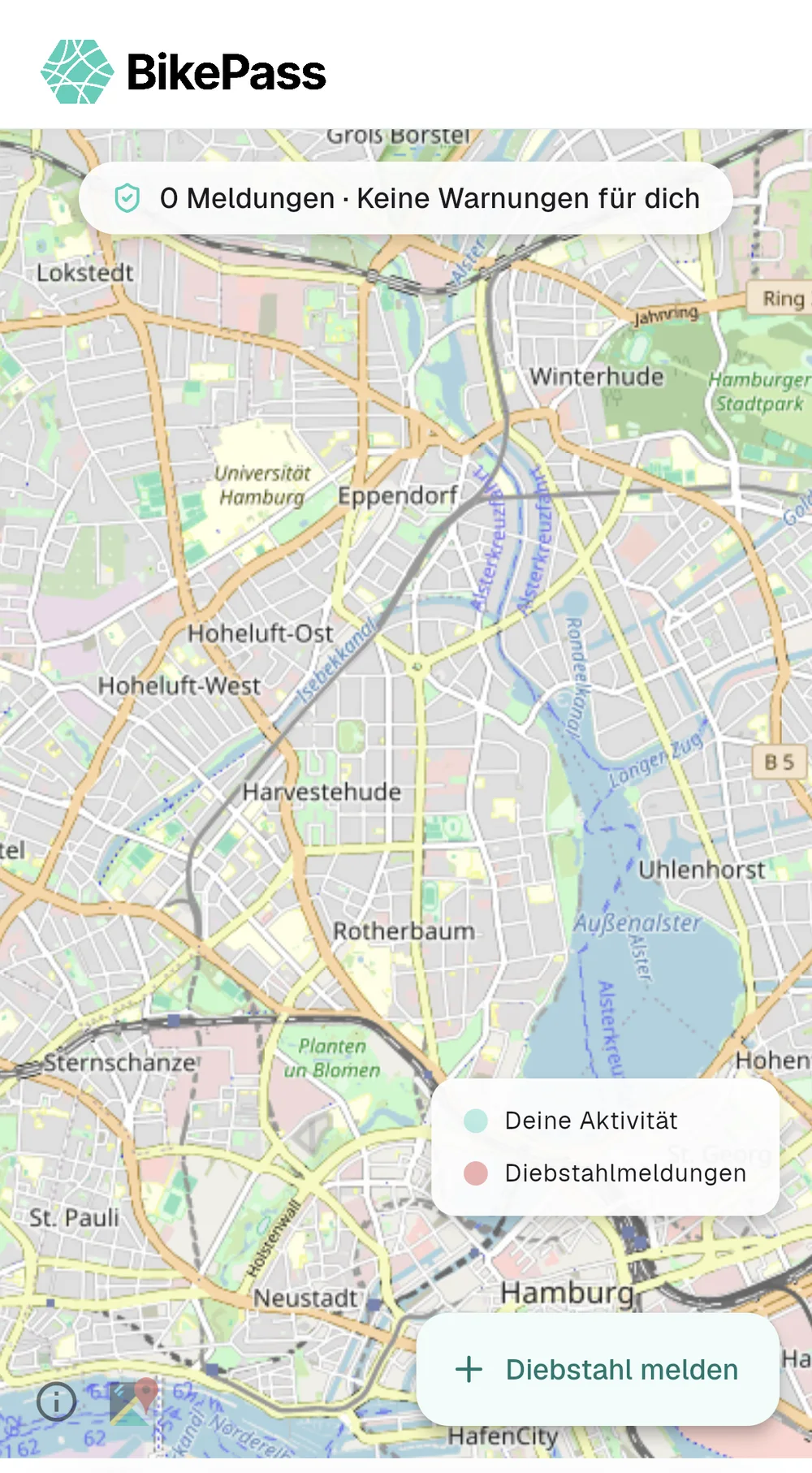
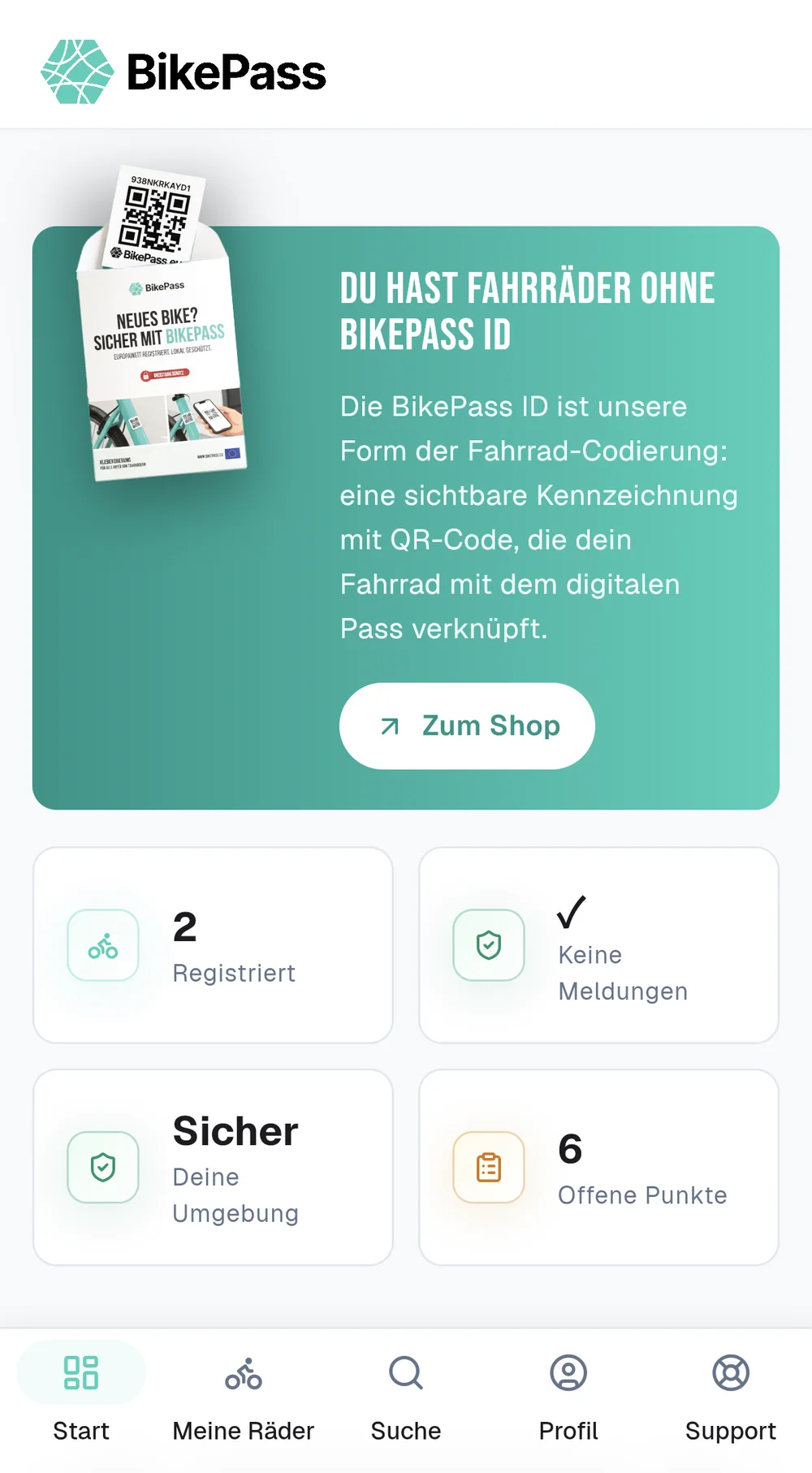
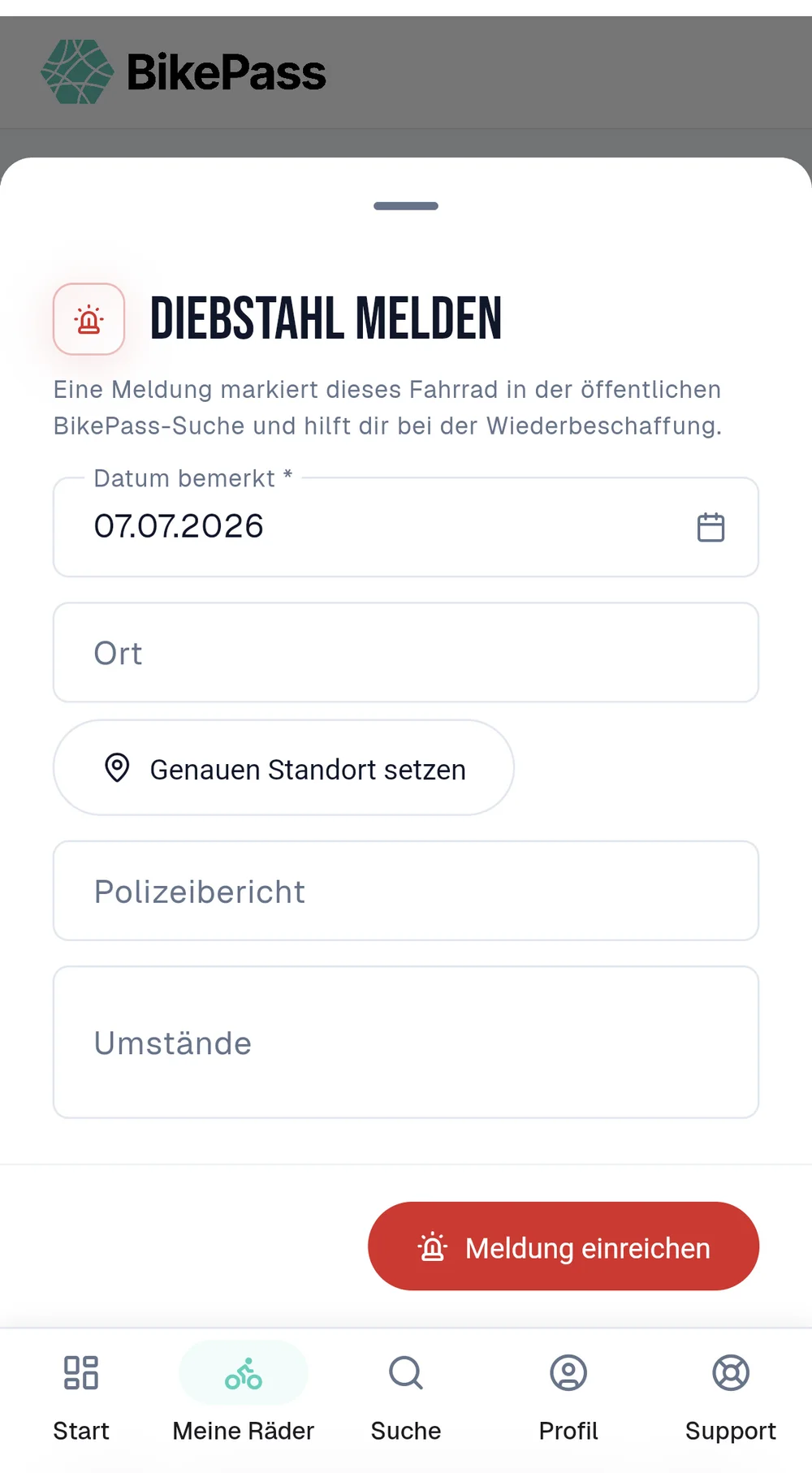
You’ll have the most peace of mind if you have your frame number, proof of purchase, and photos all in one place before a theft occurs. With BikePass, you can store this information for free as digital proof of ownership—and in the event of a theft, you can share it directly with the police and your insurance company instead of having to hunt it down first.
Checklist: Reporting a Bicycle Theft
- Have you gathered the frame number, proof of purchase, and photos?
- Have you narrowed down the time and location of the crime as precisely as possible?
- Did you search for your state's online police station or visit a police precinct?
- Has the form been completely filled out and submitted or returned?
- Have you written down the case number and set it aside for the insurance company?
We write about bicycle theft, anti-theft coding, and digital theft protection—in a practical way, without scaremongering, and with concrete steps you can take.
View all guides →