In short
The cost of bicycle insurance depends primarily on the value of the bike, the scope of coverage, the deductible, and where you live—general figures can be misleading. Compare specific quotes for your bike instead of relying on an average figure.
“How much does bicycle insurance cost per month?” is one of the most frequently searched questions on this topic—and the honest answer is: It depends. Unlike liability insurance, which has fixed rate tiers, the premium for bicycle insurance is determined by several factors at once, which each provider weights differently. If you understand these factors, you can realistically evaluate quotes—instead of relying on a figure that doesn’t apply to your own bike anyway.
Cost Factors
In practice, five factors determine how much a seller charges for your bike:
- Value of the bike. The premium calculation is almost always based on the replacement value of your bike—an 800-euro everyday bike is calculated differently than a high-end e-bike. The higher the insured value, the higher the premium is usually.
- Scope of Coverage. A policy that covers only theft is usually less expensive than a comprehensive policy that also covers, for example, accidental damage, vandalism, or operator error. What “comprehensive” actually means varies greatly among providers—it’s always worth taking a look at the terms and conditions.
- Deductible. If you agree to forgo a portion of the reimbursement in the event of a claim, your current premium will typically decrease. The extent of the reduction depends on the rate plan and can usually be compared directly in the quote.
- Place of residence. In cities with above-average rates of bicycle theft, some providers charge higher rates than in rural areas—the risk associated with the place of residence is factored into the premium.
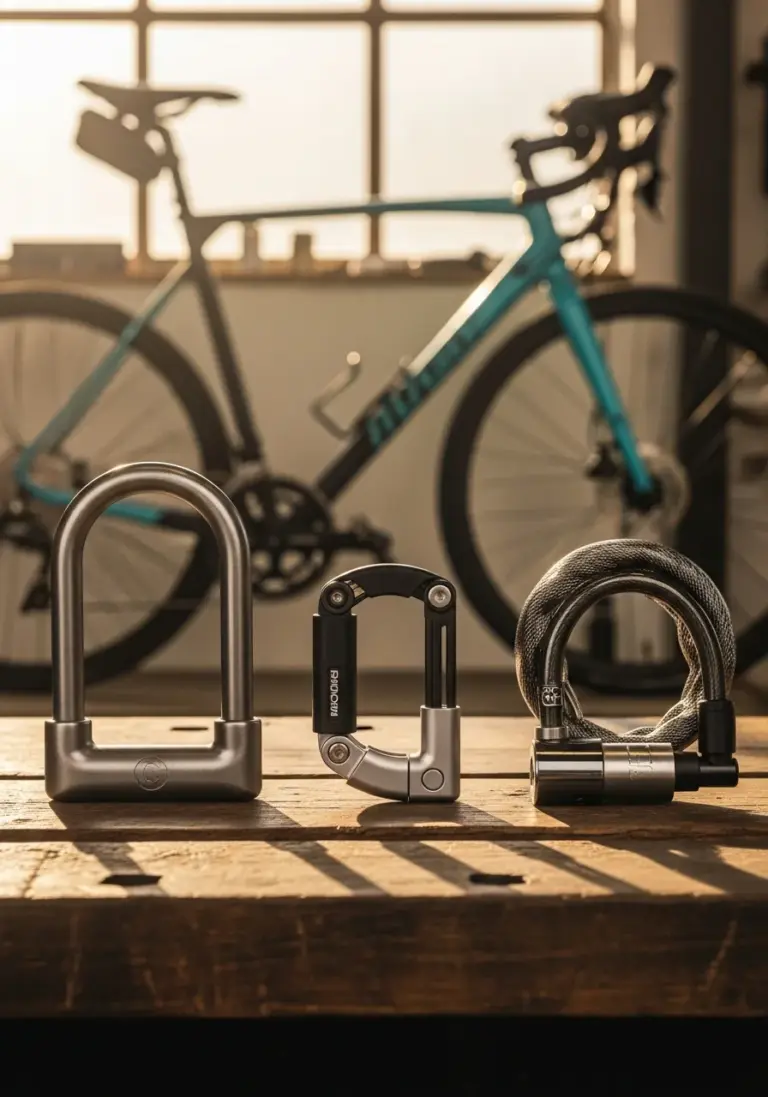
- Parking and lock requirements. Many insurance plans tie full coverage to a minimum lock or a specific lock class. As a general guideline, regardless of the insurer, it’s not a bad rule of thumb to budget about 10% of the bike’s value for a suitable lock.
What Makes for Good Coverage
Not every low-cost policy delivers what it promises when you really need it. Before you focus solely on the premium, it’s worth taking a look at the coverage options:
- Replacement-value coverage. Good insurance plans reimburse the original purchase price of an equivalent bike—not the lower current market value after depreciation. This is the key difference, especially for older bikes.
- Theft of parts. Often, it’s not the entire bike that’s stolen, but rather the wheel, saddle, or battery. Whether theft of parts is covered varies by plan and is specified in the terms and conditions.
- Theft while out and about and at night. Some policies limit coverage outdoors or during certain hours. Check to see if your bike is covered 24/7 and outside your home.
- E-bike battery. The battery is usually the most expensive single component on an e-bike—coverage for it is common, but it depends on the insurance plan and should be checked separately.
A hypothetical calculation example
To ensure that the cost factors aren’t just theoretical, here’s a purely fictional example—entirely made up, not based on actual market rates: Let’s take an e-bike with an assumed new value of 3,000 euros. An equally fictitious annual premium of 3% of the bike’s value would amount to 90 euros per year. Only an actual quote can tell us whether this percentage is realistic—the point here is simply to illustrate the principle behind the calculation.
This example becomes particularly interesting when considered in relation to home contents insurance: If the compensation limit on your home contents policy were, say, 1% of a 50,000-euro insured value, that would amount to a maximum of 500 euros in the event of a claim—significantly less than the replacement value of the e-bike. In this hypothetical scenario, the math clearly illustrates just how large the gap between home contents coverage and the bike’s actual value can be. Apply this principle to your own bike and your own policy—using the actual figures from your contract instead of our example values.
When it becomes worthwhile
There’s no set threshold beyond which bicycle insurance “pays off”—but there is a rule of thumb that usually holds true in practice: If the replacement value of your bike exceeds the coverage limit of your home insurance policy, you’ll have to foot the bill. Our guide to home insurance coverage for bicycle theft explains how to determine this limit and what your home insurance actually covers in the event of bicycle theft.
A look at the reality of claims shows why this investment is worthwhile: In 2025, German insurers paid an average of around 1,270 euros per bicycle for which compensation was paid—a record high (Source: GDV, 2025). So when a bicycle is stolen, the amounts involved are rarely small. Anyone who regularly rides a high-quality bicycle or e-bike should not leave this coverage gap to chance.
Whether a specialized bicycle insurance policy, an expanded household property coverage clause, or no additional policy at all is the right choice ultimately depends on your individual risk. You can find a structured overview of the options in our guide , “Bicycle Stolen—Which Insurance Pays?”
Here's how to upvote the post
Even without cutting back on coverage, it's often possible to lower the premium:
- Choose a higher deductible. If you agree to pay a larger share of the cost in the event of a claim, your monthly premiums will usually be lower. Calculate whether this is worth it for you—or whether a lower deductible is more important in an emergency.
- Provide proof of a certified lock. Some providers offer a higher reimbursement rate for a high-quality, certified lock. To learn how to secure your bike properly, check out our guide “How to Lock Your Bike Properly” and our page on bike theft prevention.
- Registration and coding. A documented frame number and visible coding make it harder for thieves to resell the vehicle—some insurers view this favorably. Regardless, proper documentation is always helpful in the event of a claim, no matter what kind of policy you have.
Tip: Be sure to ask your insurer whether a documented frame number or code affects your premium—not every provider actively advertises this, but some will take it into account if you ask.
Your Cost Checklist
- Is the bike's value estimated realistically (replacement value, not the original purchase price)?
- Coverage Scope Made Clear: Theft Only or Comprehensive Coverage?
- Calculating the Deductible—Is a Higher One Worth It?
- Have you compared the household property coverage limit to the value of the bicycle?
- Are the lock and storage requirements for this rate plan known?
- Are the frame number and supporting documents stored digitally?
We write about bicycle theft, anti-theft coding, and digital theft protection—in a practical way, without scaremongering, and with concrete steps you can take.
View all guides →