In short
GPS trackers determine their position via satellite and report it to an app over the mobile network – what matters is battery life, a good hiding place and the running costs (SIM/subscription). Bluetooth tags such as AirTags, by contrast, only locate via other people's smartphones nearby.
“But I've got a tracker on it” – that sentence only helps if you have understood how the technology behind it works. A GPS tracker is not a magic chip that invisibly pins your bike to a screen; it is a small device with its own battery, its own SIM card and its own limits. If you know that, you buy more deliberately, hide more cleverly and are not disappointed when it counts.
How the tracking works technically
A genuine GPS tracker receives signals from satellites and calculates its position from them – just like a car sat nav or a smartphone. It then sends this position via its own SIM card over the mobile network to a server, which you access in an app. That is exactly why GPS tracking works almost anywhere there is mobile reception, and delivers a relatively accurate location – even when nobody is nearby.
Bluetooth tags such as Apple AirTags or comparable network tags work in a fundamentally different way: they only send a weak Bluetooth signal over a short distance. Only when another person's smartphone with an active tracking network passes nearby does that device anonymously pass on the location. Without other smartphones in the vicinity – in rural areas, for example, or when the bike is hidden away – the tag stays silent. In return, Bluetooth tags need no SIM card of their own and are correspondingly cheaper to run.
For you that means: a GPS tracker delivers more active, more reliable location data, but costs something on an ongoing basis for the SIM connection. A Bluetooth tag is usually cheaper, but depends on the density of other people's smartphones in the area.
Which designs are available
GPS trackers for bikes come in different forms, each designed for a particular hiding place:
- Rear-light trackers: the tracker sits inside a working rear light. That looks inconspicuous, because a rear light on a bike surprises nobody – but at the same time it is the first place experienced thieves look.
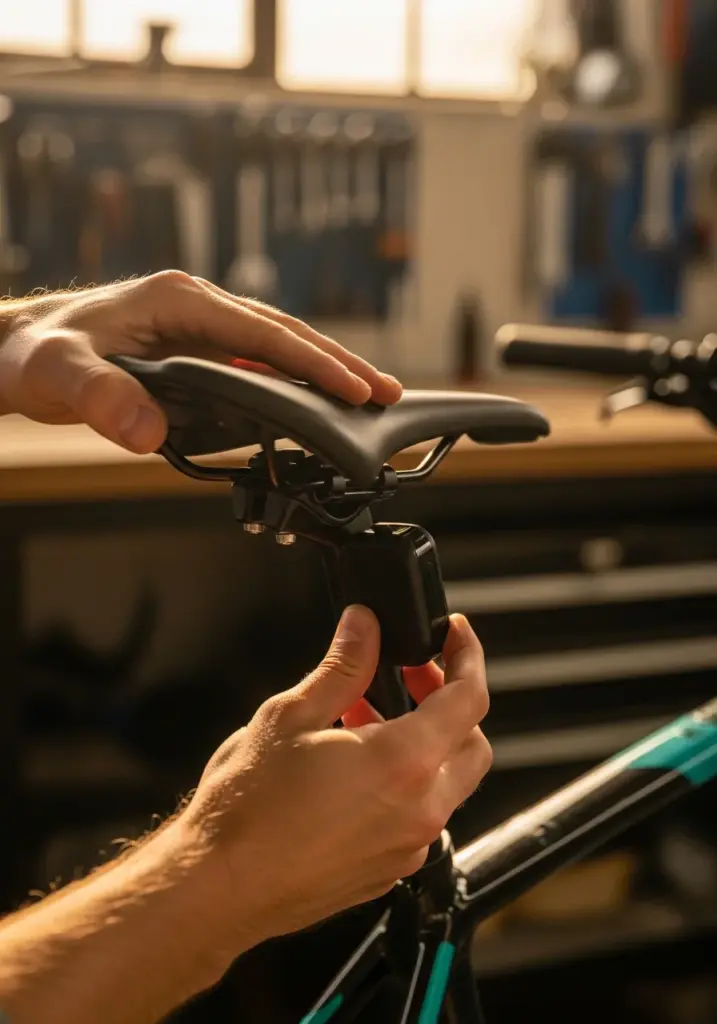
- Frame or head-tube modules: small, usually cylindrical trackers hidden inside the frame – in the seat tube or head tube, for example. Nothing is visible from the outside, but fitting is more involved and sometimes only possible with tools.
- Bottle-cage mounts: a tracker screwed on under the bottle cage like a bracket or adapter piece. Inconspicuous, as long as nobody looks closely, but in principle accessible from the outside.
With e-bikes there is a further option: some drive systems come with their own tracking functions. You can read more about the particulars of e-bikes on our topic page on e-bike theft protection.
What you should look out for
Before you settle on a model, it is worth looking at a few points that really matter day to day:
- Battery life. A tracker is no use if its battery is flat exactly when you need it. How long a device lasts without charging depends heavily on how often it sends its position – sending more frequently uses more battery.
- Subscription or SIM costs. With genuine GPS trackers there is usually an ongoing fee for the SIM connection on top of the purchase price. How high it is and whether it is billed monthly or annually varies by provider – factor these costs in from the start.
- Network coverage. Without mobile reception the tracker cannot transmit its position. In underground car parks, cellars or remote areas the tracking can therefore drop out.
- Theft alarm and motion sensor. Many trackers use a motion sensor to detect when the bike is moved unexpectedly and send you an alert straight away – a clear advantage over pure tracking without an alarm function.
- Water resistance. A bike stands outside in all weathers. Make sure the tracker is designed for permanent outdoor use.
The best hiding places
A tracker helps most when it manages two things at once: sitting inconspicuously and being hard to remove again. Obvious spots such as a screwed-on rear light or a visibly extra box on the frame are exactly the places experienced thieves check first – especially if they know that trackers exist.
Far harder to find and remove are hiding places inside the frame, such as the seat tube under the saddle or the head tube – there you need tools and time even to reach the tracker. Firmly glued or internally bolted solutions are also preferable to a bracket that simply clips on. As a rule: the more steps and tools needed to remove the tracker, the more likely it stays on the bike unnoticed – and the less worthwhile it is for the thief to look for it at all.
Tip: make a note yourself of exactly where the tracker sits and how it is fixed. It sounds trivial, but it helps enormously when you need to find it again months later for a battery change or a check.
When the tracker sounds the alarm
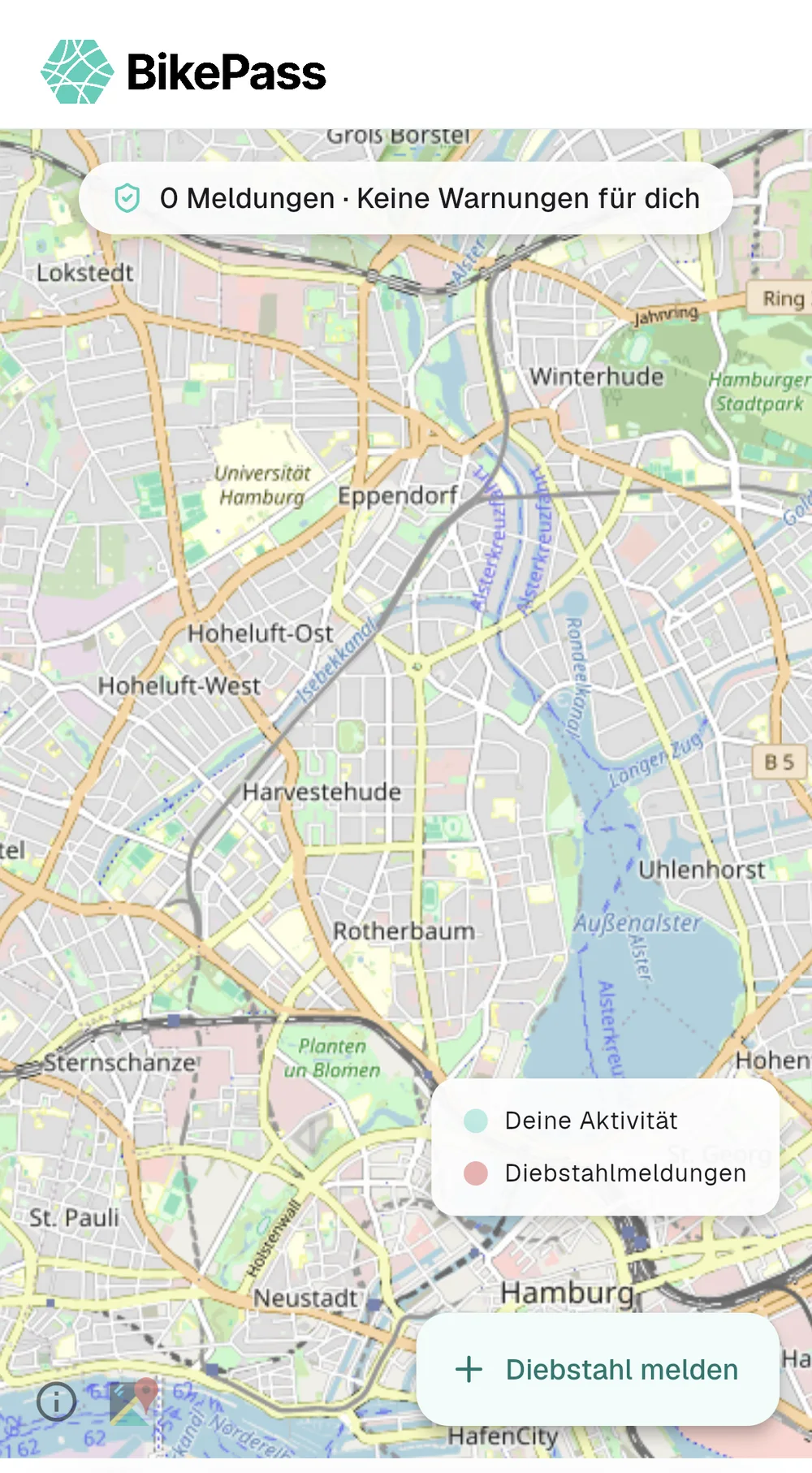
If the app reports unexpected movement or an unfamiliar location, the first step is: stay calm and document the location with a time stamp – ideally as a screenshot straight from the app. You will need these details for the police right away.
Then inform the police and pass on the located position. Never drive there yourself to retrieve your bike on your own initiative – what looks like a simple pick-up can end in a dangerous confrontation, and legally you are quickly on thin ice. You can read how to proceed correctly when you have found a location, and how to get your bike back safely, in our guide “Finding a stolen bike again”.
One more important point: only ever track your own bike. Tracking other people or vehicles without their consent is not permitted.
The limits of a GPS tracker
A GPS tracker is a useful tool, but not all-round protection. An empty battery leaves it silent at the decisive moment, a dead spot interrupts transmission, and professional thieves deliberately look for hidden transmitters on high-value bikes – sometimes with their own receivers. So a tracker is no guarantee that a stolen bike will turn up again.
A GPS tracker therefore replaces neither a good lock nor a proper registration of your bike – it complements both. You will find more on a coherent overall concept of lock, behaviour and technology in our guide to theft prevention for your bike. And if it does happen despite all your care: our article “E-bike stolen – what now?” explains what to do specifically when an e-bike is stolen.
Your tracker checklist
- Difference between GPS tracker and Bluetooth tag understood
- Battery life and transmission interval of the model checked
- Ongoing subscription/SIM costs calculated
- Discreet, hard-to-reach hiding place chosen
- Motion alarm activated in the app
- Lock and registration in use alongside the tracker
We write about bike theft, security marking and digital theft protection – practical, without scaremongering and with real steps you can take.
See all guides →