In short
The most common grounds for refusal are the night-time clause, an unsuitable lock or a bike that was not locked to something fixed, a missing police report, a missing frame number or receipts, exceeded value limits, gross negligence and missed deadlines – all seven can be defused in advance.
The police solve only around 11 % of reported bike thefts (source: German police crime statistics (PKS) 2025) – for most victims, insurance is all that is left in the end. All the more annoying when the insurer then refuses to pay. Yet a refusal rarely hinges on the theft itself, but on details that were settled long before it happened: which clause is in your contract, how the bike was secured, which records you have in your drawer. The reasons repeat themselves almost every time – and with a little preparation, nearly all of them can be avoided.
01The night-time clause kicks in
Many home contents policies – especially older ones – contain a night-time clause: if the bike is stolen outdoors between 22:00 and 06:00, the insurer only pays if the bike was demonstrably in use at that time. If it simply stood at the kerbside overnight, the insurer regularly refuses – regardless of the lock. Especially with thefts that are only noticed in the morning, the exact time becomes a point of dispute after the fact.
How to avoid it: Check your contract for the term “Nachtzeitklausel” (night-time clause). If it applies to you, the bike belongs indoors at night – in your flat, the cellar or the garage. Our guide “Home contents insurance and bike theft” explains the clause and the cap in detail.
02The lock does not meet the policy requirements
Almost every policy requires a separate lock – some also a particular type of lock or a minimum price. If the bike was merely leaning somewhere or “secured” with a weak cable lock, that is a classic ground for refusal. As a rule of thumb, budget around 10 % of the bike’s value for the lock.
How to avoid it: Read the lock clause in your terms and always lock the bike to a fixed object, not just lock it up – in a dispute, that puts you in a much stronger position. If a lock is broken open, that counts as aggravated theft anyway (Section 243 of the German Criminal Code, StGB). Our guide “How to lock your bike properly” shows you how.
03No police report filed
No insurer settles a claim without a police report. That applies even though the clear-up rate is only around 11 % according to the German police crime statistics (PKS) 2025 – the report is mandatory, not the clear-up. Some victims skip it out of resignation and automatically lose their claim.
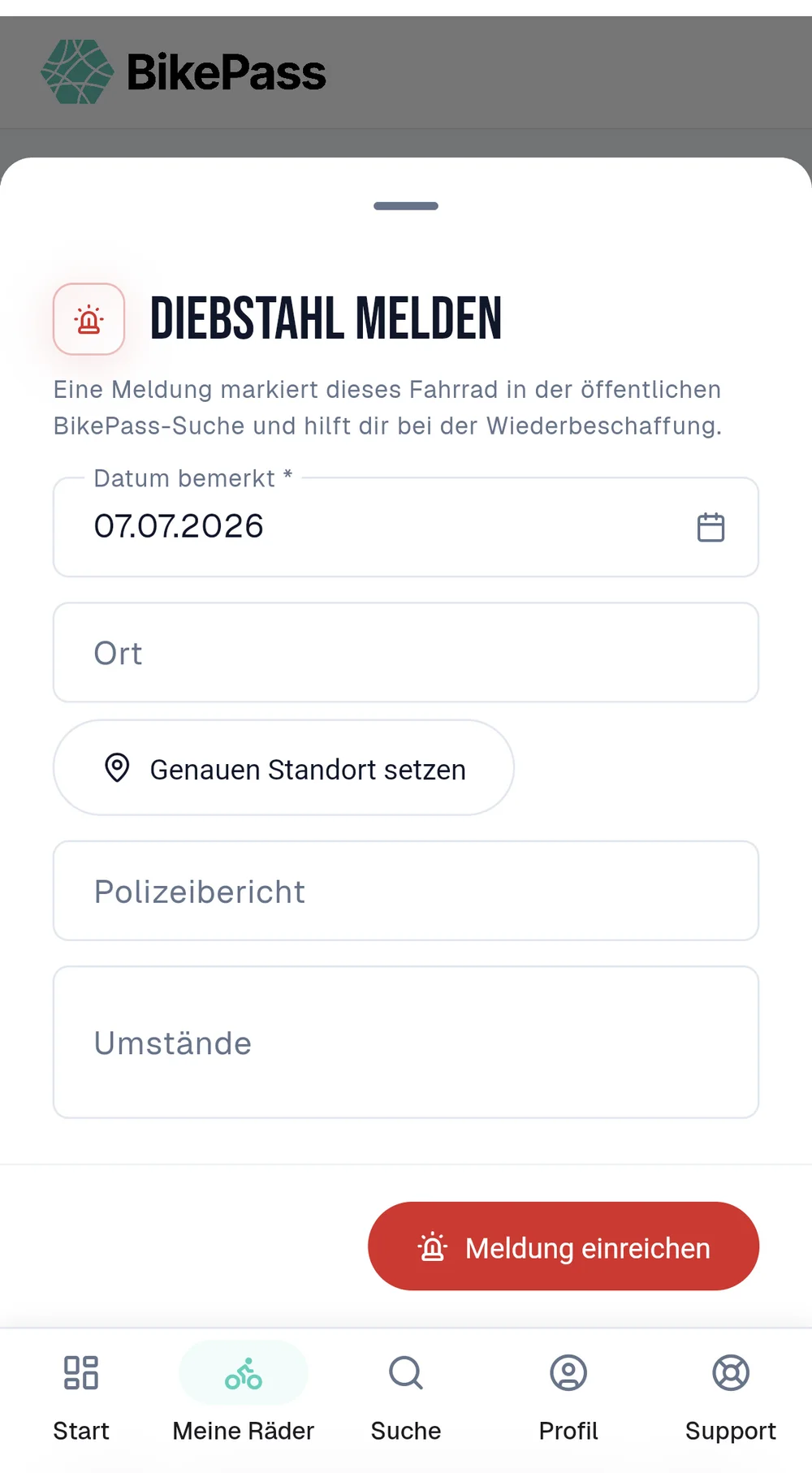
How to avoid it: File the police report immediately, ideally with the frame number, and ask for the case reference number – your insurer will ask for it. Our guide “Reporting a bike theft” shows the process.
04Frame number or purchase receipt missing
Only what you can prove gets settled. Without a frame number, purchase receipt or meaningful photos, the insurer can verify neither your ownership nor the value of the bike – and refuses or reduces the payout. After the theft it is too late for that: the documents were usually with the bike or have long since been mislaid.
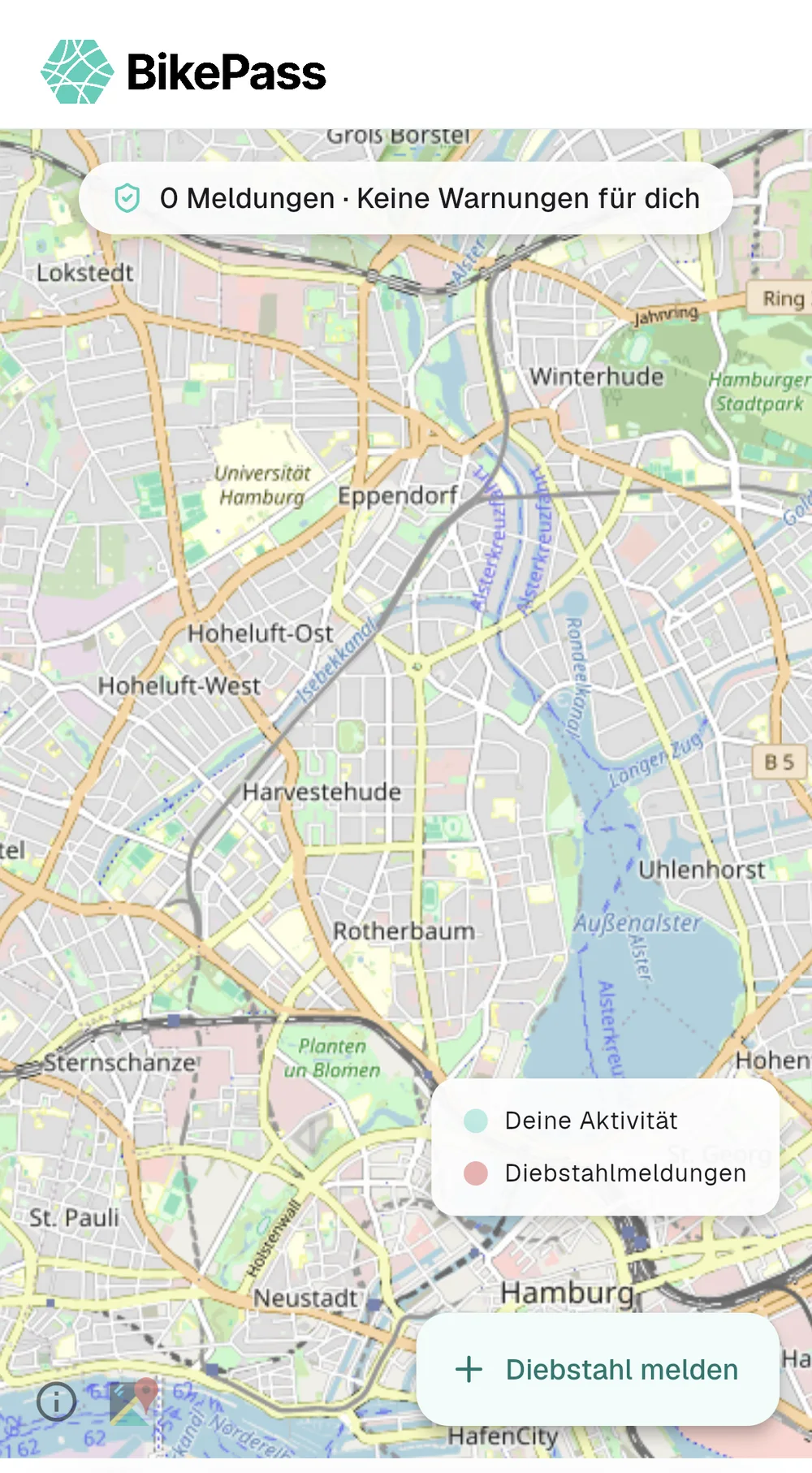
How to avoid it: Secure the frame number, purchase receipt and photos before anything happens. “Find & check your frame number” shows where the number sits. With BikePass you store everything free of charge in one place as digital proof of ownership and share it directly with the police and your insurer if the worst happens.
Tip: Photograph your bike from all sides, including the frame number, as soon as it is new – not only after a theft. That spares you any argument about proof if the worst happens.
05The policy’s value limit is exceeded
The bicycle clause in home contents insurance is almost always capped – 1 to 5 % of the sum insured is common. If the replacement value of your bike is higher, you only get part of it reimbursed in the event of a claim, no matter how cleanly all the other points are met. A calculation example (fictitious): with a sum insured of 50,000 euros and a 2 % limit, a maximum of 1,000 euros is covered – with an e-bike costing 2,500 euros, you are left with the rest.
How to avoid it: Work out your limit in euros and compare it with the replacement value of your bike. If it is not enough, look into increasing the clause or taking out dedicated bicycle insurance – “Bicycle insurance: costs at a glance” gives you an overview of what that costs.
06Accusation of gross negligence
If the bike was left unlocked, the key was still in the e-bike battery, or an obviously inadequate lock was used, the insurer can invoke gross negligence and reduce or refuse the payout entirely. What matters is how carefully you acted compared with an averagely cautious cyclist – and the burden of proof often lies with you.
How to avoid it: Always lock the bike, and lock it to something fixed, even when you are “only popping in” to a shop. Additional measures such as a registered frame number or visible security marking reduce the risk and strengthen your position – more on this on our page about theft prevention for bikes.
07Reporting and notification deadlines missed
Almost all policies require you to report the theft without delay – both to the police and to your insurer. If you report or notify the theft considerably later, you risk the insurer treating the delay as a breach of duty and reducing the payout. That also applies if you were initially unsure whether reporting it was worth it at all.
How to avoid it: Report the theft to the police straight away and inform your insurer at the same time – the exact deadline is in your policy terms, and “without delay” means without culpable hesitation. Do not wait until all your documents are complete.
Your checklist against refusal
- Checked your contract for a night-time clause?
- Does the lock meet the policy requirements and was the bike locked to something fixed?
- Do you have a police report with a case reference number?
- Frame number, purchase receipt and photos to hand (ideally registered digitally)?
- Compared the policy’s value limit with the value of your bike?
- Never left the bike unlocked or with the key still in it?
- Reported the theft to the police and your insurer without delay?
We write about bike theft, security marking and digital theft protection – practical, without scaremongering and with real steps you can take.
See all guides →