
In short
What a bicycle insurance policy costs comes down mainly to the value of your bike, the scope of cover, the excess and where you live. There is no flat figure, but there is a calculation you can do yourself: the cover gap against the premium over the years you plan to keep the bike.
The receipt for the new bike has been sitting on the kitchen table for days, half buried under a pile of post. Next to it, a printed insurance quote with a figure in the bottom right corner. Whether that figure is good or bad cannot be read from the number alone.
“What does bicycle insurance cost?” is one of the most common questions about bikes, and the honest answer is not a number but a calculation. What can be quantified is the scale of the loss: in 2025, German insurers paid out an average of around 1,270 euros per bike compensated, a record figure (source: GDV, the German Insurance Association, 2025). So anyone weighing up premiums is weighing up a sum that is at stake if the worst happens.
First, a definition: a bicycle insurance policy is a standalone property insurance contract that covers your bike against theft, depending on the tariff also includes crash, vandalism or battery damage, and charges an ongoing premium based on the value of the bike. It is not a clause in your home contents policy but a separate contract with its own terms, its own excess and its own term length. The premium is a price tag that a provider sticks on your risk: high bike value, risky parking spot, broad cover, small excess. Each of these levers pushes the tag higher. The policy has one limit before you pay a single premium: it does not prevent theft. It replaces money, not a bike.
What does bicycle insurance really cost?
Bicycle insurance has no list price, only an individually calculated premium built from the same components at every provider and yet different each time. Unlike liability cover with fixed tariff bands, there is no table where you look up your case.
That is not a weakness of the market but the logic of property insurance: the provider estimates how likely it is to pay out for your bike and how much would then be due. Your premium comes out of that estimate.
This is why average figures from comparison portals help little. They average across everyday bikes and e-bikes, across villages and theft hotspots, across tariffs with and without an excess.
What you need are two things: the factors that move the premium, and a calculation that tells you when it pays for itself. The price is a result, not a starting point.
Which factors determine your premium?
In practice, five levers determine what a provider charges for your bike. The table shows which way each pushes the premium and which ones you control yourself. The last column decides whether an offer is negotiable.
| Factor | How it affects the premium | What you can influence | What you cannot |
|---|---|---|---|
| Bike value | The basis of the calculation. The higher the insured replacement value, the higher the premium as a rule. | State the value correctly and with evidence instead of rounding up generously. | The fact that an expensive bike costs more to insure. |
| Scope of cover | Pure theft protection is usually cheaper than all-round cover with crash, vandalism and wear components. | Deselect components you do not need. | What a provider offers as a separately bookable option at all. |
| Excess | If you carry more of a claim yourself, the ongoing premium usually falls. | Choose the amount, usually directly comparable within the quote. | The fact that the excess falls due when it matters, however tight things are. |
| Where you live | In cities with high theft rates, some providers calculate higher than in rural areas. | Little, other than comparing several providers. | Your postcode. |
| Lock and parking requirements | They rarely affect the premium, but they hit the payout hard: break the requirement and you get nothing. | Buy a suitable lock and use it. | Softening the policy terms after the event. |
For locks, the familiar rule of thumb applies regardless of insurer: budget around 10 % of the bike’s value. That is not a premium saving but your ticket to a payout. Our guide “Locking your bike properly” shows how to secure your bike afterwards, and our page on theft prevention for bikes gives an overview of the technology.
How much your location weighs is clear from the regional distribution of thefts in our guide to bike theft statistics for Germany.
What benefits are included in the premium?
A low premium is only a good premium if the policy holds up when it matters. The table lists the components where tariffs differ most clearly, with what they cover and what they leave open. Read it with your own daily routine in mind: parking at the station at night calls for different components than keeping the bike in the cellar.
| Cover component | What it covers | What it does not cover | When it counts |
|---|---|---|---|
| New-for-old settlement | Reimbursement for an equivalent new bike instead of the lower current market value. | Often only within a set period from purchase, after which the market value applies again. | For bikes that already have a few seasons behind them. |
| Theft of parts | Theft of a wheel, saddle, display or battery without the whole bike going missing. | Parts that were not permanently fitted, such as bags or loose accessories. | Whenever the bike is parked outside and has quick-release fittings. |
| Theft away from home and at night | Cover around the clock and away from home, depending on the tariff also abroad. | Tariffs with night-time or location clauses leave a gap here. | For commuters and anyone who does not bring the bike inside every evening. |
| Battery and drive system | The most expensive single part on an e-bike, usually including the charger. | Capacity loss through normal ageing, in other words wear. | For every e-bike and pedelec. |
| Crash and vandalism | Repair costs after an accident or wilful damage. | Material fatigue, breakdowns and anything that looks like neglected maintenance. | For cargo bikes and bikes in daily use. |
The catch: no two providers name the components the same way. What one calls “all-round cover” is “premium” at the next and contains something different. Rely on the terms and conditions, not on the product name.
Our guide has collected exactly where the typical gaps sit and why claims fail, in the cases where the insurer does not pay out after a bike theft.
How do you work out whether the premium is worth it?
Whether bicycle insurance pays off is not decided by the premium alone, but by its relationship to the cover gap: the amount you would have to replace out of your own pocket after a theft, because no existing policy covers it.
Here is what the calculation looks like, as a fictional example and deliberately without figures, because any invented number would confuse more than help:
Step 1: Note down the bike value. Take the replacement value of an equivalent bike today, not the purchase price back then and not what you would still get if you sold it.
Step 2: Deduct existing cover. Check your home contents policy for the compensation limit that applies to bicycles. Everything the bike value exceeds that limit by is your cover gap. Our guide to home contents insurance and bike theft explains how to find the limit.
Step 3: Project the premium. Multiply the annual premium from a real quote by the number of years you realistically expect to ride the bike. That sum falls due whether or not anything happens.
Step 4: Add the excess. In a claim you also pay your own share. It belongs on the same side of the ledger as the premium.
Step 5: Compare. If the projected premium total plus the excess sits clearly below the cover gap, the policy carries its weight. If it is in the same order of magnitude, you are better off saving the money yourself.
The pattern stays the same, whether for an everyday bike or a cargo bike: the bigger the gap between bike value and existing cover, the more likely the premium pays off. Use the figures from your contract and a real quote. That is more honest than any comparison site.
From what bike value is bicycle insurance worth it?
There is no fixed value threshold above which bicycle insurance pays off, but there are typical constellations. The table sorts them by bike type and everyday use, because together those two determine the cover gap. Pay less attention to your own row than to the reasoning beside it.
| Situation | More likely worth it | Why |
|---|---|---|
| Everyday bike, cellar, occasional trips into town | Rarely | The bike value usually sits within the home contents limit, so the premium buys little extra. |
| Commuter bike, parked at the station daily | Often | Long parking times in public space, often overnight too. This is exactly where home contents clauses work worst. |
| E-bike or pedelec | Mostly | The replacement value quickly exceeds the home contents limit, and the battery is a claims hotspot of its own. |
| Cargo bike in family life | Mostly | High value, awkward to secure, hard to replace at short notice. Without the bike, the logistics stop. |
| Sports or road bike, rarely outside in everyday use | It depends | The value argues for it, the short parking time against it. Here the calculation above decides. |
No row lives on price alone. Parking time, parking location and replaceability often weigh more heavily than the receipt.
Our guide „Bike stolen: which insurance pays?" compares the options open to you, from a topped-up home contents clause to a policy of your own.
How do you lower the premium without losing cover?
You can push the premium down mainly through the excess, the way the modules are put together and an honestly stated bike value. All three take effect immediately in the quote, without you cutting back on theft cover.
Raise the excess. The most effective lever, but the one with a price tag when it matters. Work out whether you could actually cover the higher own share at the moment of a claim. If not, the saving is borrowed.
Drop modules. Anyone who never parks their bike abroad and needs no breakdown service still pays for both as long as they sit in the package. Ask for a leaner tariff.
State the bike value correctly. A value set too high costs premium permanently and brings nothing in a claim, because what gets replaced is what the bike was worth. Set it too low and you risk slipping into underinsurance. The purchase receipt is the most reliable source.
Improve your evidence. A documented frame number and visible security marking make resale harder. Some providers view that positively, others do not. It speeds up every claim report.
Tip: Ask your provider directly whether a documented frame number or security marking affects your premium. Not everyone advertises it, and some take it into account on request.
When is bicycle insurance not worth it?
There are cases where the premium is simply burnt money. Four of them come up again and again, and none of them appears on a product page.
When home contents cover already suffices. If the bike value sits clearly below the compensation limit of your home contents policy and you rarely park the bike outside anyway, you are paying twice for the same cover.
When you breach the conditions. A tariff with a lock requirement that you undercut with your old cable lock is worthless in a claim. The premium still ran every month.
When the excess eats up the loss. With an inexpensive bike, the own share can sit so close to the bike value that hardly anything is left. The policy then formally pays, but it does not help.
When the evidence is missing. That is the most uncomfortable truth in the whole calculation: without a purchase receipt and frame number it gets difficult, no matter how good your tariff is. The provider has to know what was stolen and that it belonged to you. If it does not get that, it reduces or refuses payment, and the best premium in the world changes nothing.
What does your proof of ownership have to do with the premium?
Proof of ownership decides whether the premium brings anything back in the end. Without it, a claim report is hard to push through, and unlike the policy it costs you nothing but a quarter of an hour.
Almost always the same documents are needed: frame number, purchase receipt, photos of the bike and the police confirmation of your report. Our guide to the frame number on your bike explains where to find it.
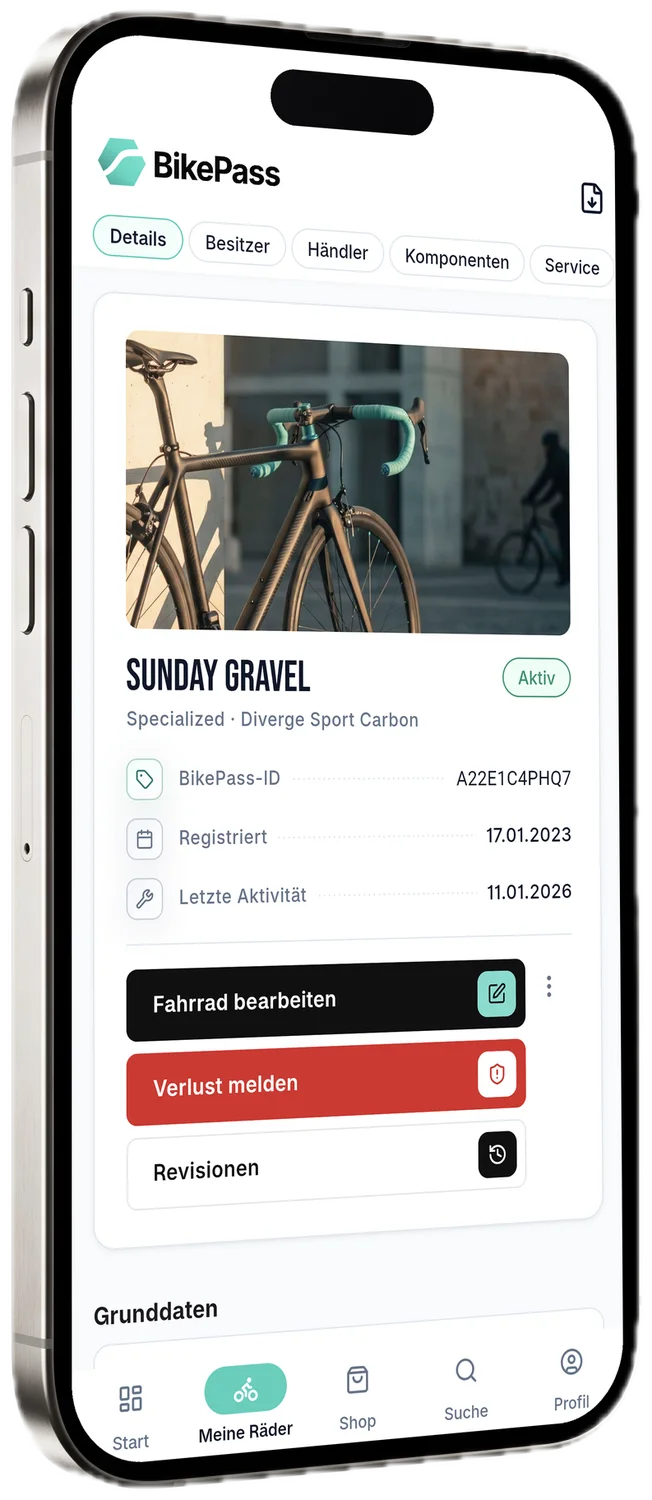
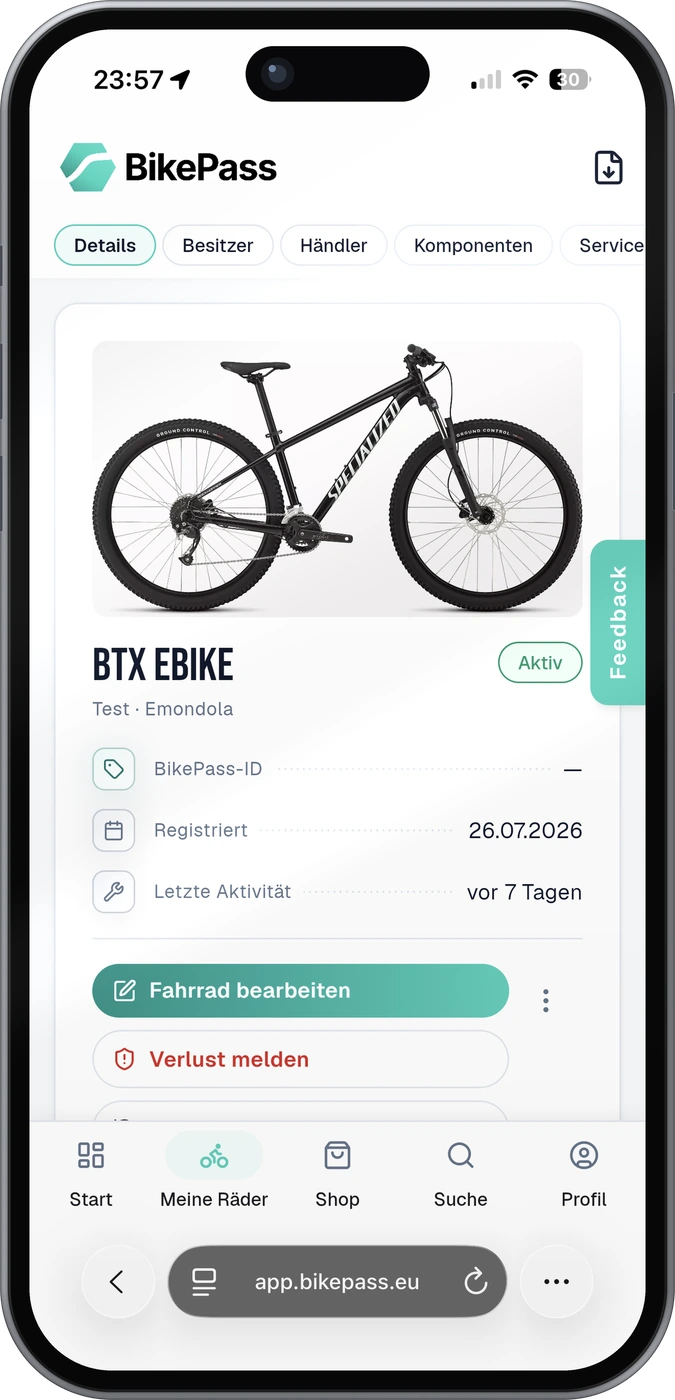
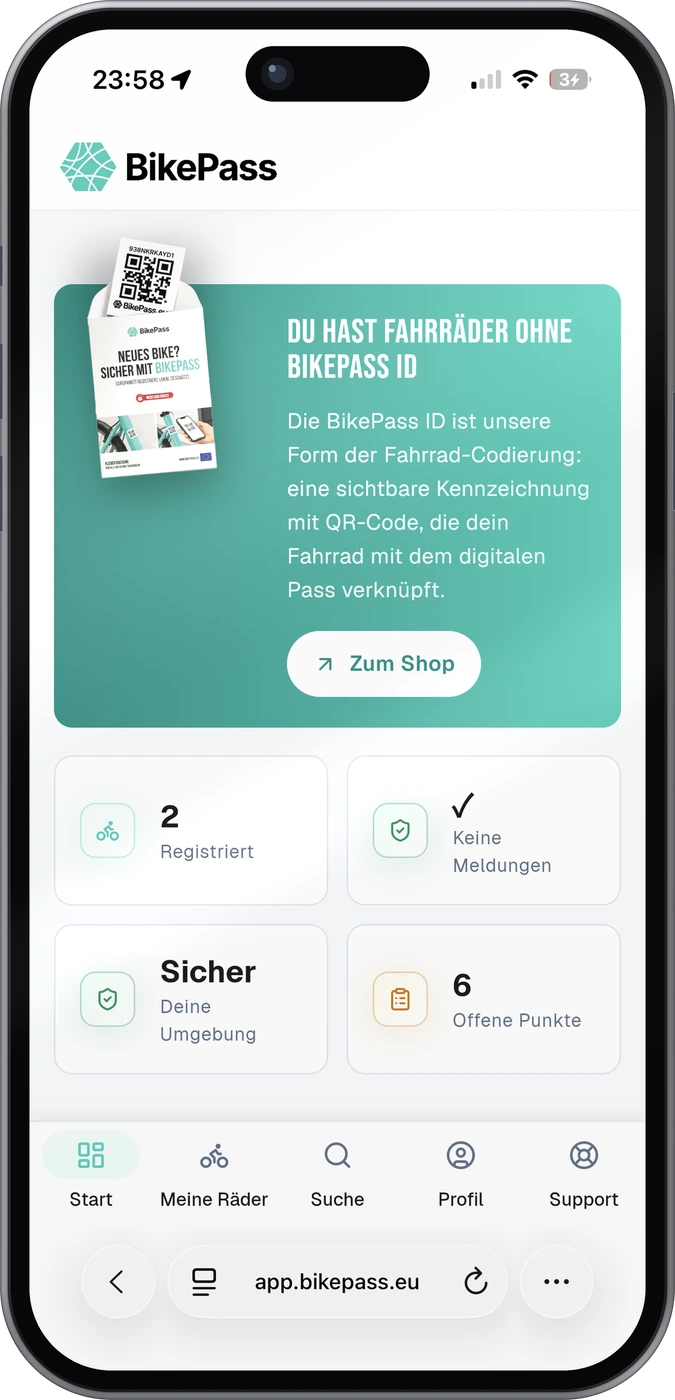
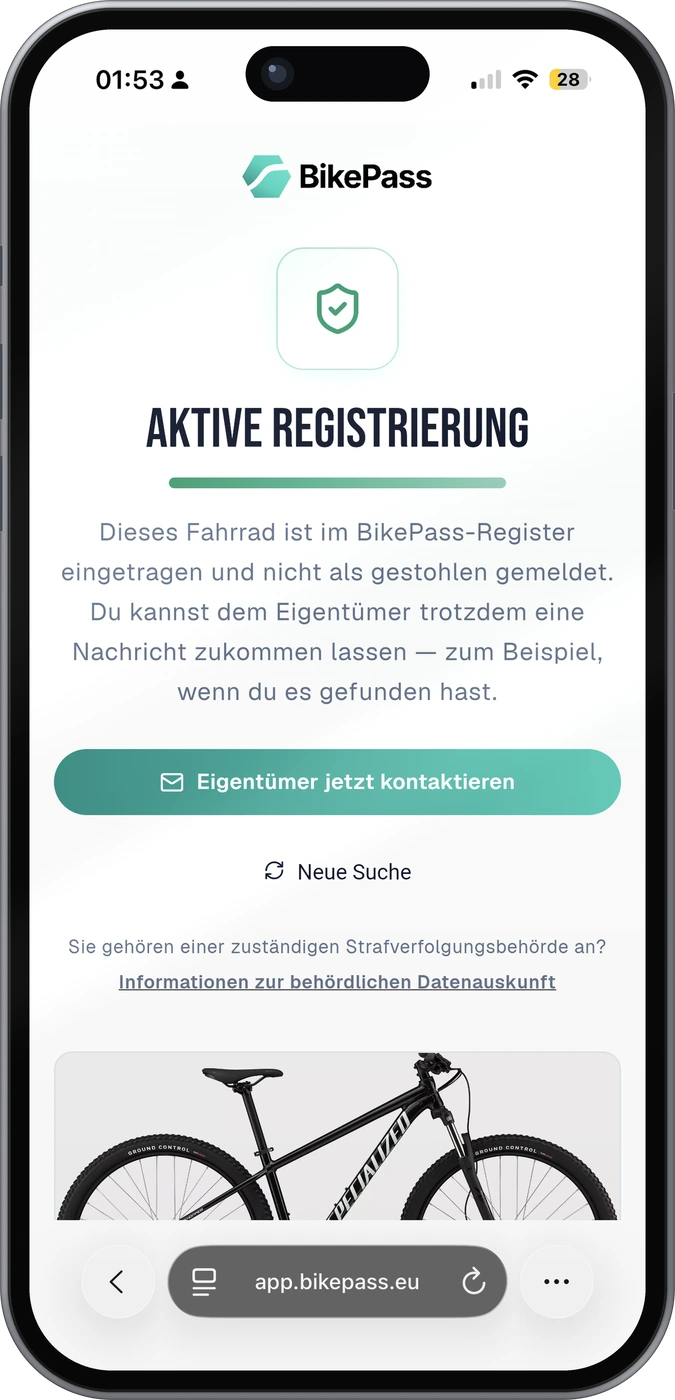
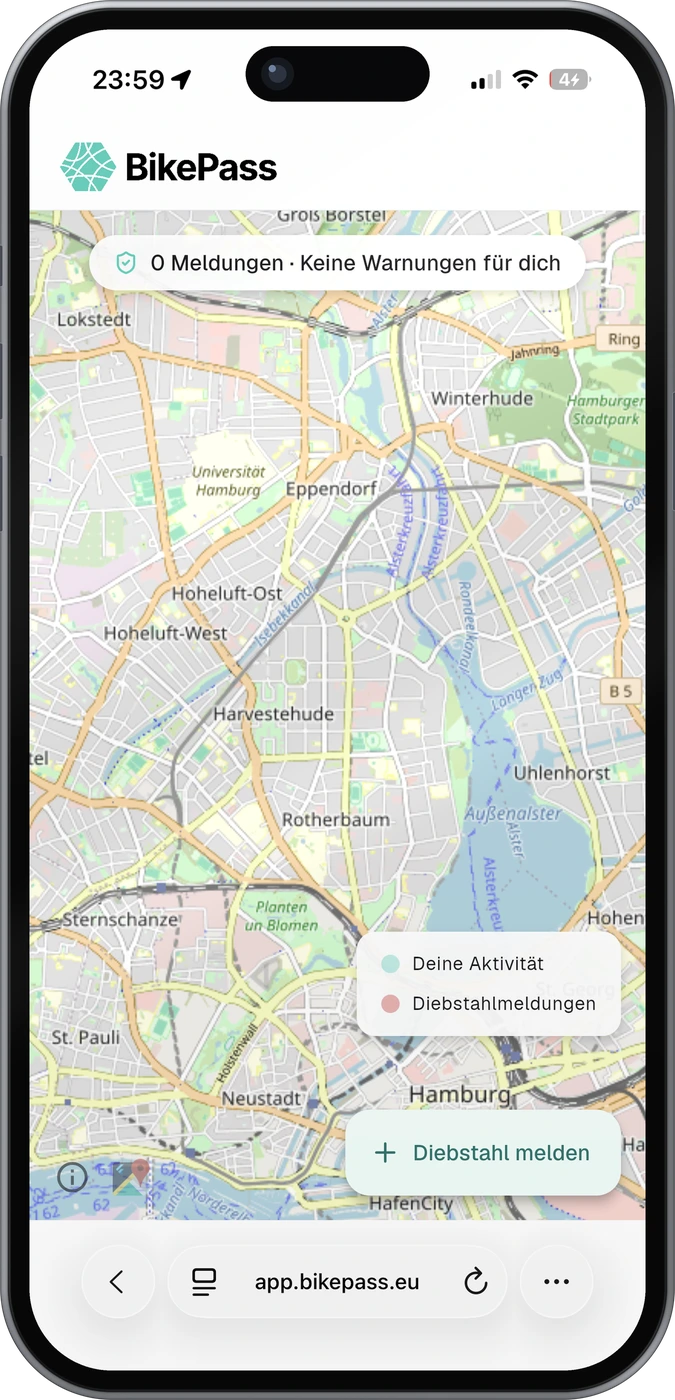
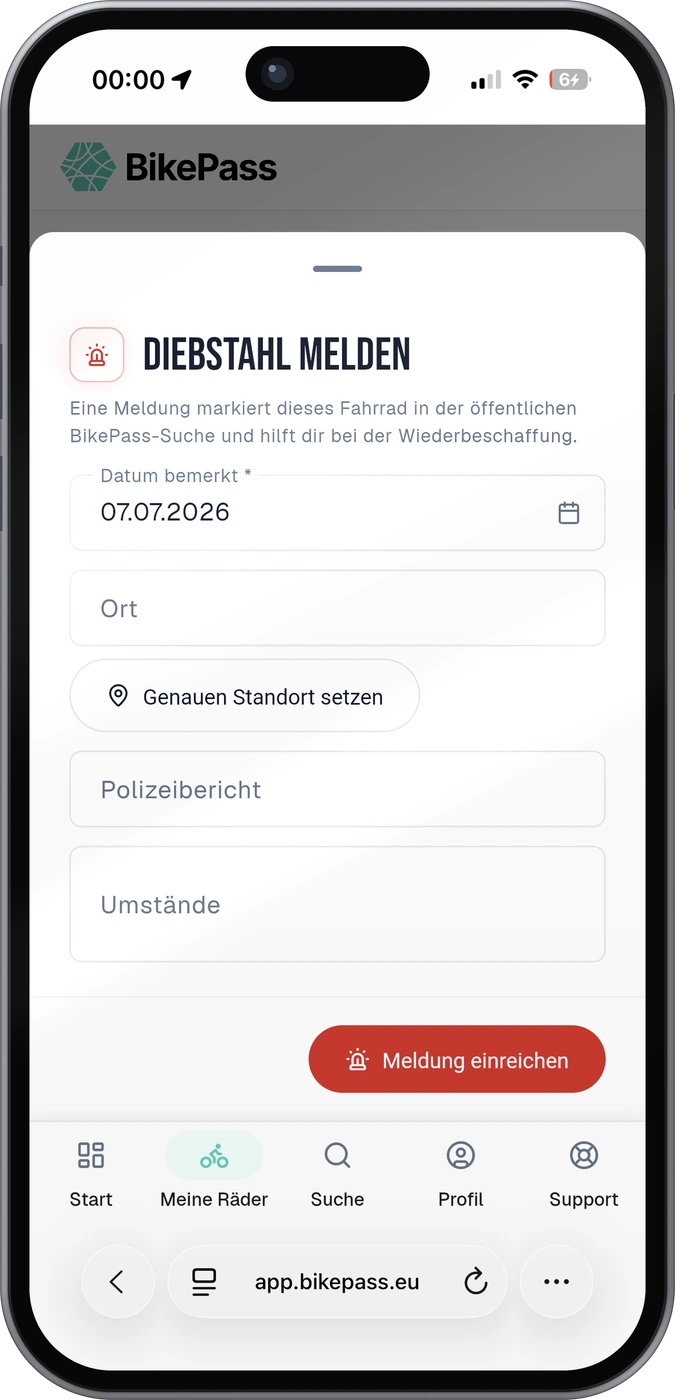
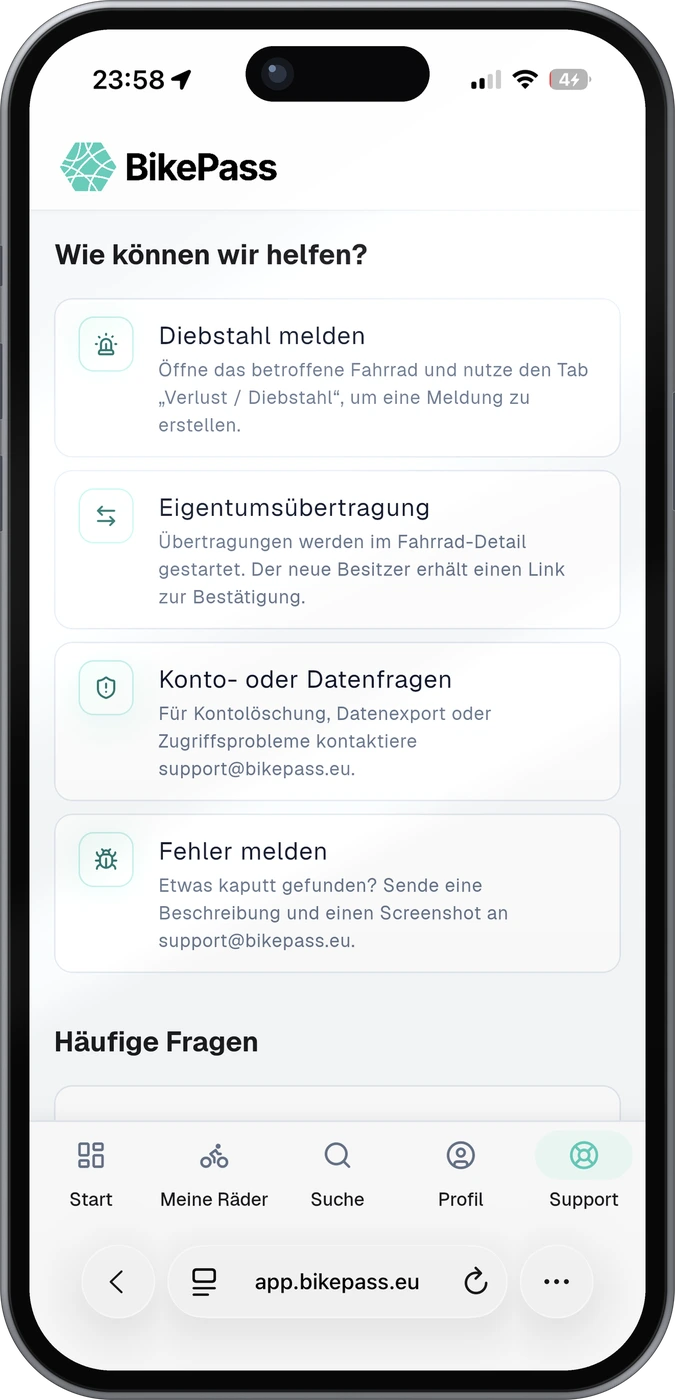
With BikePass you store all of that free of charge in one place: frame number, photos and receipts bundled together, shareable with the police and your insurer, EU-wide and hosted in Europe. Registration takes under three minutes and covers as many bikes as you like. When you sell, you transfer ownership in a few clicks.
If you want, you can add a marking set with a tamper-proof sticker and QR code that you fit at home yourself, with no appointment and no tools. A marked bike is less attractive to handlers of stolen goods.
And the purchase receipt from the start, half buried under the pile of post? That belongs photographed and stored before it disappears into a drawer. Whether the figure on the quote beside it was good or bad, you now know how to work out yourself.
Your cost checklist
- Bike value stated realistically, that is replacement value rather than the purchase price back then?
- Compensation limit of your home contents policy looked up and the cover gap calculated?
- Annual premium multiplied by the planned period of use and compared with the gap?
- Scope of cover clarified: theft only or all-round protection?
- Excess worked through, including for the moment when it falls due?
- Lock and parking conditions of the tariff read, and workable in everyday life?
- Frame number, photos and purchase receipt stored digitally?
We write about bike theft, security marking and digital theft protection – practical, without scaremongering and with real steps you can take.
See all guides