In brief
If your bike is stolen from a locked room, home contents insurance usually covers it automatically. Outdoors it only pays with a bicycle clause, and then normally capped at a share of the sum insured. A locked bike and a police report are conditions almost everywhere.
The bike cellar is open, the space against the wall is empty, and the sentence is already running through your head: “It’s insured, after all.” Then comes the call to the insurer. And with it the question nobody asked before: does your policy actually contain the word “bicycle”?
The figures show how expensive that question can be: in 2025 German insurers compensated around 115,000 stolen insured bikes and paid out roughly EUR 150 million for them, an average of about EUR 1,270 per bike and therefore more than ever before (source: the German Insurance Association (GDV), 2025). Anyone who received no compensation does not appear in these statistics.
So that we mean the same thing: home contents insurance is a property policy that covers your movable belongings in your home, replaces damage caused by burglary, fire, escape of water and storm, and includes your bike for as long as it stands in locked rooms. It is not bicycle insurance but home insurance that takes your bike along as part of the contents. For theft outdoors it needs a separate agreement: the bicycle clause. Without it, cover ends at your front door.
When does home contents insurance pay out for bicycle theft?
Home contents insurance always pays for bicycle theft when the bike was stolen from a locked room: from the flat, the locked cellar, the garage or the locked communal room. In insurance terms this is burglary, and that is part of the basic cover in every policy. You do not need an extra clause for it.
Outdoors it gets difficult. At the station, outside the supermarket, in a courtyard without lockable access: there the insurer speaks of simple theft, and the basic cover does not include it. For that, your policy needs the bicycle clause.
The difference sounds like hair-splitting, but it decides the entire claim. The overview below shows what the basic cover provides for typical places to leave a bike, and where it stops. Check your own case against the row that comes closest to your everyday routine.
| Where the bike stood | What basic contents cover pays | What it does not pay | What you need |
|---|---|---|---|
| Flat, balcony within the flat | Theft following a break-in to the flat. | Nothing, if the door stood open and nobody broke in. | Police report, frame number, purchase receipt |
| Locked cellar or garage | Theft after a door, lock or window was forced. | Theft from an unlocked cellar. | Traces at the access point, police report |
| Communal room in the building | Theft if the room was locked and was broken into. | Theft if the room is openly accessible to everyone. | Evidence that it was locked |
| Street, station, courtyard | Without an add-on: nothing. | All simple theft. | Bicycle clause in the policy |
| Someone else’s cellar, hotel, holiday | Depending on the tariff, as external cover for a limited period. | Permanent storage away from the home. | A look at the policy conditions |
The last column is the real message. Without a clause in your policy, even the best lock will not help you outdoors.
Tip: not sure whether your policy has a bicycle clause? Search the policy conditions for “Fahrrad”, “einfacher Diebstahl” and “Nachtzeitklausel”. If you find nothing, ask your insurer by email and get the answer in writing. A phone call will not help you much when you claim.
What is the bicycle clause and where is the compensation limit?
The bicycle clause is an additional agreement in your contents policy that covers simple bicycle theft away from the home, ties cover to conditions about locking the bike, and caps the payout at a fixed maximum. In many policies it is simply called “Fahrraddiebstahl mitversichert”. Some insurers offer it as a module you tick, others only in certain tariff levels.
The catch nearly always sits in the final clause: the compensation limit. It is usual to cap payouts at a share of the contents sum insured, which the policy states as a percentage or as a fixed maximum amount in euros. If your bike is worth more, the insurer still only pays up to that limit. The rest stays with you.
This is exactly where payouts for high-value bikes and e-bikes fall short. Not over a dispute about what happened, not over the lock. Over a figure that has sat unchanged in the paperwork since the policy was signed, while the bike market has moved on.
So work the limit out in euros once, instead of leaving it as a percentage. Then compare it with the price you would have to pay for an equivalent new bike. If the two do not match, you have two options: have the clause increased, or take out a separate bicycle policy. We have broken down what the latter costs in our guide to the costs of bicycle insurance.
What does the night-time clause mean for your bike?
The night-time clause is a restriction in older contents policies under which a theft between 22:00 and 06:00 is only reimbursed if the bike was in use at the time. In use means: you were out and about and left the bike briefly to buy bread, go to the cinema or work a shift. If it stood at the roadside all night, cover does not apply.
Many newer tariffs have dropped the clause. Do not rely on that.
Whether it applies to you is set out solely in your policy conditions, and old contracts often run on unchanged for decades. If you find the clause there, the practical consequence is simple: the bike goes into the cellar, the garage or the flat at night. Our guide on parking your bike safely shows exactly where the safe places are.
And if the theft does happen at night, note the time window as precisely as you can. In a dispute, the time is your argument.
Is my bike also insured away from home?
Away from home your bike is only insured with a bicycle clause, and even then under conditions that practically all tariffs share. They are not small print to skim past, but the points on which a claims handler bases the settlement.
- Locking is mandatory. The bike must have been secured with a lock of its own. Some policies set requirements for the type of lock or a minimum lock value. Which design suits your bike is explained in our comparison of bike lock types.
- Locking to something beats locking up. Not every contract demands it explicitly. But a bike locked to a fixed object puts you in a far better position in any dispute about gross negligence.
- The police report is a precondition. No insurer pays out without a police reference number. Our emergency guide “Bike stolen, what now?” shows how to file it quickly and completely.
- Deadlines start straight away. Insurers expect notification without delay, often within a few days. The exact deadline is in your policy terms, and it does not wait until you have collected yourself.
That leaves the special case of travel. Many contracts include temporary cover away from home, which protects your contents outside the flat for a limited period, for example on holiday or during a move. It rarely applies to bikes, and where it does, usually only for a limited time. Ask before the trip, not after.
What applies to part theft, batteries and add-on components?
The theft of individual parts is generally not covered by home contents insurance as long as the bike itself stays put. Front wheel removed, saddle gone, display unscrewed: with most contracts, such losses fall outside the bicycle clause, because it insures the theft of the bike, not of its components.
With an e-bike this hits you harder than with an everyday bike. The battery is the part with the highest individual value and at the same time the quickest to remove. Take it with you if you leave the bike for longer.
Then there is the question of value: many standard home contents policies list e-bikes and pedelecs separately or exclude them entirely above a certain motor output. Whether your bike falls under the clause at all is better settled beforehand than at the point of claim. What else works differently with an electric bike is set out on our page about e-bike theft protection.
Home contents or a dedicated bicycle insurance: what suits your bike?
For everyday bikes below the compensation limit, home contents insurance with a clause is usually enough. With expensive bikes and e-bikes it reaches its limits, and that is exactly where a dedicated bicycle policy comes in. The table shows what both routes deliver and where each one stops. Which policy applies in a specific claim is covered in our guide “Bike stolen, which insurance pays?”.
| Criterion | Home contents with bicycle clause | Dedicated bicycle insurance | When this decides it |
|---|---|---|---|
| Sum insured | Capped at a share of the total sum insured. | As a rule up to the replacement value of the bike. | As soon as your bike is above the limit |
| Night-time clause | Present depending on the policy, common in older contracts. | Usually not included. | If the bike stands outside at night |
| Part theft, battery | Mostly not covered. | Often included or available as an add-on. | With e-bikes and expensive accessories |
| Vandalism, crash damage | Not covered. | Available as an add-on depending on the policy. | With daily use in city traffic |
| Premium | Included in the contents premium or a small surcharge. | Separate premium, depending on the bike’s value. | If only one bike in the household counts |
| Suits | Everyday bikes below the compensation limit. | Expensive bikes, e-bikes, cargo bikes, frequent riders. | Rule of thumb: weigh replacement value against the limit |
All figures are typical market patterns, not policy details. What applies to you is set out in your contract alone, and the differences between two providers are bigger than the advertising suggests.
A third route is often overlooked: some insurers raise the bicycle clause for an extra premium, so you do not need a second policy. Ask about that before you start comparing. Topping up is usually the shorter route.
Where does home contents insurance stop helping you?
Home contents insurance replaces money, not your bike. That sounds obvious, but it gets confused constantly in daily life, so here are the uncomfortable points in one go.
It does not bring a bike back. In 2025, around 214,000 bicycle thefts were reported in Germany, and the clear-up rate was about 11 % (source: German police crime statistics, Polizeiliche Kriminalstatistik 2025). Compensation changes none of that. It cushions the loss, nothing more.
It rarely pays the full value. With an older bike, there are worlds between the purchase price, the current value and the compensation limit. What arrives in the end is the smallest of these three amounts.
It also assesses your behaviour. Gross negligence, the classic case of a lock merely clipped on or a key left in the door, leads to a reduction or refusal depending on the contract. We have gathered the other reasons for refusal in our guide: why insurers do not pay after a bicycle theft.
It is no substitute for preparation. Every settlement assumes you can prove ownership. Anyone who starts looking for the frame number, receipts and photos after the theft negotiates from the weakest position there is. Prevention remains the better route, and our overview of theft prevention for your bike shows what that looks like in practice.
What do you really need when you make a claim?
Only what you can prove gets settled. Insurers almost always ask for four pieces of evidence after a bicycle theft, and all four can be prepared in calm minutes rather than hectic ones. The table tells you what each one is good for and when to get it.
| Evidence | What it counts for | What it does not replace | When to secure it |
|---|---|---|---|
| Police report | Proves the offence and the time, supplies the reference number. | It does not prove that the bike is yours. | Immediately after the theft |
| Frame number | Assigns a recovered bike unambiguously to you. | It says nothing about the value. | Today, while things are calm |
| Purchase receipt | Proves value, purchase date and specification. | It does not prove the condition before the theft. | At purchase, saved digitally |
| Photos of the bike | Show condition, add-on parts and distinguishing features. | They do not replace a police report. | In daylight, before it matters |
The frame number is the point where most people get stuck. Our guide “Find and check your frame number” explains where it sits on the frame and how to read it correctly.
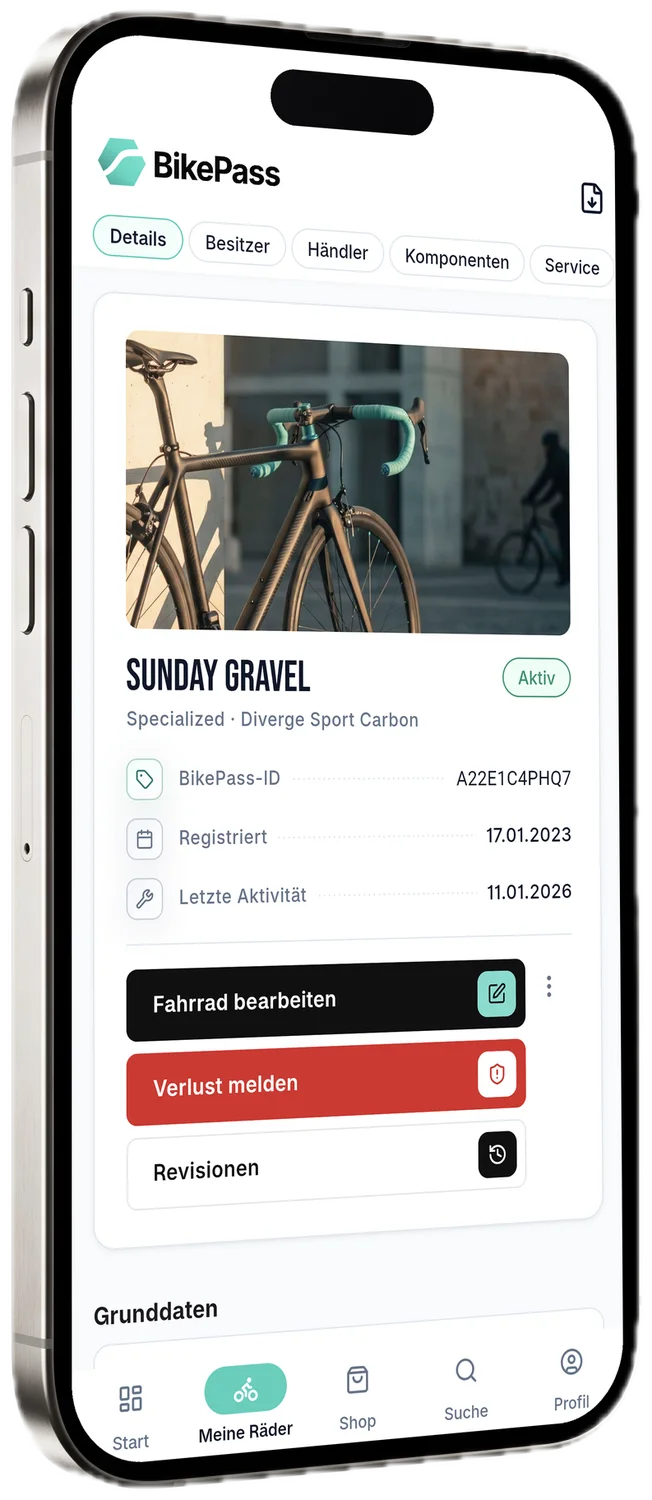
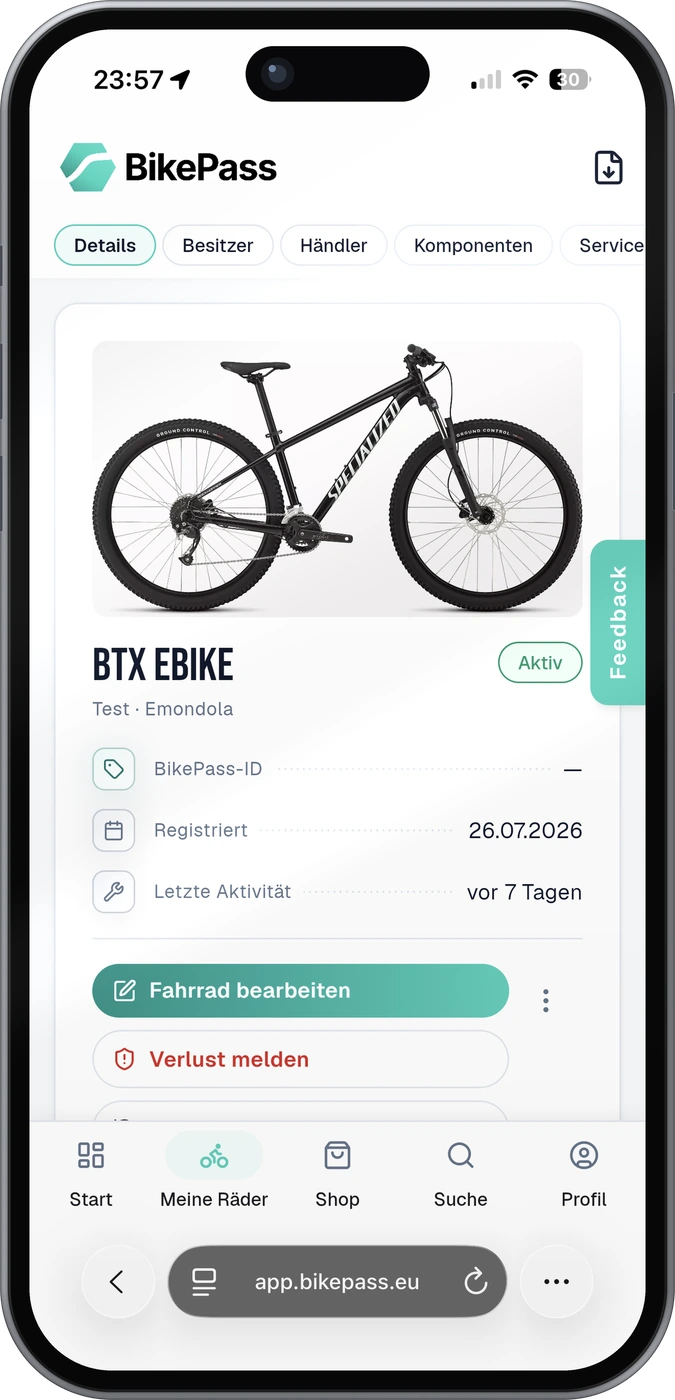
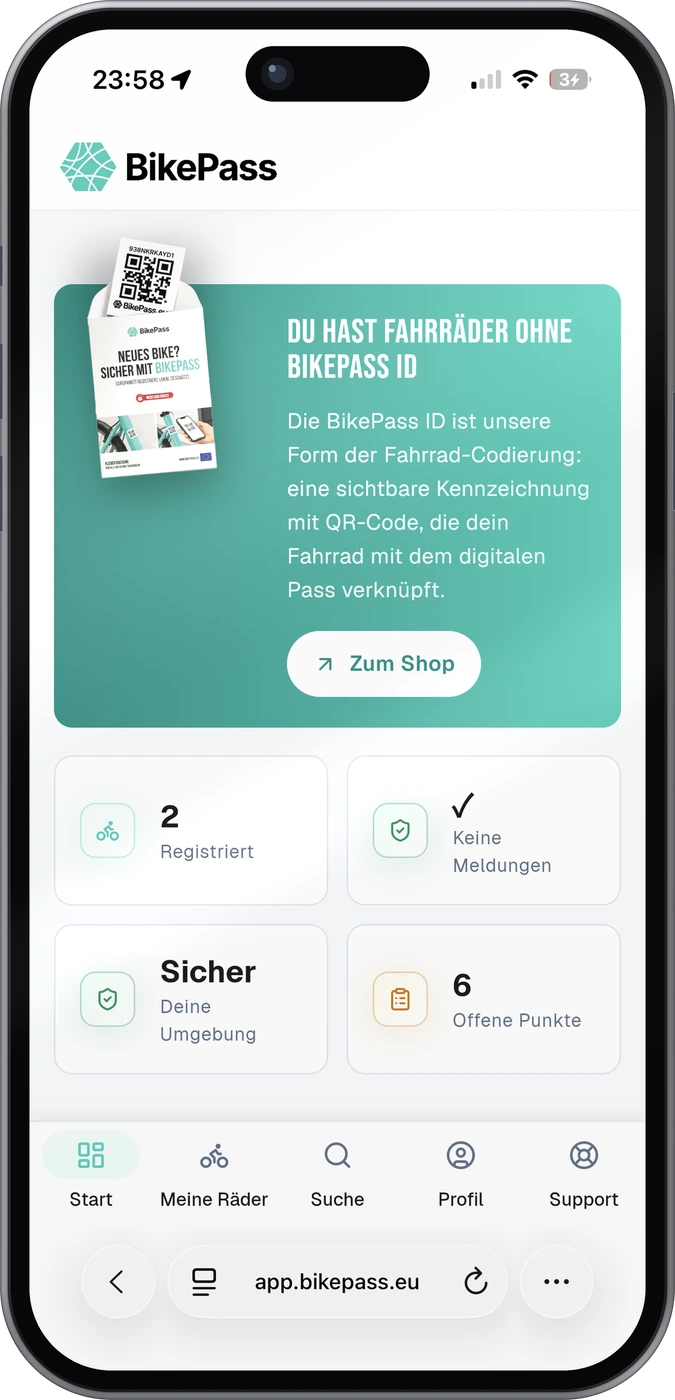
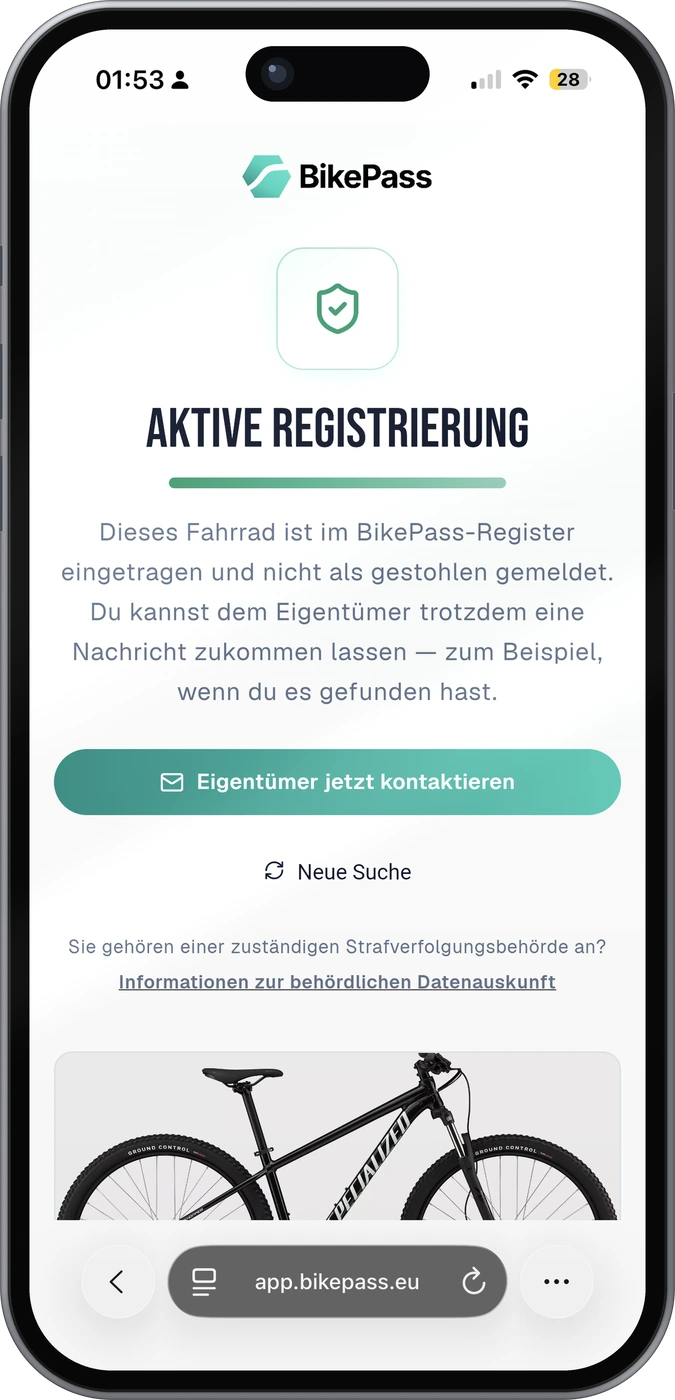
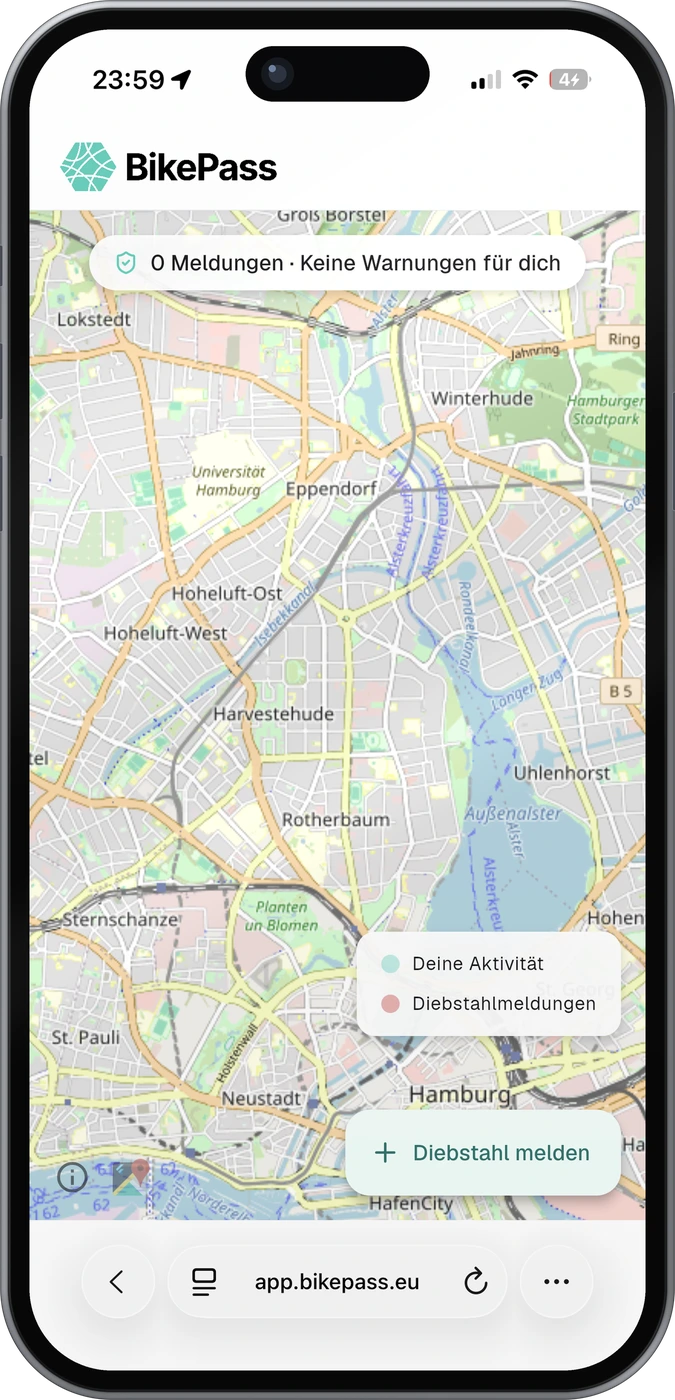
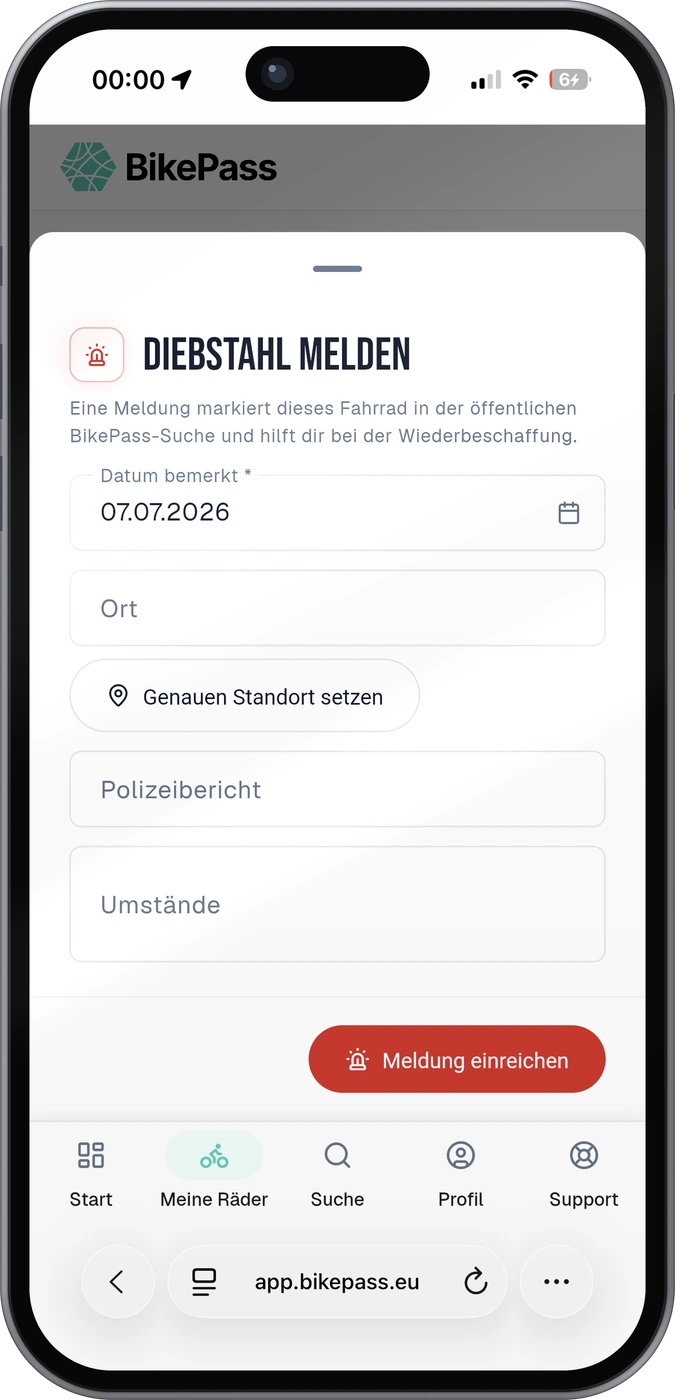
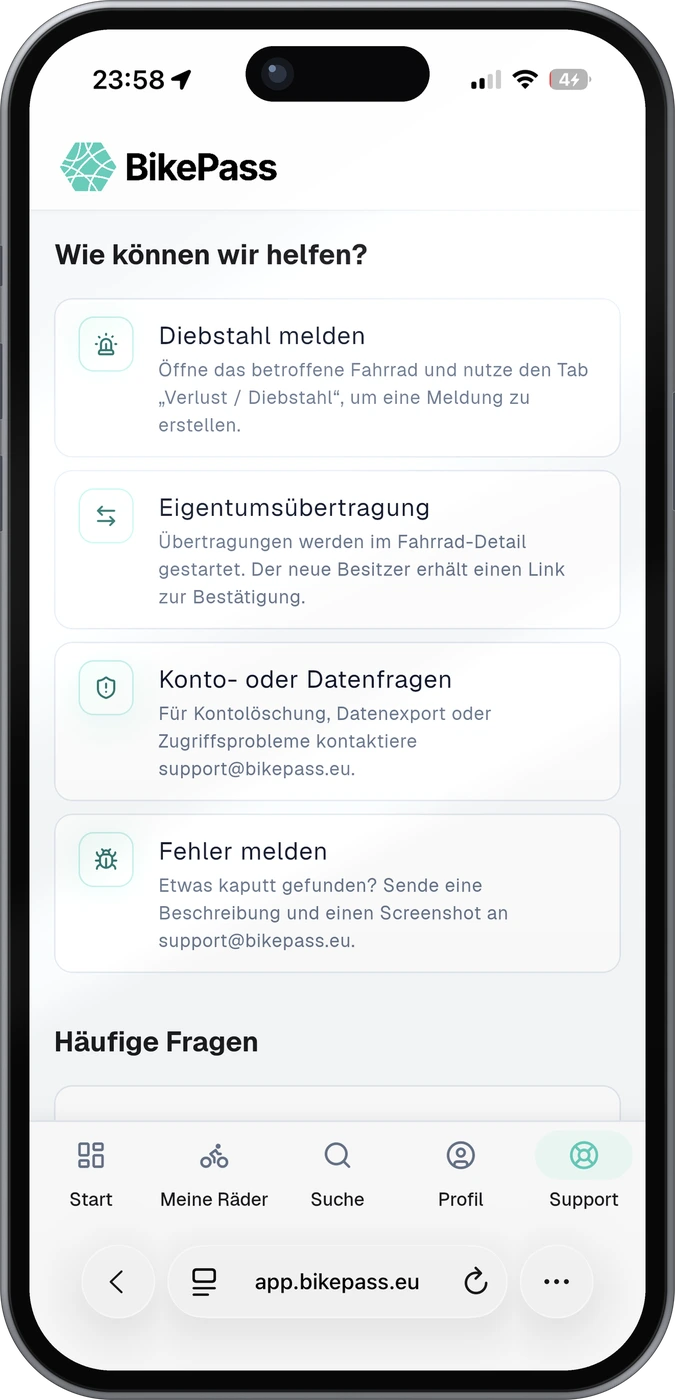
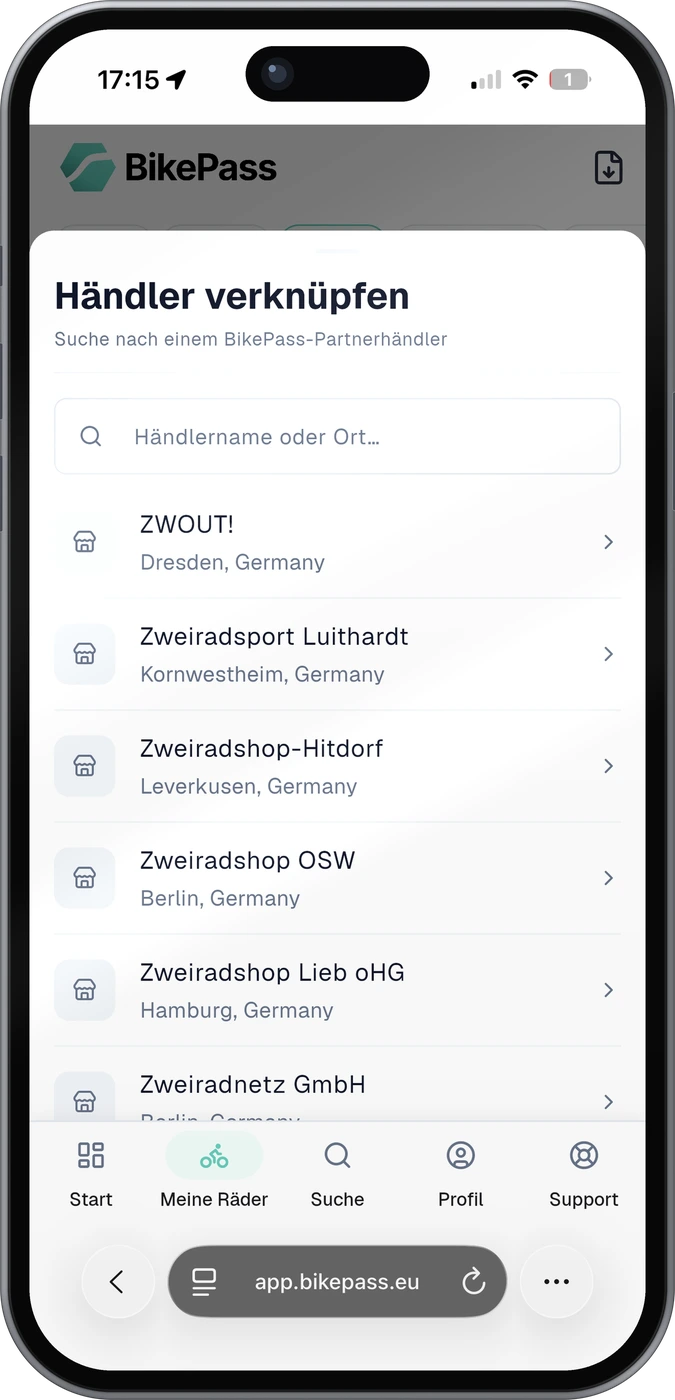
A claim is least stressful when these documents are already gathered in one place. With BikePass you store your frame number, photos and receipts free of charge as digital proof of ownership, EU-wide and GDPR-compliant, hosted in Europe. If the worst happens, you report the theft in the web app and share the proof with the police and your insurer instead of searching through drawers. Registration takes under 3 minutes and covers any number of bikes.
Back to the empty bike cellar from the beginning. The difference between “it’s insured, isn’t it” and an actual payout is not created in the moment you stare at the empty wall. It is created on a quiet evening beforehand, with the policy terms on the table and the frame number in your phone.
Your contract checklist
- Is a bicycle clause in your home contents contract and confirmed in writing?
- Compensation limit worked out in euros and compared with the bike’s value?
- Night-time clause checked, night-time parking spot sorted?
- Lock requirements of the policy known and met?
- For an e-bike, clarified whether the bike and battery fall under the clause at all?
- Frame number, purchase receipt and photos stored digitally?
- For a high-value bike: topping up or a separate bicycle policy calculated through?
We write about bike theft, security marking and digital theft protection – practical, without scaremongering and with real steps you can take.
See all guides