
In short
Bikes are at greatest risk where many of them wait for a long time and unobserved: railway stations, university stands, city-centre corners with no clear line of sight. They are safest when they stand in the light, in full view and locked firmly to an anchored object. The location decides how much time a thief has; the lock decides whether that time is enough.
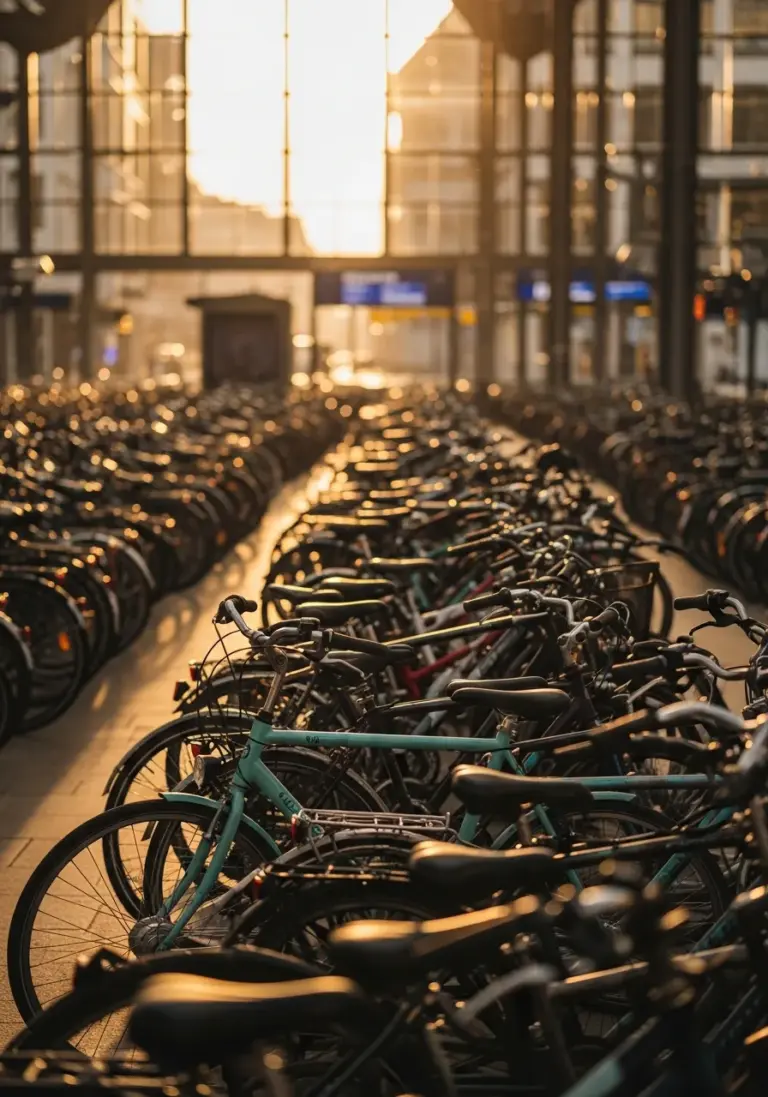
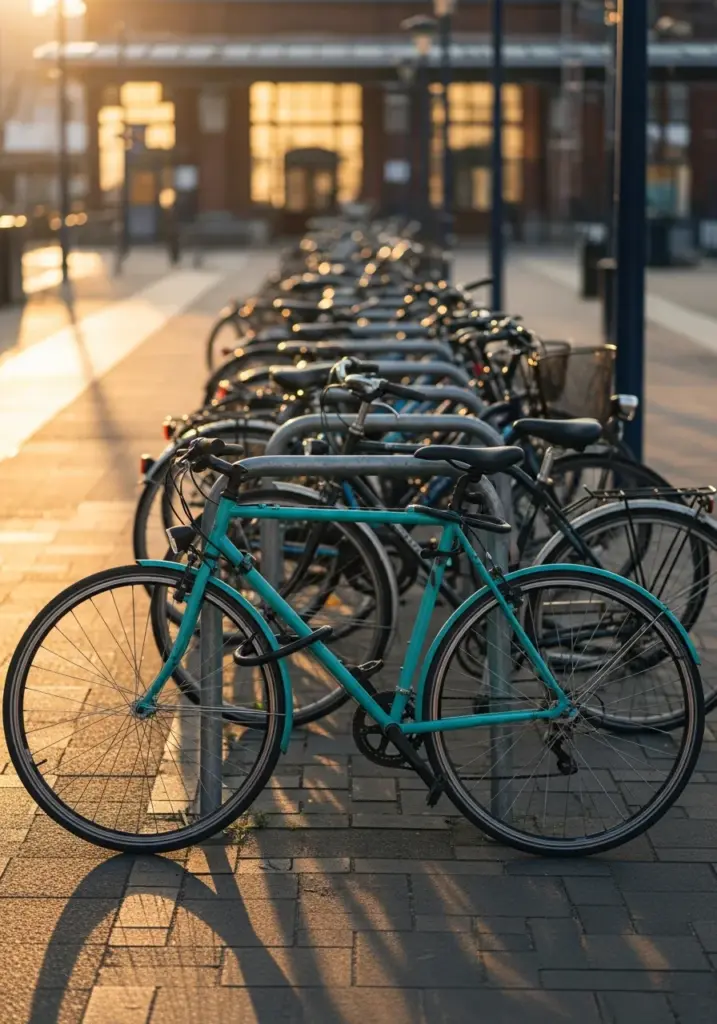
The evening train has gone, the station forecourt is empty, and your bike has been in the back row of the stand since half seven. Between two strangers' bikes, behind a concrete pillar, out of sight of everything. That very back row is the reason this article starts with locations and not with locks.
In 2025, around 214,000 bicycle thefts were reported in Germany, and roughly one in nine cases was solved, so around 11 % (source: the German police crime statistics, Polizeiliche Kriminalstatistik 2025). So if your bike goes, you usually will not get it back. That is why every decision you make beforehand counts, and the first of them is the spot you push your bike into.
Parking safely means choosing a spot that makes the thief visible, takes time away from him and denies him a point of attack for his tools. Not “put it down and lock it”, but lock it to something: by the frame, to a firmly anchored object, in a place where someone is looking. Location and lock work towards the same goal, namely time. A spot in full view costs the thief his nerve, a good lock costs him minutes, and together they cost him more than a bike is worth to him. What even the best spot cannot do: hold your bike in place.
Where are most bicycles stolen?
Thefts happen where many bikes stand for a long time at once: at railway stations, at university bike stands and in city centres. That is not a question of city size but of cycling culture. Measured per head of population, Münster leads in 2025 with around 1,500 cases per 100,000 inhabitants, followed by Göttingen with around 1,300 and Freiburg with around 1,100 (source: the German police crime statistics, Polizeiliche Kriminalstatistik 2025). In absolute numbers, Berlin leads with around 23,000 reported thefts, ahead of Hamburg with around 10,000, Cologne with around 6,400 and Munich with around 5,700.
Cycling cities are theft cities. Where everyone cycles, everyone leaves a bike standing somewhere too.
What is interesting here is less the ranking than the pattern behind it. Thieves do not pick a city, they pick a situation: many bikes in a small space, high turnover, nobody who links a single bike to a single person. How the figures break down across years and regions is shown in our guide to the bicycle theft statistics for Germany.
What makes a parking spot risky or safe?
A parking spot becomes risky through three factors: how long the bike stands there, how visible it is, and what it is locked to. The longer your bike stands, the fewer glances it gets and the weaker the object it hangs on, the more attractive it becomes. Everything else follows from that.
The matrix below is the core of this article. Do not read it as a rulebook but as a diagnosis: find your everyday spot, look at the third column, and above all at the fourth, because that is where you will see what you are wrongly relying on at that spot.
| Location | What makes it risky | What really helps here | What does not help here |
|---|---|---|---|
| Station & public transport | Hundreds of bikes packed together, the commuter flow as cover, standing times overnight and longer. | A lockable bike box or bike parking facility; otherwise a spot near the entrance, within sight of staff. | The crowd. “Mine will not stand out among so many bikes” applies to you, not to the thief. |
| University & school | Overcrowded stands, always the same bikes in the same place, standing times of six to eight hours. | A second lock of a different type and changing parking spots on the site. | A single cable lock. It holds for seconds, not hours. |
| City centre & shopping | Short stops tempt you into carelessness; side alleys and car park corners have no line of sight. | A busy spot with a clear view from shop windows, cafés or bus stops. | The short duration. Five minutes are enough for a practised thief. |
| Cellar, courtyard & garage | Shared cellars with many keys, open courtyards, bikes left unlocked there. | A locked room plus locking to a firmly anchored point, such as a wall anchor. | The cellar door on its own. A single key passed on defeats it. |
| On the road & travelling | Unfamiliar surroundings, rear carriers at motorway services, hotel courtyards without supervision. | A bike room confirmed in advance, an extra lock on the carrier and in the train compartment. | The carrier mount. It secures against the wind, not against hands. |
In every row, the last column names something that feels safe and is not. That gap is exactly what thieves use.
How do you park your bike safely at the station?
At the station, your bike belongs in a lockable bike box or a bike parking facility, and if there is none, on a stand in full view near the entrance. Stations combine everything that makes theft easy: bike volume, anonymity, long standing times and an escape route that departs every few minutes. In a place like this, the difference between the first and the last row matters more than the difference between two lock classes.
The parking options differ less in price than in what they actually protect against. This overview helps you choose on site:
| Parking option at the station | What it can do | What it cannot do | When it makes sense |
|---|---|---|---|
| Lockable bike box | Takes the bike completely out of sight and out of reach. | Is not available everywhere and is often let long term. | A commuter route with a fixed station, daily use. |
| Bike parking facility / cycle station | Access only with a card or key, often with staff or cameras. | Has opening hours and usually charges a fee. | Long standing times, business trips, a high-value bike. |
| Stand near the entrance | Offers an anchored locking point and plenty of glances from passers-by. | Prevents nothing if nobody comes past at night. | Stops of a few hours during the day. |
| Free space in the back row | Is always free and costs nothing. | Offers neither visibility nor, often, a fixed locking point for the frame. | A last resort, then with two locks and a short standing time. |
One point many people underestimate: if your bike stands at the same station for several days over a business trip or a holiday, the risk does not rise linearly but in leaps. Thieves watch bike stands. In that case, ask specifically about long-stay spaces instead of taking your usual spot. How to lock up properly there is shown in our guide “Locking your bike properly”.
Why is the bike rack at university and school so risky?
At university and school the problem is the parking time, not the place. A bike left at a quarter past eight that stands until the afternoon gives a thief a window of opportunity that almost nobody else hands over.
Then there is the routine. The same bikes park at the same racks every day, and anyone who spends a few mornings there quickly knows which bike looks expensive and which lock gives way. Your habit is the thief's reconnaissance.
Two things genuinely help against this. First, a second lock of a different type: a D-lock and a chain lock require different tools, and most thieves only bring one. Second, changing your parking spot, however unspectacular that sounds. Our guide “Types of bike lock compared” compares how long each type of lock holds out.
Tip: Lock your bike by the frame at every location, never by the front or rear wheel alone. Quick releases come undone in seconds, and a secured wheel attached to a vanished bike does not help you.
Is a quick stop in the city centre fine without a lock?
No. “I'm only popping in for a minute” is one of the most common sentences said before a bike theft, and the reason is simple: for a thief, brief does not mean little time, it means little observation.
In the city, the line of sight decides. Put your bike where passers-by, shop windows, outdoor seating or a stop have a clear view of it, and not in the side alley behind the building. In car parks it pays to check the level: the lower levels with people coming and going are far less attractive to thieves than the empty corners at the top.
And if there is no stand within reach, check the object before you lock up. A young tree can be pushed over, a construction fence can be lifted, and a sign can be unscrewed. I have seen every one of these used as an anchor point. Firmly anchored means: in the ground, not just in the way.
Is my bike really safe in the cellar?
In a locked cellar your bike stands far more safely than outside, but it is only secure once it is locked up down there as well. The flaw in the thinking sits in the door: it protects against strangers, not against the many people in a block of flats who legitimately have a key, and not against the one key that gets lost or passed on at some point.
On the insurance side, the distinction matters. A locked cellar, a locked garage or a dedicated bike room usually count as part of your home contents: if a bike is stolen there in the course of a break-in, standard home contents insurance normally applies, without a separate bicycle clause. In an open courtyard, in an unlocked communal cellar or in the stairwell, that does not apply automatically. Terms differ from provider to provider, so it pays to look at your policy; our guide “Home contents insurance and bike theft” explains how the clauses are structured.
In practical terms: a wall anchor or a floor anchor in the cellar, the bike locked to it by the frame, keys not on the board next to the door. Ten minutes of fitting, one evening, done.
How do you secure your bike out and about and on trips?
Away from home the same logic applies as at home, only without local knowledge. On a rear carrier, the mount secures your bike against headwind and potholes, not against a grab at the service station; an extra lock through the frame and the carrier costs you ten seconds per break. On the train you use the fixing in the bike compartment and still lock up, because the compartment stands open at every stop.
At a hotel, the best question is the earliest one. Ask when you book about a lockable bike room or a garage, because many places have one without advertising it. If there is no secure option, the basic rule applies: a visible, well-lit spot instead of a back courtyard, with the frame firmly locked.
An unfamiliar place is not automatically more dangerous, you simply do not know its corners and take the first lamp post out of convenience. Take the extra minute. Our guide “Breaking a bike lock: how to protect yourself” describes the typical weak points that thieves check first.
Where does even the best parking spot stop helping?
Time for the uncomfortable truth: choosing the place lowers your risk, it does not remove it. You should know four limits before you rely on a good spot.
Night empties out every place. A busy square is busy at six in the evening and a back courtyard at three in the morning. If your bike stands outside overnight, visibility drops out as a protection, and all that remains is the lock.
Watching does not mean intervening. Passers-by often see a theft but take it for a locked-out owner cutting through her own lock. Visibility deters, it rarely stops.
No place protects against being carried off. Anyone who lifts a bike and puts it in a van needs no time at the lock at all. The only defence is a fixed anchor point, and many lovely spots do not have one.
After that, only proof counts. If the bike is gone despite everything, nobody cares any more how good the spot was. What matters then is whether you can produce the frame number, photos and the receipt. Without this proof, even a recovered bike often stays with the police, because no owner can be identified.
How do place, lock and registration work together?
Place, lock and proof cover three different moments: before the attempt, during the attempt and afterwards. The place decides whether a thief can tackle your bike undisturbed at all. The lock decides whether he manages it in the time he trusts himself with; as a rule of thumb, budget around 10 % of the bike's value for the lock. And the proof decides whether your bike is still yours after a theft. If a lock is broken open in the process, this normally counts as aggravated theft (Section 243 StGB, the German Criminal Code).
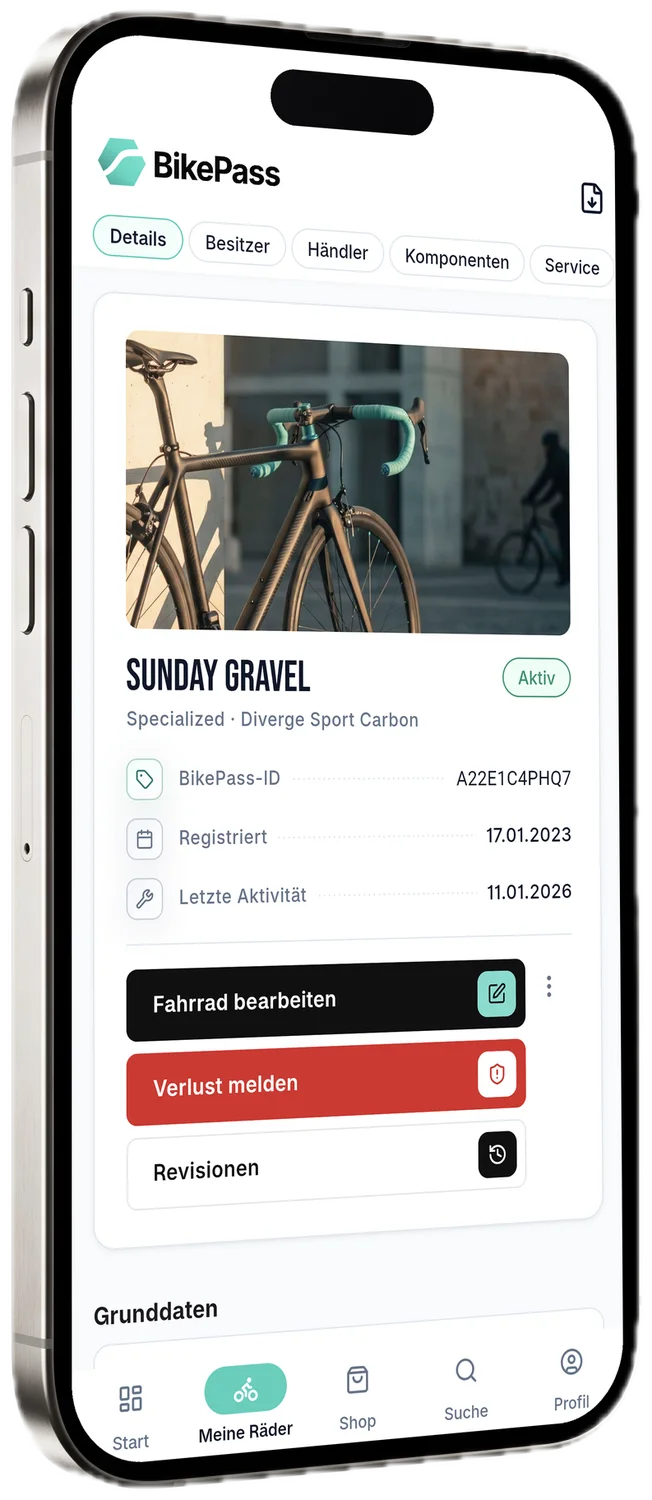
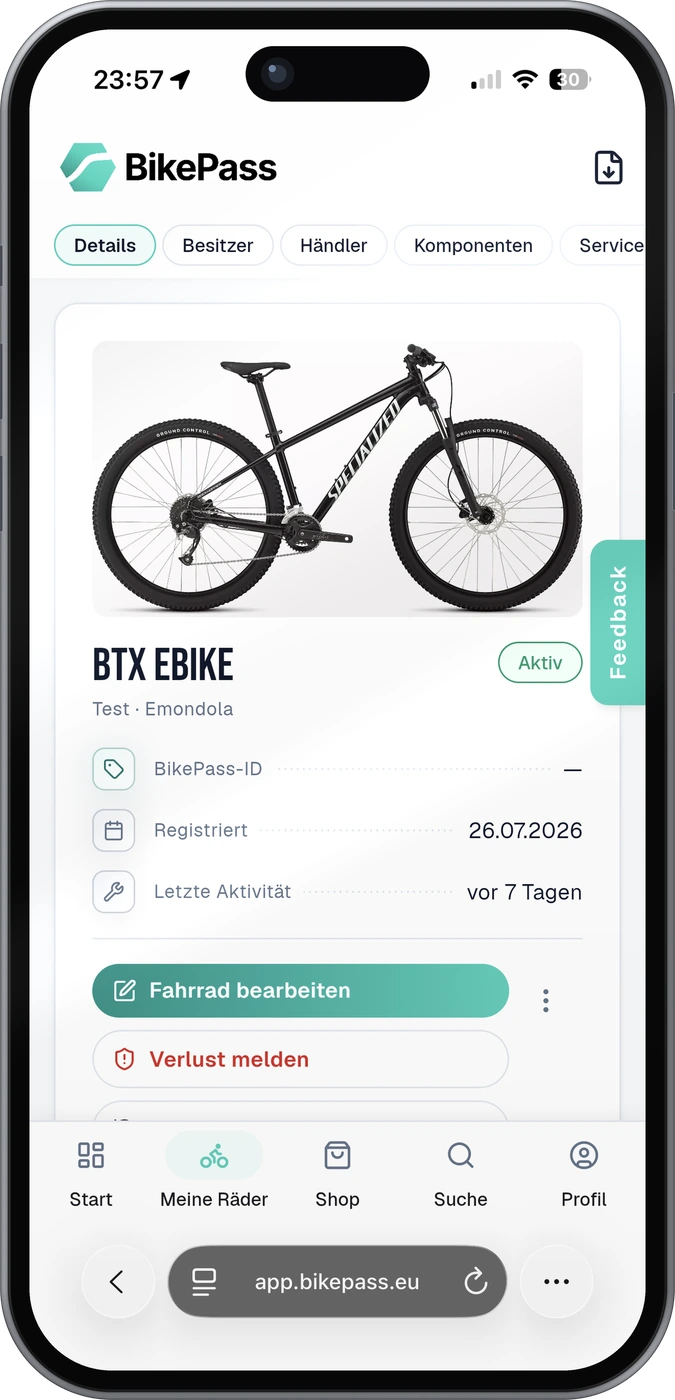
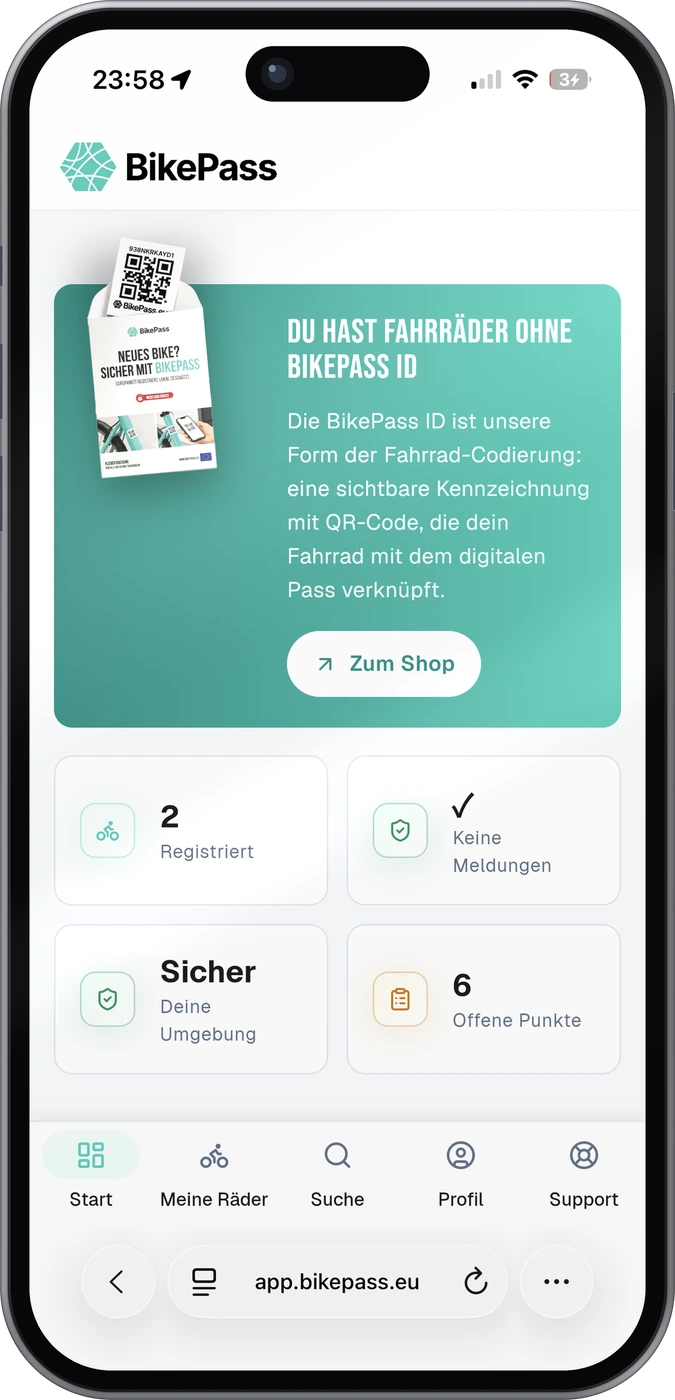
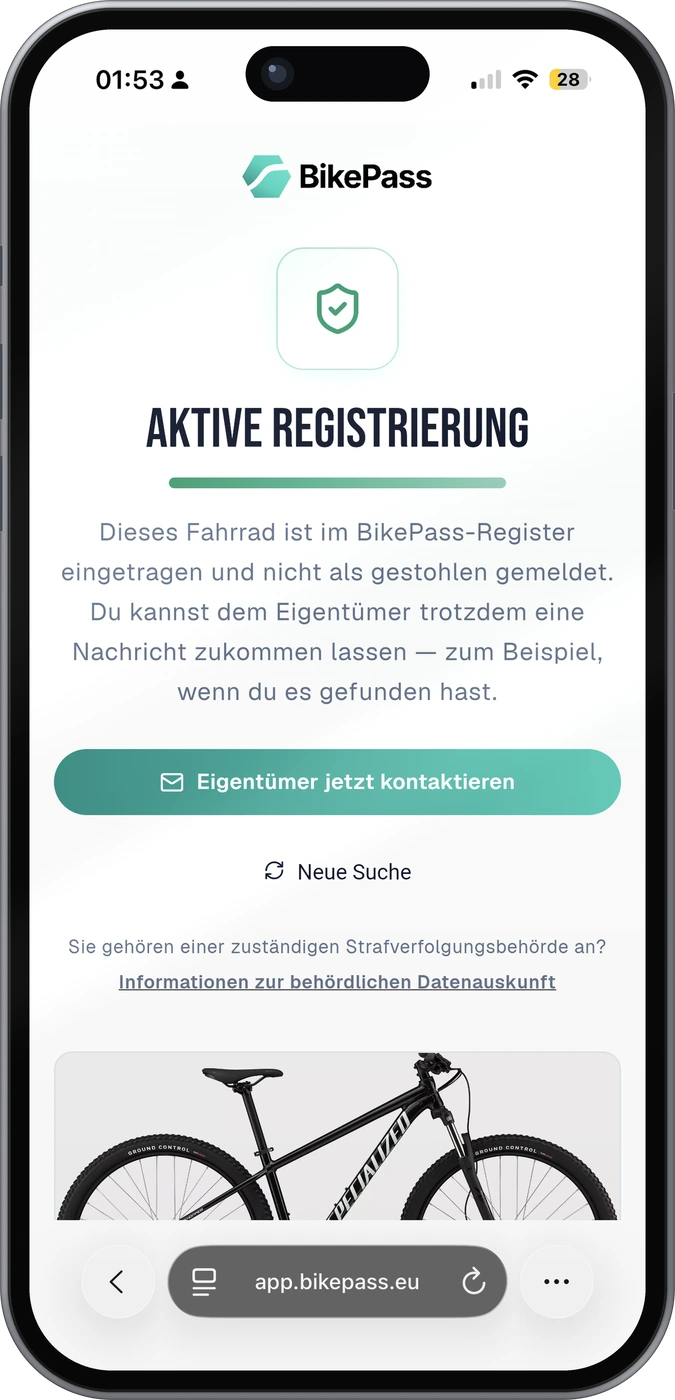
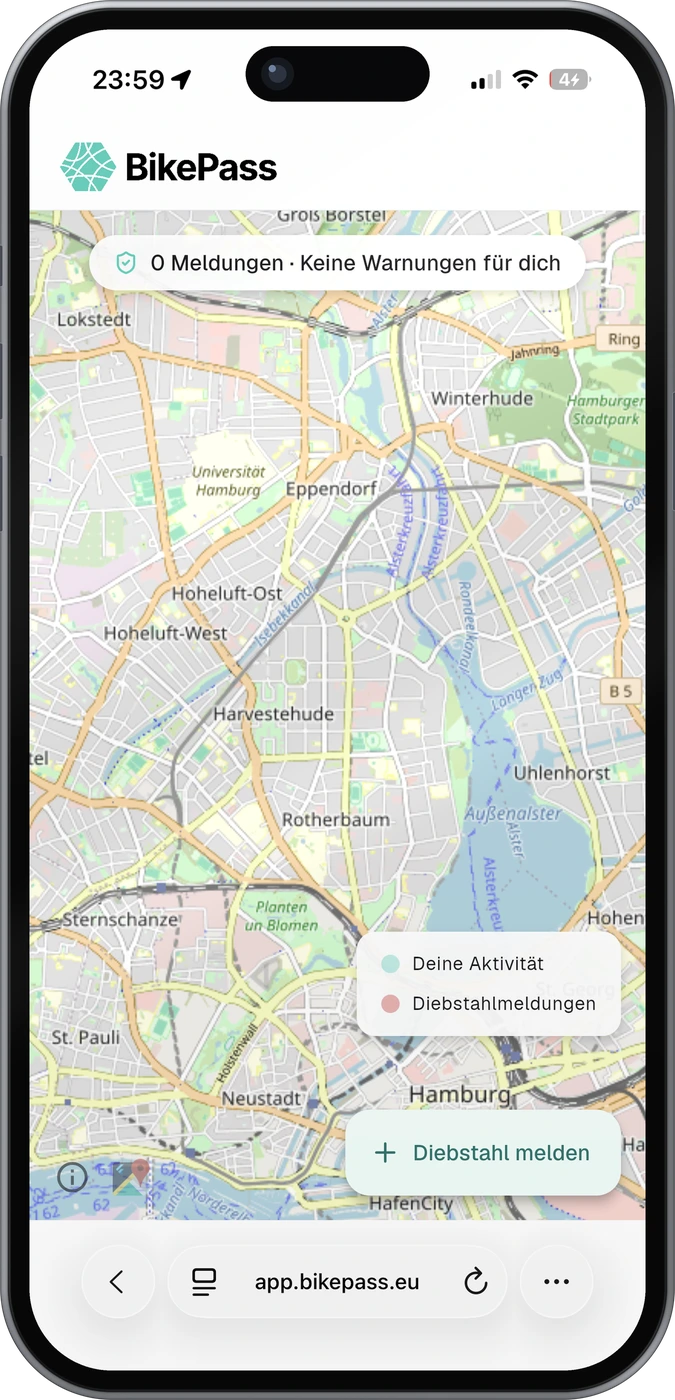
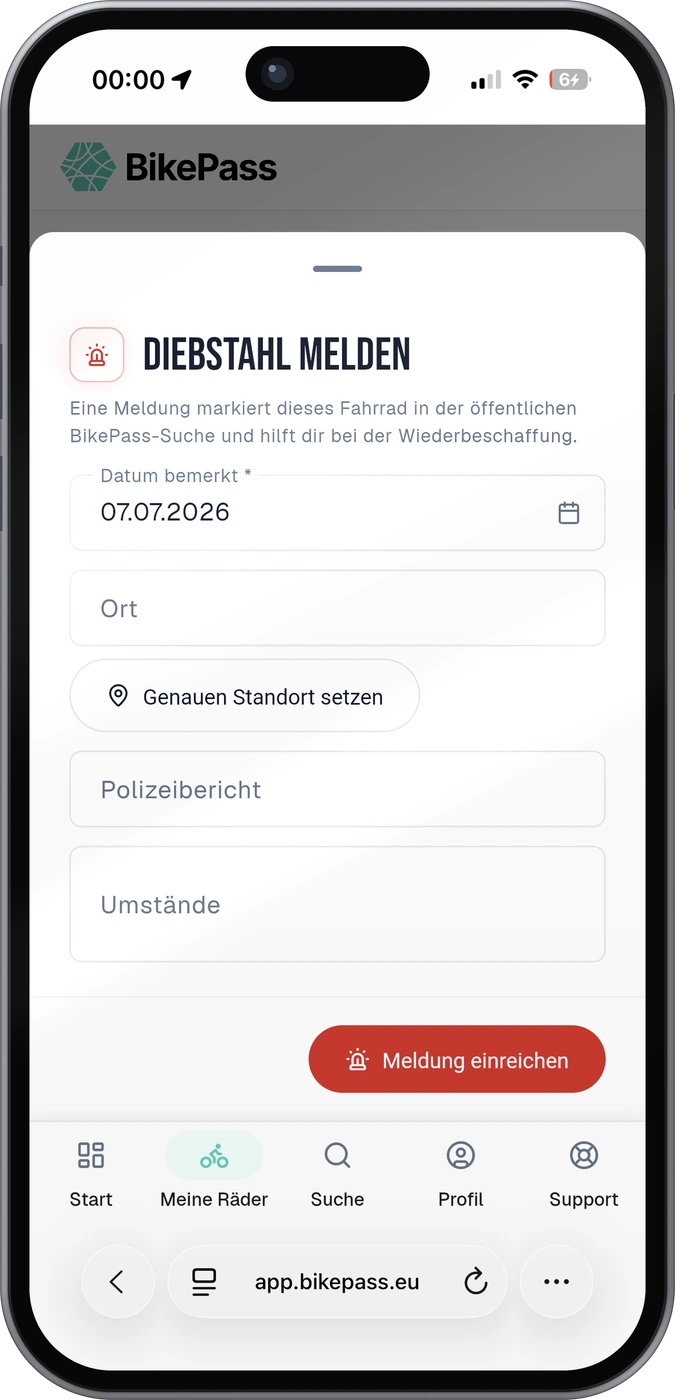
The third link is forgotten most often, because it only pays off once everything else has gone wrong. With BikePass you store your frame number, photos and receipts free of charge as digital proof of ownership, shareable with the police and your insurer, for as many bikes as you like. If you also want visible marking, add security marking: a tamper-proof sticker with a QR code turns an anonymous bike into an identifiable one. Our overview of theft prevention for your bike shows how the individual building blocks work together.
Three moments, three measures. None replaces another.
And that back row at the station from the start? It is not dangerous because bad people are about, but because nobody is about. Two rows further forward, under the street light, at an anchored stand, locked through the frame and with the frame number registered long ago: that is the same station and a different evening.
Your parking spot checklist
- Is your bike always locked through the frame to a firmly anchored object, never just by the wheel?
- Have you chosen a visible, well-lit spot instead of a side alley, back yard or the last row?
- At the station: have you checked for a bike box or bike parking facility, otherwise a stand near the entrance?
- For long stays at university or school: do you have a second lock of a different type with you?
- At home: is the cellar or garage locked and the bike also secured to a wall anchor or ground anchor?
- On the road: have you sorted out the carrier, train compartment and hotel storage in advance and locked the bike as well?
- Are the frame number, photos and receipt stored digitally, in case it does happen?
We write about bike theft, security marking and digital theft protection – practical, without scaremongering and with real steps you can take.
See all guides