In short
Bike thieves work above all with bolt croppers, cordless angle grinders and brute leverage – and they calculate in seconds. Nobody cracks a high-quality lock silently in passing: it costs time, noise and attention. That time is your real safeguard – combined with security marking and registration, your bike becomes the least attractive target on the street.
It often takes less than 20 seconds for a cheap cable lock to give up – you know the footage from every guide video. What thieves are really thinking is revealingly simple: they do the maths. How loud will this get? How long do I have to stand here? How many people are watching? Once you understand that calculation, you know exactly how to swing it in your favour.
The four most common methods – briefly named
No instructions, but honest – this is how thieves typically work:
- Bolt croppers: the standard tool against cable locks and thin chain locks. Quiet, fast, fits under a jacket. It gets nowhere against hardened shackles above a certain thickness.
- Cordless angle grinder: given enough time it beats almost any lock – but it is loud, throws sparks and is obvious to everyone. That is exactly why thieves avoid them in busy places.
- Levering and breaking: the lock is forced open with a pipe or a car jack. This works above all when the lock has too much play or lies on the ground.
- Weak points in the cylinder: cheap lock cylinders can be manipulated. Branded locks with modern cylinders are far more resistant here.
Important: we deliberately do not explain any techniques in detail here. The point is to understand the logic of thieves – because that is exactly where the most effective countermeasures come from.
Why time is the real safeguard
No lock in the world is uncrackable – that is the uncomfortable truth. But that is not what matters. A thief breaks off as soon as the risk exceeds the reward. Every minute your lock holds out, every second of grinder noise, every curious glance from passers-by shifts his calculation – until the bike next to yours looks more attractive.
That is why two things work together: a lock that offers resistance, and a parking spot that guarantees attention – busy, well lit, in full view. A top lock in a dark side alley loses out to a good lock in a busy square.
Which locks really hold out
The rule of thumb among experts: you should invest around 10 % of the bike's value in the lock. What the individual designs deliver is shown in detail in our comparison of bike lock types – here is the short version:
| Lock type | Resistance | Who it suits |
|---|---|---|
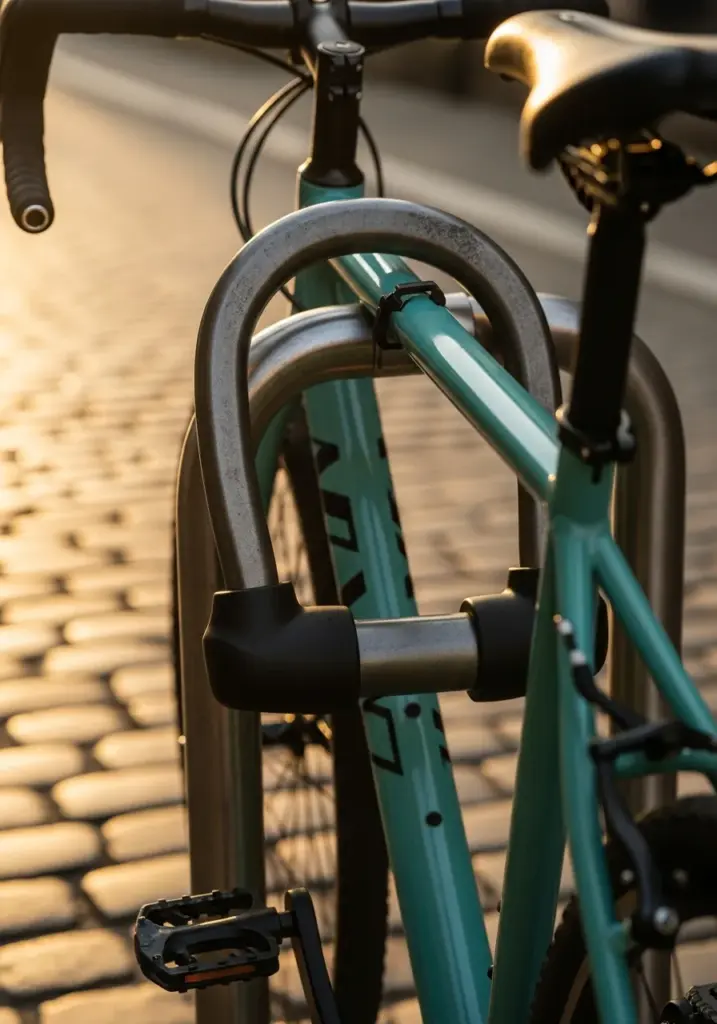
| D-lock | top class – hardened steel, barely any surface to lever against | high-value bikes, e-bikes, long-term parking |
| Folding lock | a good compromise between resistance and handling | everyday and city use, when a D-lock is too inflexible |
| Chain lock (heavy-duty) | strong but heavy – the quality of the links is decisive | flexible locking points, home base |
| Cable/spiral lock | opportunist protection only – withstands no tool | at most as a second lock for a wheel or the saddle |
When buying, look at the manufacturers' security levels and independent test seals – and always lock the frame to a fixed object, with as little play as possible and off the ground – the 8 most common locking mistakes are shown in „Lock your bike properly". Two different lock types, by the way, force thieves to bring two tools – a simple, effective trick.
Combined protection: lock + security marking + registration
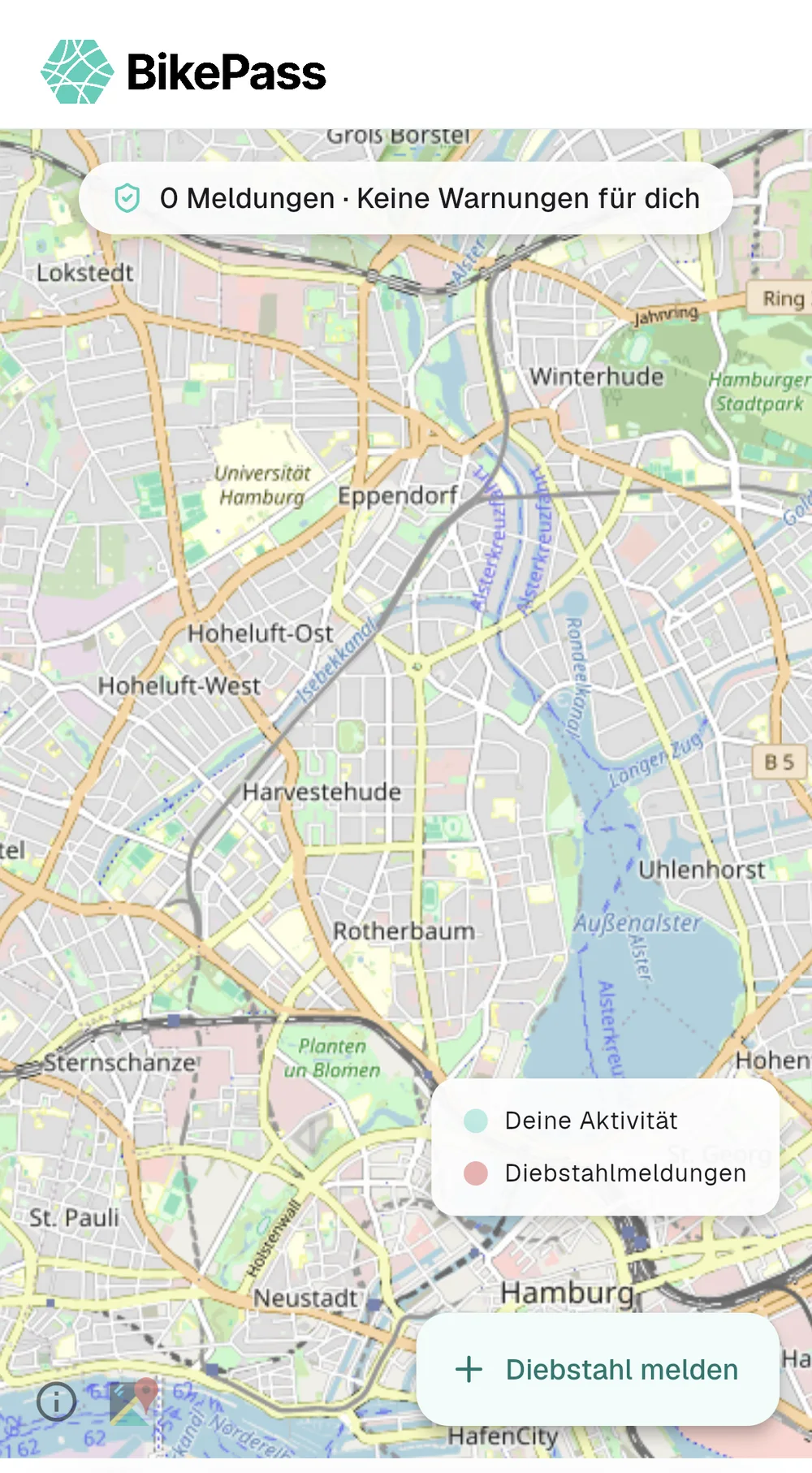
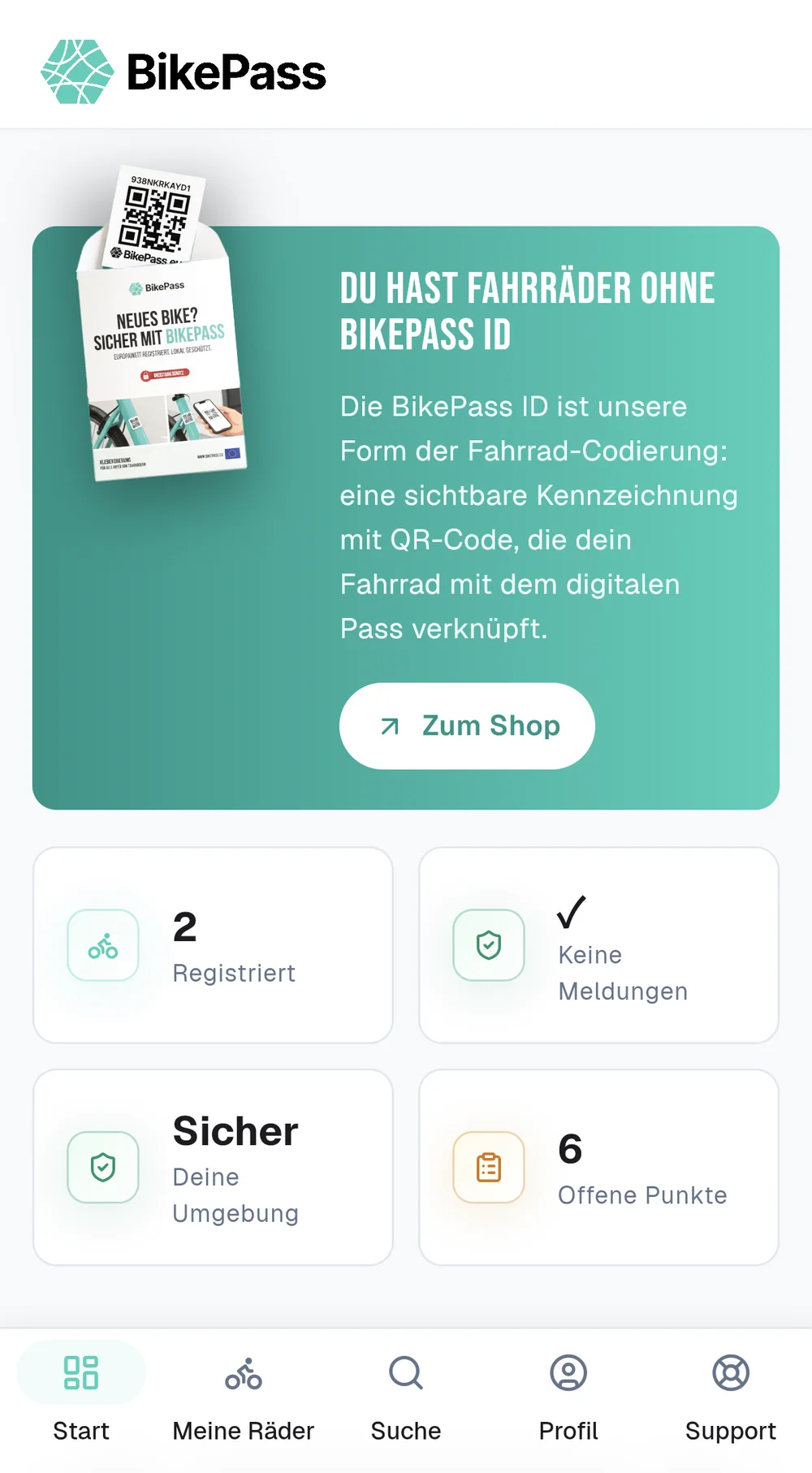
The lock defends your bike at the rack. But what if it disappears anyway? Then what counts is whether your bike is identifiable. A visibly security-marked bike is harder to sell – many thieves leave it where it stands for that reason. And free registration with the frame number, photos and digital proof of ownership means you can prove immediately, for the police report, the insurer and any recovery: this is mine.
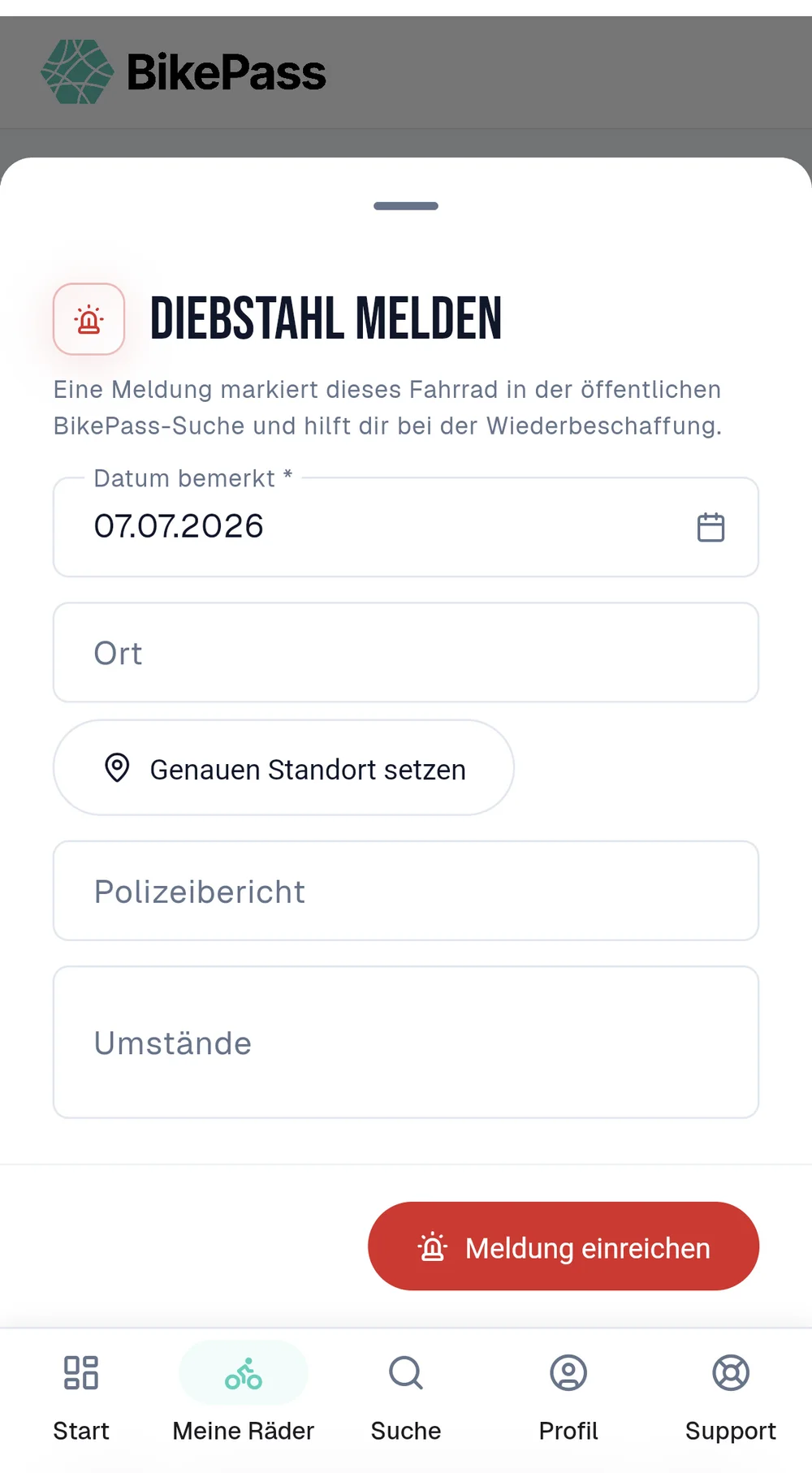
How to combine lock, parking spot and marking into one overall concept is shown on our page Theft prevention for your bike. And if the worst has already happened: Bike stolen – what now?
Your anti-thief check
- Lock budget: around 10 % of the bike's value invested
- D-lock or folding lock instead of a cable lock
- Frame locked to a fixed object, lock high up and tight
- Busy, well-lit parking spot in full view
- Bike visibly security-marked
- Frame number, photos and proof of ownership registered digitally
We write about bike theft, security marking and digital theft protection – practical, without scaremongering and with real steps you can take.
See all guides →