
In short
An alarm and an immobiliser are sensible additions, but no substitute for a lock – they help most on e-bikes, where the electronics are already on board. They only become really strong as part of a chain: lock, alarm, registration.
Somewhere in a bike cellar an alarm starts wailing. Three seconds, then silence – and not one of the neighbours even looked out of the window. This is exactly the point where it is decided whether electronic theft protection actually helps or just sounds good.
The need is real: in 2025, around 214,000 bicycle thefts were reported in Germany, and only about one in nine cases was solved (source: German police crime statistics (Polizeiliche Kriminalstatistik) 2025). No wonder many people look for extra protection for their bike: an alarm, an immobiliser, app functions on the e-bike. What this technology can really do – and what it cannot – is what we clarify here. Our guide to the bicycle theft statistics for Germany shows how theft figures are spread across the cities.
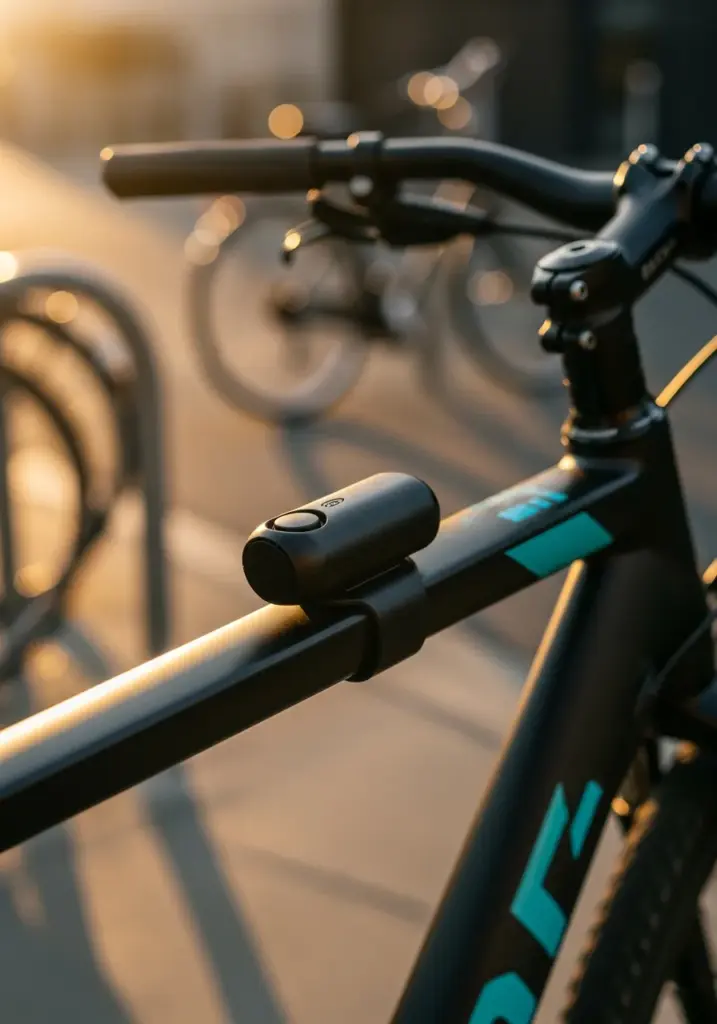
First the terms, so we are talking about the same thing: a bicycle alarm is an electronic theft protection device that detects vibrations, triggers a loud signal tone and deters thieves before the lock gives way. An immobiliser is a locking device that blocks the rear wheel or the motor and thus makes the bike unusable – but not immovable. Neither of them holds a bike in place, and neither of them finds it again. That is the limit that decides everything else in this article.
How does a bicycle alarm work?
A bicycle alarm works with a motion or vibration sensor: if the bike is lifted, tilted or the lock is tampered with, a shrill signal tone goes off. The actual effect is simple but effective – attention is a thief's enemy. An alarm on an open street draws eyes, and that is exactly what nobody wants while breaking someone else's lock. So the effect is less technical than psychological. Our guide “Breaking a bike lock: protection” explains how thieves tackle locks in the first place and how you can protect yourself.
Today the technology comes in three designs. Which one suits you depends less on your budget than on what you already have on your bike:
| Design | How it works | What it cannot do |
|---|---|---|
| Alarm lock | Lock and alarm in one device – it locks mechanically and sounds when tampered with. | With a flat battery only the lock remains. The alarm stays silent. |
| Alarm module | A small device on the frame or in the rear light, combinable with any existing lock. | It stops nobody mechanically – it only makes noise. |
| E-bike system | Uses the drive's built-in electronics, controlled via an app. | Works only with that particular drive system, not on a second bike. |
We deliberately do not go into test winners or specific models – the range on the market is wide, and what suits you depends on your bike and where you park it. The design question matters more than the brand question.
What does a bicycle immobiliser achieve?
An immobiliser stops anyone from riding away on your bike – not from taking it away. You know the mechanical principle from the classic frame lock: a shackle blocks the rear wheel so it can no longer turn. Electronic versions link this locking function to a lock, a chip or – on an e-bike – to the motor, and release it only with the matching code, key or app.
The difference from a locking-up lock is decisive: an immobiliser makes the bike unusable, but not immovable. Anyone who simply lifts it up, loads it into a van or wheels it away on a sack trolley bypasses the immobiliser completely. That is why an immobiliser is no substitute for a lock that fixes your bike to a solid object. It complements it.
Tip: An alarm and an immobiliser work mainly preventively – before the theft. If you also want to locate your bike if the worst happens, take a look at our guide to GPS trackers for bikes.
How good are manufacturer e-bike systems such as Bosch eBike Lock?
Many e-bike drive manufacturers now build alarm and locking functions directly into their systems. One well-known example is Bosch eBike Lock, which locks the motor via an app – other drive manufacturers now offer similar functions. We deliberately do not go into details of individual systems, because the feature set and availability differ depending on the manufacturer, model year and update status – it is best to check directly with the manufacturer of your drive.
The principle is similar in all of them: if the motor is locked, the bike can still be pushed, but there is no assistance – for most thieves that makes an e-bike far less attractive. What these systems cannot do: prevent the bike being carried off. A locked motor stops nobody from lifting the bike into a vehicle and cracking it or stripping it for parts elsewhere at their leisure.
That is precisely why extra technology is especially worthwhile on e-bikes: the battery supplies power anyway, the control unit is fitted anyway – so an alarm function and locking system can be used with little extra effort, whereas on a simple everyday bike they would first have to be retrofitted specially. You will find more on the overall package on our page about e-bike theft protection.
Alarm, immobiliser or lock: what protects against what?
The three terms are constantly lumped together, yet they answer completely different questions. The table shows which measure covers which risk – and where each one is blind:
| Measure | Prevents riding away | Prevents carrying away | Deters | Helps with recovery |
|---|---|---|---|---|
| Locking-up lock | Yes – as long as it holds | Yes, on a solid object | Yes, visibly | No |
| Alarm | No | No – it only makes noise while it happens | Yes, loudly | No |
| Immobiliser | Yes | No | To a limited extent | No |
| GPS tracker | No | No | Barely – it is hidden, after all | Yes, by locating |
| Registration & security marking | No | No | Yes – marked bikes are harder to sell | Yes, through clear attribution |
Read the table from right to left and you see the pattern: no single measure covers all four columns. That is not a shortcoming of the products. It is the reason why theft protection is always a combination.
What is worth it for which bike?
Not every bike needs the full set-up. Here is a rough plan by bike type – and the reasoning behind it:
| Bike type | Sensible set-up | Why |
|---|---|---|
| Everyday bike | A good, tested lock first – everything else is an extra. | The value of the bike rarely justifies retrofitted electronics plus battery care. |
| E-bike | Consistently activate the manufacturer's locking system, plus an alarm. | The electronics are already on board – the extra effort is minimal and the bike is valuable. |
| Cargo bike / high-value bike | A combination of lock, alarm and immobiliser. | At that purchase price, every hurdle that slows a theft down or makes it loud pays off. |
As a rule of thumb for the lock: budget around 10 % of the bike's value. There is no comparable formula for an alarm or an immobiliser – what counts here is how high your personal risk of theft is where you park every day, for example at a busy railway station or in a bike cellar with lots of bikes. The order matters: first match the lock to the value of the bike, then consider which additional technology genuinely helps in your daily routine. Not the other way round. Our guide “How to lock your bike properly” shows you how to use that lock correctly.
Where are the limits of alarms and immobilisers?
Time for the uncomfortable truth: electronic theft protection has four weak points that product pages rarely mention.
False alarms. Alarms sometimes go off for no reason – a gust of wind, someone bumping into the bike rack. That is not only annoying, it also breeds indifference: anyone who has heard a neighbour's bike alarm ten times will not react the eleventh time. Remember the bike cellar from the start.
The battery. An empty battery turns the alarm into silent metal. Checking it regularly is as much part of owning an alarm as pumping up the tyres is part of owning a bike.
Carrying it away. Neither an alarm nor a lock-out prevents a bike from being carried, loaded up or pushed away. Only a lock attached to a fixed object closes that gap.
After that, it is over. If the bike is gone despite everything, neither the alarm nor the immobiliser helps you. From that moment on, all that counts is whether you can prove your ownership – with the frame number, photos and receipts. Without proof, even a recovered bike often stays sitting at the police station.
How do lock, alarm and security marking work together?
The best protection is always a chain, never a single part. It starts with the lock: if you are still unsure which type of lock suits your bike, our guide “Types of bike lock compared” gives you some orientation. An alarm and an immobiliser sit on top – they deter thieves and make riding away harder, but they do not replace the lock.
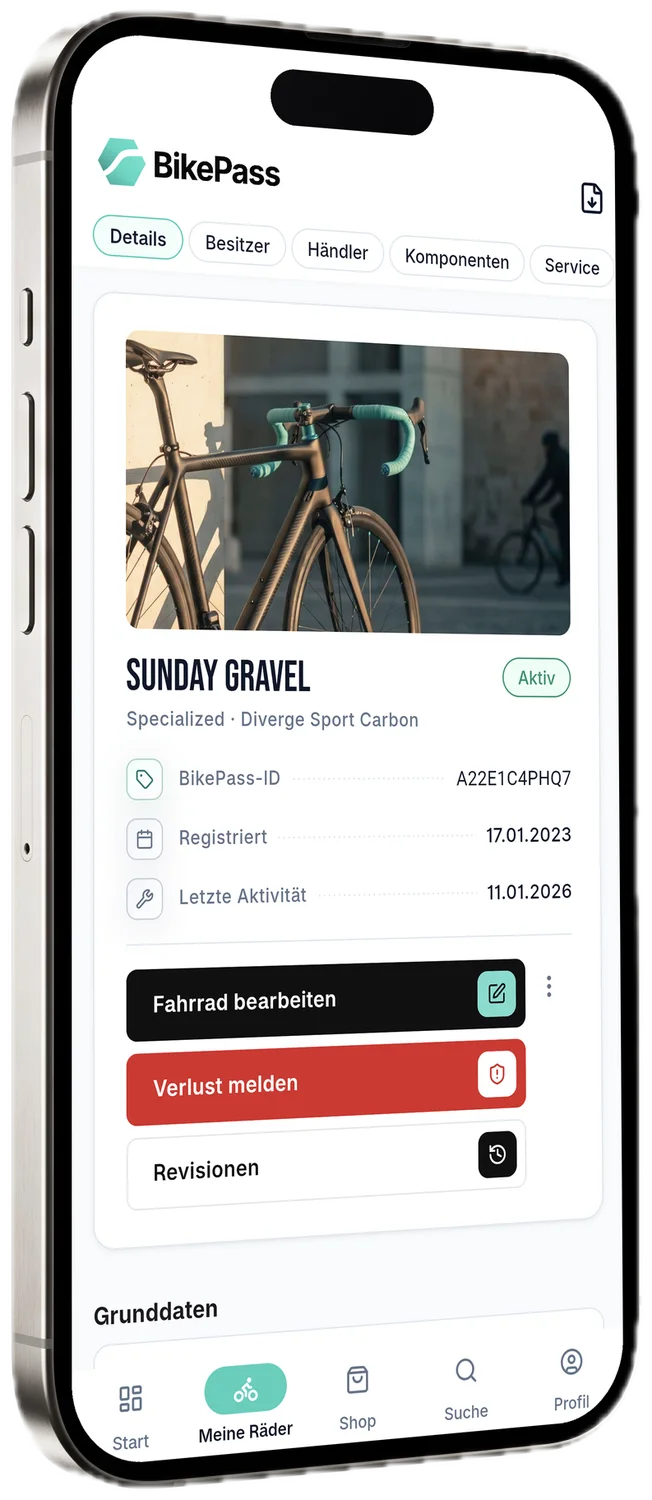
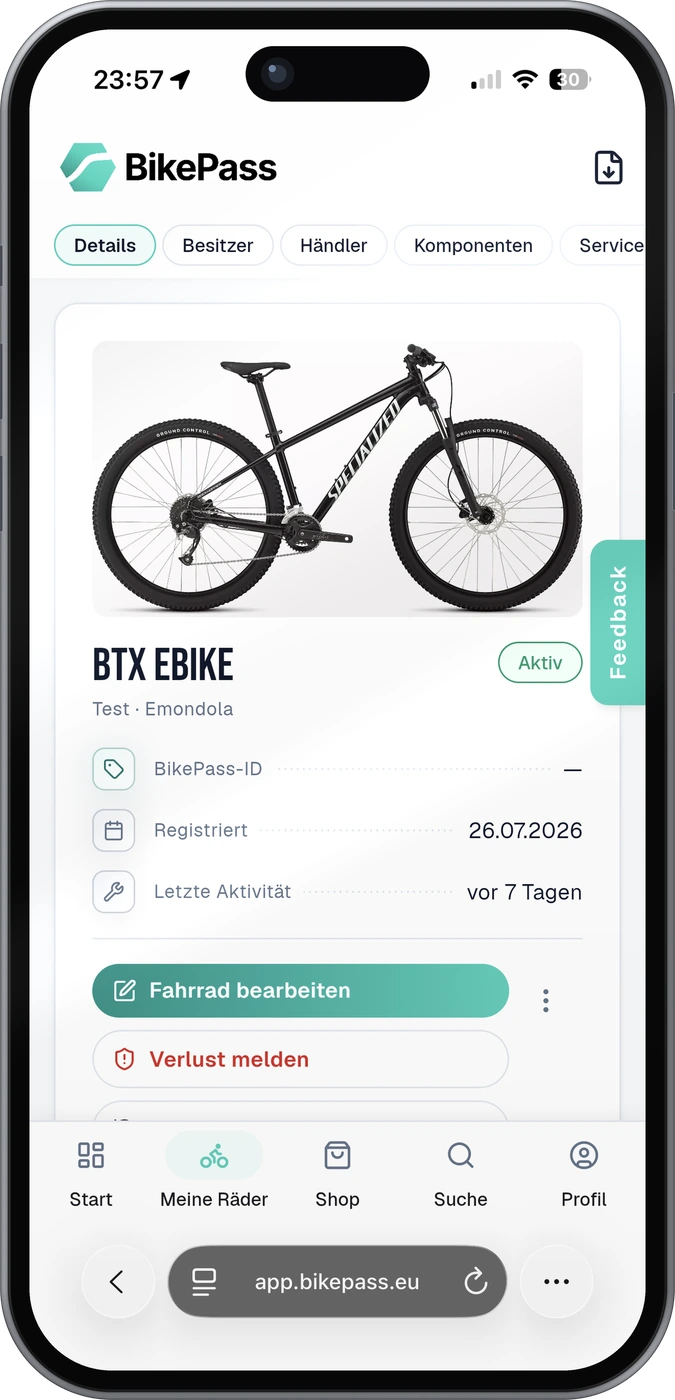
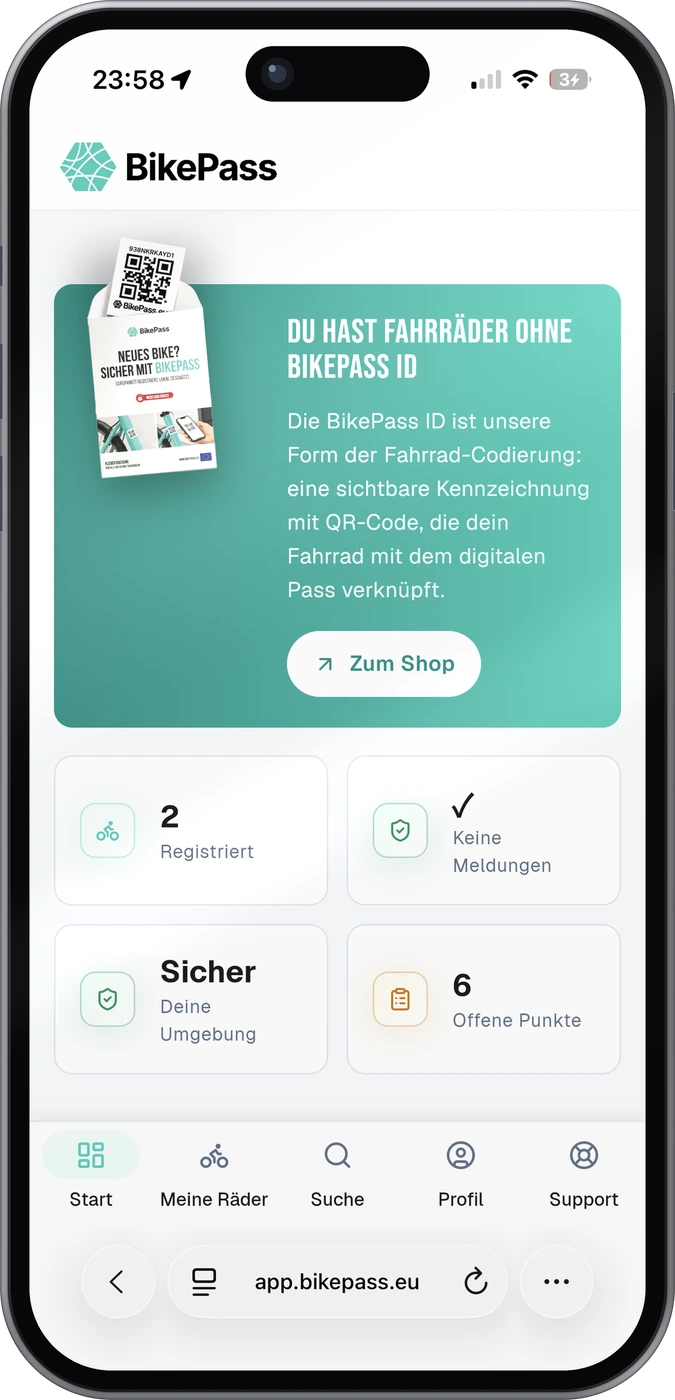
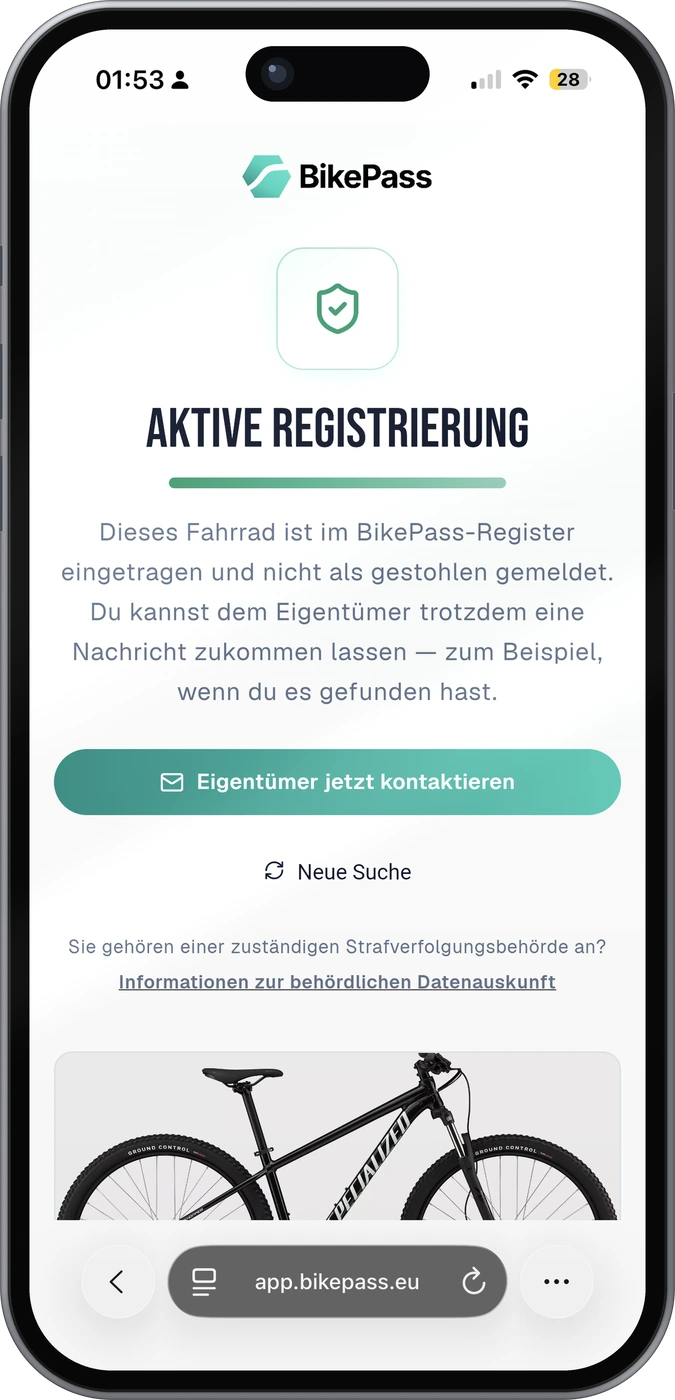
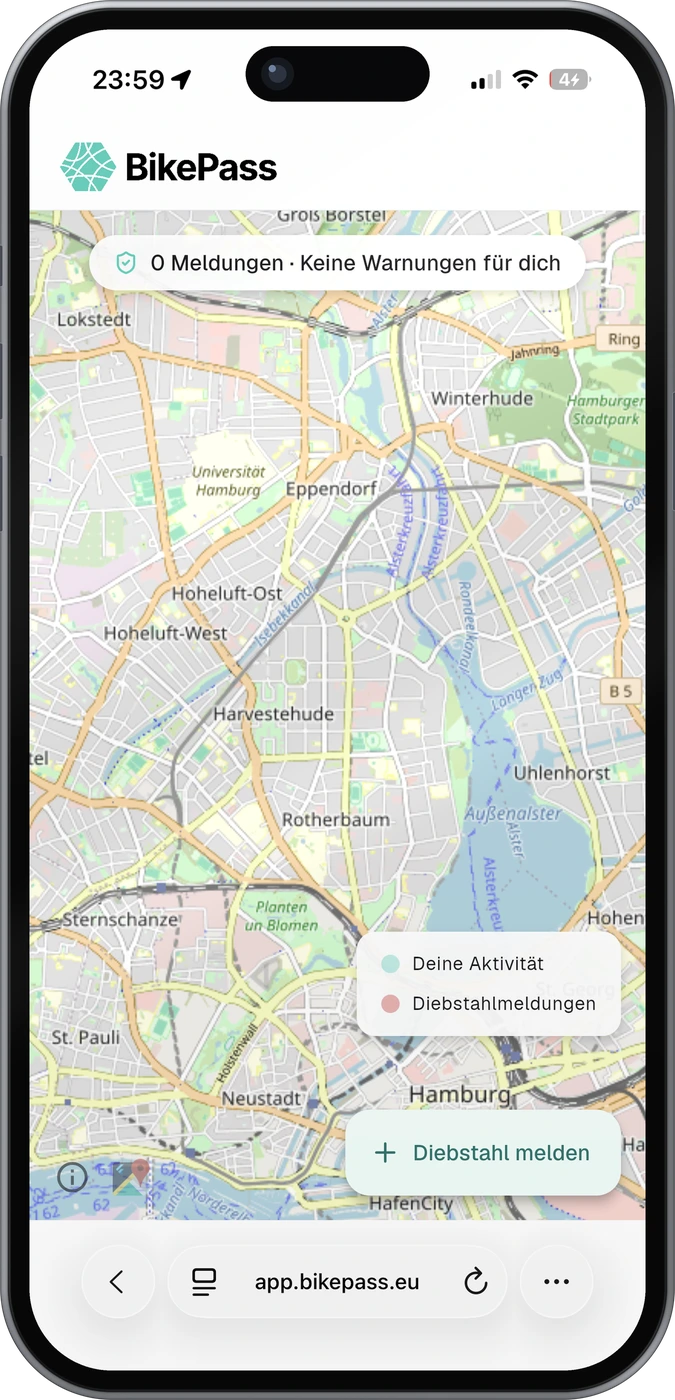
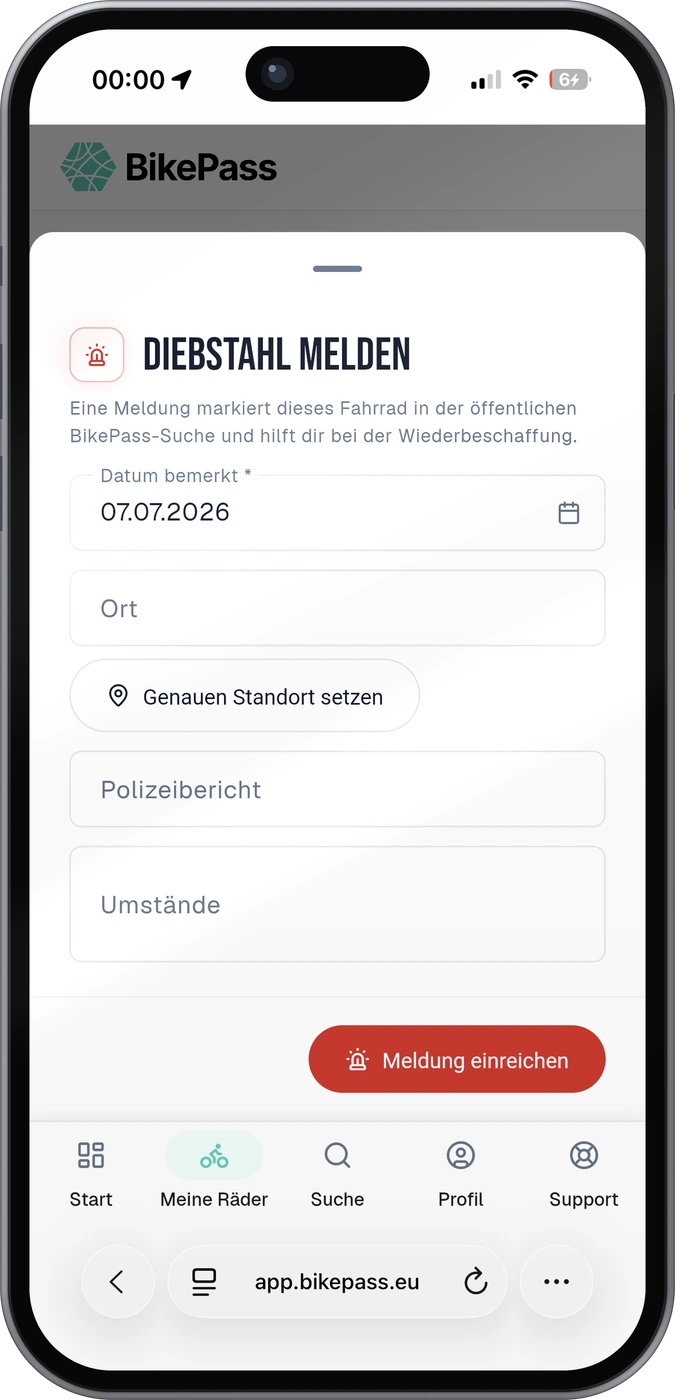
The final link in the chain is provability: security marking or registration of your bike, so that it can clearly be traced back to you if the worst happens. With BikePass you store your frame number, photos and purchase receipts free of charge as digital proof of ownership – and, if you wish, add a tamper-proof marking set with a sticker and QR code that you fit yourself at home, with no appointment and no tools.
Put together, the chain forms a picture: the lock holds your bike in place, the alarm makes the attempt loud, the immobiliser makes riding away pointless – and registration ensures that your bike stays yours even after a theft.
And the alarm in the bike cellar from the start? It works best when it never has to go off at all – because the lock deters, the immobiliser discourages and the sticker on the frame tells every fence: this bike is registered. Noise is plan B.
Your protection checklist
- Do you have a good, tested lock – matched to the value of the bike (rule of thumb: around 10 % of the bike's value)?
- Alarm added where it makes sense, battery checked regularly?
- For an e-bike: manufacturer's locking system activated?
- Immobiliser considered for a high-value bike or cargo bike?
- Parking spot thought through – a busy place instead of a lonely corner, so that an alarm is actually heard?
- Frame number, photos and receipts stored digitally?
We write about bike theft, security marking and digital theft protection – practical, without scaremongering and with real steps you can take.
See all guides