In short
Security marking means an individual identifier on your frame that clearly links your bike to an owner if it is found or stolen. The classic options are marking events run by the ADFC and, in some areas, the police – usually with an appointment and some waiting time. The digital alternative works entirely from home, with no appointment and no tools.
The police recorded around 214,000 bike thefts in 2025, and only about one in nine cases was solved – a rate of roughly 11 % (source: the German police crime statistics (Polizeiliche Kriminalstatistik) 2025). This is exactly where security marking comes in: it makes your bike less attractive to thieves and, if it is found, clearly identifiable for the police. Here you can read where to get your bike security-marked, what it costs and why marking only becomes truly effective together with a registration.
What security marking is and what it does
With security marking, your frame gets an individual identifier – usually a combination of numbers and letters that is engraved, stamped or applied as a tamper-proof sticker. This identifier is unique and, with most providers, is also stored in a register that lets the police link a found bike to its owner.
The effect works two ways: a visibly marked bike is less attractive to thieves, because it is harder to resell discreetly. And if it is stolen anyway and later found, the police can trace it back via the marking – provided the identifier is stored somewhere and can be found. That is exactly the difference to a plain frame number: it is there from the factory, but without a link to you as the owner it is initially worthless to the police.
Security marking replaces neither a good lock nor a complete registration with frame number, photos and receipt; it complements both. The most effective approach combines all three building blocks: a lock that makes theft on the spot harder, a visible marking that deters, and a stored proof of ownership that makes the difference when it matters. Our guide “Locking your bike properly” shows you how to secure your bike correctly on top of that.
Tip: Note down your code separately from the bike, for example digitally together with the frame number. That way you still have it if the sticker weathers or the bike is not to hand.
Classic places to go
The best-known place for classic security marking is the ADFC: many local groups regularly run marking events, sometimes together with the local police, sometimes purely as a club activity. Some bike dealers also offer marking as an extra service. The process is similar everywhere: your frame number is checked, an individual code is assigned and applied to the frame – usually with an entry in the organiser's own register.
The catch with classic events: you are tied to an appointment. Marking events often take place only a few times a year, places are limited and you have to turn up in person with the bike – waiting time included. The most reliable way to find out when and where marking takes place in your region is to ask your local ADFC group or your local police station directly; there are no fixed nationwide dates.
For anyone in work or without a suitable event nearby, this dependence on appointments quickly becomes the biggest obstacle: miss the one event of the year and you have to wait for the next – riding without marking until then. That is the point where the digital alternative plays to its strengths.
What it costs
There are no flat-rate prices for security marking – costs vary widely by provider. At ADFC events, marking is sometimes free for members or available for a small contribution, and in some places non-members pay a bit more. If a bike dealer marks your bike instead, they usually charge it as a service including labour time.
It is best to ask your local group, police station or dealer directly about current terms – that is where you will find reliable figures, not in general online claims.
Classic vs digital
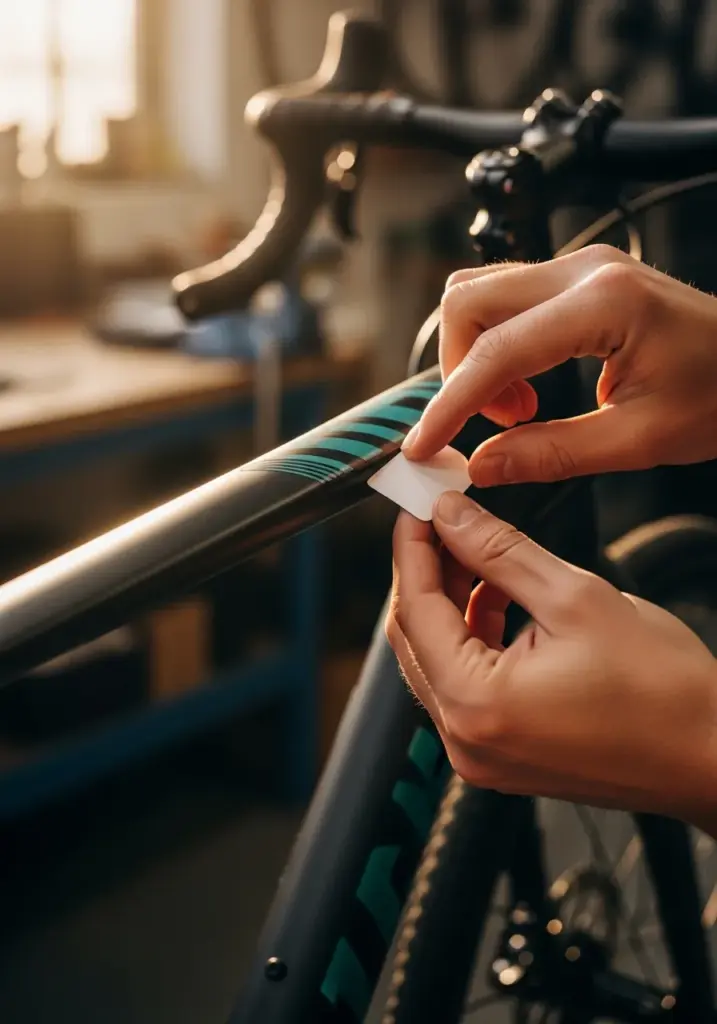
Alongside the classic marking event, there is now a digital alternative: the BikePass ID. Instead of waiting for an event date, you get a tamper-proof sticker set with an individual QR code that you apply yourself at home – no appointment, no tools and no trip to get there. The stickers are UV- and weather-resistant and cannot be removed without leaving traces, which makes an attempted theft harder still. It is a one-off purchase, with no subscription.
| Classic marking event | BikePass ID (digital) | |
|---|---|---|
| Appointment needed | yes, tied to event days | no, possible at any time |
| Location | on site at ADFC, police or dealer | at home, delivered by post |
| Tools | sometimes the organiser's engraving device | none, sticker set to apply |
| Tamper resistance | depends on method and provider | stickers cannot be removed without traces |
| Cost model | varies, sometimes free at events | one-off purchase, no subscription |
Important: an existing marking – from an ADFC event, for example – does not have to be lost in the process. Existing codes and serial numbers can be added later and linked to a digital proof of ownership.
After marking: register
Marking alone is only half the job. It only takes full effect if a proof of ownership actually exists when your bike is found or stolen – in other words, frame number, photos and receipt to hand. Otherwise even a clearly identifiable code remains a puzzle piece without its counterpart for the police.
With BikePass you store these documents free of charge as a digital proof of ownership – whether your bike already carries a classic marking or a BikePass ID. Our guide “Find & check your frame number” explains where to find your frame number and how to note it correctly, and “Register your bike” shows you the full registration process. You can find more about the BikePass ID itself on the security marking page.
This works both ways, by the way: if you register your bike first and only have it marked later, you simply add the identifier afterwards – your proof of ownership stays untouched and grows with every addition. That way you build up a complete file on your bike step by step, instead of scattering marking, receipt and photos across different places.
Your security marking checklist
- Marking done, or an appointment booked with the ADFC, police or a dealer?
- Code or frame number noted separately (e.g. digitally)?
- Receipt and photos to hand?
- Marking registered digitally, so it really helps when it matters?
- A tested lock in use as well – marking does not replace it?
We write about bike theft, security marking and digital theft protection – practical, without scaremongering and with real steps you can take.
See all guides →